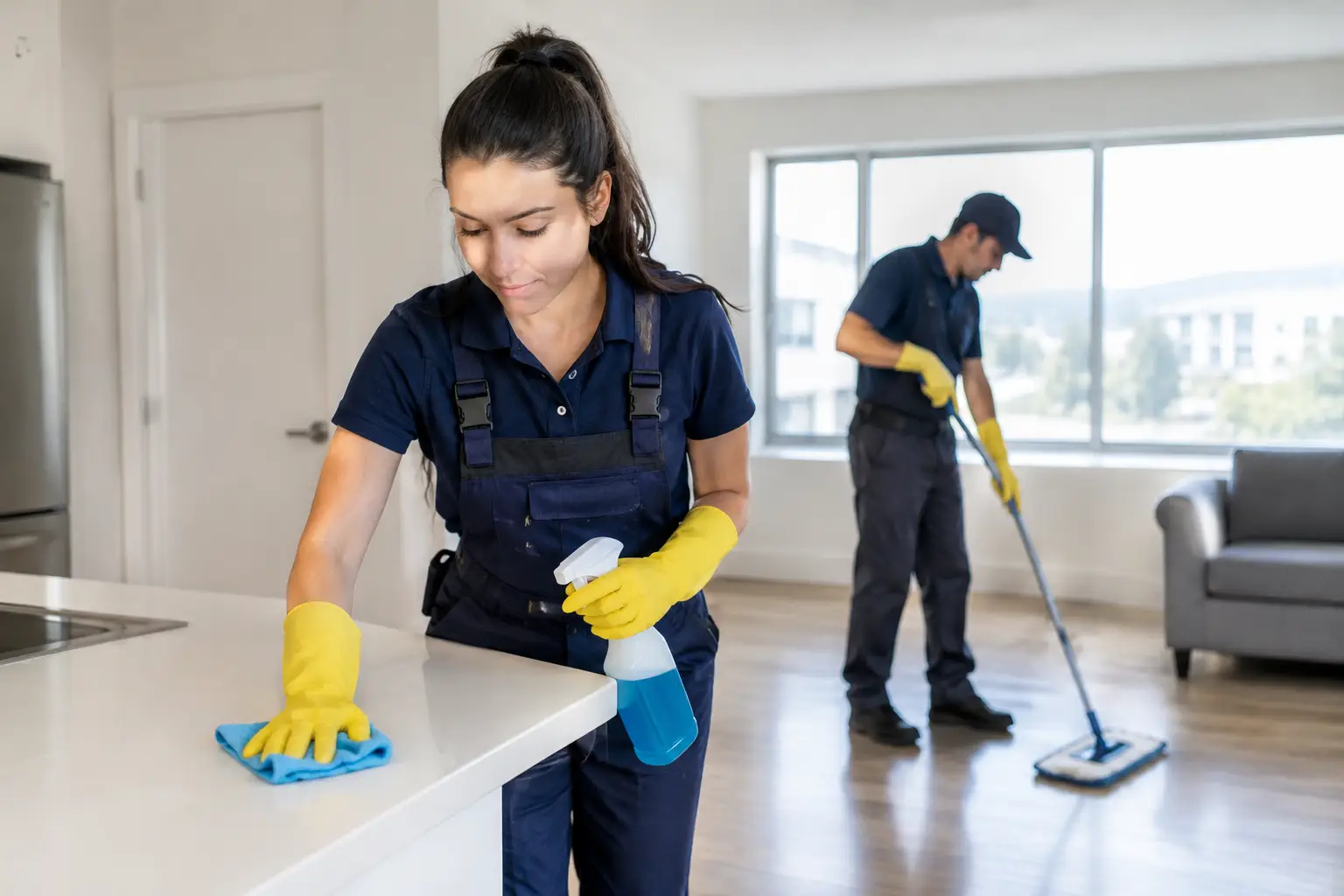

A vacant unit is not simply an empty address. It is lost rental income, a leasing deadline, and a direct reflection of how well a property is managed. The best cleaning plan for rentals treats cleaning as a controlled turnover process, not a last-minute task assigned after keys are returned. For property managers and multi-unit owners, the goal is a unit that is clean, documented, safe, and ready for the next resident without unnecessary delays.
A reliable plan also prevents a common turnover problem: cleaning a unit before maintenance, flooring, or water-damage issues have been fully addressed. When trades are scheduled in the wrong order, crews may need to clean the same apartment twice, and the turnover timeline starts slipping. A better process coordinates every step around the condition of the unit and the move-in date.
Start the Best Cleaning Plan for Rentals Before Move-Out
The most efficient turnover clean begins before the resident leaves. Confirm the move-out date, send clear expectations for the condition of the unit, and schedule a preliminary inspection when appropriate. This gives the property team time to identify likely repair needs, such as damaged flooring, leaks beneath sinks, wall repairs, appliance issues, or heavy carpet staining.
The preliminary inspection is not a substitute for the final walkthrough. It is a planning tool. It helps determine whether cleaning can be scheduled immediately after move-out or whether the unit needs maintenance, restoration, or remodeling work first.
For larger portfolios, use one standard inspection form across every unit. Document room-by-room conditions with notes and photos, especially in kitchens, bathrooms, utility areas, and around windows. Consistent documentation protects the owner, supports deposit decisions where applicable, and gives every vendor a clear scope of work.
Separate normal cleaning from restoration work
Not every dirty unit needs the same response. Standard turnover cleaning may cover dust, residue, kitchen grease, bathroom buildup, interior cabinets, appliances, and hard-surface floors. A unit with mold concerns, active moisture, pet odors embedded in flooring, sewage backup, or smoke damage requires a different scope and qualified response.
This distinction matters because surface cleaning cannot solve a moisture problem below the flooring or inside a wall cavity. Sending a cleaning crew into a unit with unresolved water damage can create repeat work and may expose the property to larger repair costs. When the cause of damage is still active, stop and address that condition first.
Build the Turnover Sequence Around Trade Order
The order of work is what makes a cleaning plan operationally useful. Cleaning should be the final major step before quality control, but it should not be the only step managed. A practical sequence reduces rework and helps leasing teams receive accurate readiness dates.
Begin with the final move-out inspection and condition documentation. Next, complete urgent repairs, water-damage assessment, pest treatment if needed, drywall work, painting, and flooring repairs or replacement. Once dust-producing work is complete, schedule the detailed cleaning. Finish with a final inspection, touch-up items, and move-in readiness confirmation.
There are exceptions. If a unit is heavily soiled, an initial debris removal or rough clean may be necessary before contractors can safely assess and perform repairs. But the detailed clean, including floors, fixtures, appliances, cabinets, and glass, should happen after construction-related work is finished.
For occupied common areas or commercial spaces, the sequence may need to be phased rather than completed all at once. The right plan depends on resident access, operating hours, safety requirements, and the scope of repairs. The principle remains the same: coordinate work so each service completes its portion once, correctly, and without disrupting the next crew.
Define What a Rent-Ready Clean Includes
Vague scopes create avoidable disputes. “Clean the unit” means different things to different vendors, maintenance teams, and owners. A rent-ready cleaning scope should clearly state what is included, what is excluded, and what triggers an additional service request.
A strong standard scope generally addresses the kitchen, bathrooms, living areas, bedrooms, closets, entry points, appliances, cabinets, baseboards, light fixtures, switches, windowsills, and flooring. It should also include removal of loose debris and attention to odor sources that can be reasonably resolved through cleaning.
The unit should not only look clean from the doorway. Inspect high-touch and high-visibility details: inside the refrigerator, oven and range hood, cabinet interiors, shower tracks, toilet bases, vanity drawers, ceiling fan blades, vents, and behind doors. These areas often determine whether a prospective resident feels the property has been properly cared for.
Set clear standards for flooring and odor
Flooring deserves its own decision point. Vacuuming and mopping may be sufficient for a lightly used unit with well-maintained surfaces. Carpet with visible staining, persistent odor, pet contamination, or heavy traffic may need professional extraction, repair, or replacement. Attempting to clean beyond the material’s recoverable condition can delay leasing while still delivering a poor result.
Odor should be treated as a cause-and-source issue, not a fragrance issue. Air fresheners can temporarily mask odors, but they do not correct pet contamination, smoke residue, standing water, or food waste in hidden areas. Identify the source, remove or treat affected materials, then clean the unit thoroughly. This approach protects the resident experience and prevents complaints shortly after move-in.
Use Checklists for Accountability, Not Just Compliance
A turnover checklist works best when it assigns responsibility and records completion. Each item should have an owner, whether that is the cleaning team, maintenance staff, a flooring contractor, or the property manager. It should also have a status: complete, pending, or requires follow-up.
For multi-unit properties, a digital checklist with photos can create an accurate record without slowing down the team. Photos should verify completed work, not merely document problems. A clean oven, an empty cabinet, a repaired baseboard, and a finished floor are easier to confirm when the final condition is recorded.
The final quality-control walkthrough should happen before the unit is released for showings or move-in. This is where a manager checks that cleaning details, repairs, safety items, keys, access devices, and appliances are all ready. A unit can be technically clean but still not rent-ready if the smoke detector is missing, the refrigerator is not operational, or a plumbing leak remains unresolved.
Protect Vacancy Days With the Right Vendor Structure
Turnover speed often depends less on how fast one crew works and more on how well all vendors communicate. Property teams lose time when a cleaner arrives before flooring is complete, a painter is waiting on a repair approval, or a maintenance issue is discovered only after final cleaning.
Using a single accountable partner for cleaning, maintenance, flooring, restoration, and remodeling can simplify scheduling and reduce handoffs. That does not mean every unit needs extensive work. It means the property manager has one point of contact who can identify what the unit needs, coordinate qualified crews, and keep the scope moving toward a confirmed ready date.
For Southern California portfolios, this is particularly valuable when an unexpected leak or water intrusion interrupts a scheduled turnover. A 24/7 emergency response can limit damage, while coordinated cleaning and repairs help the unit return to service without unnecessary vendor juggling. V&S Management Services Inc. supports this type of integrated property work as a licensed, bonded, and insured general contractor with experienced turnover, restoration, flooring, and maintenance teams.
Review Results and Adjust the Plan
The best plans improve over time. Track how long each turnover takes from move-out to rent-ready status, along with the most frequent causes of delay. If appliance cleaning regularly reveals damaged seals, if carpet cleaning repeatedly fails in certain units, or if leaks are discovered late, those patterns should shape future inspections and budgets.
Avoid measuring success only by how quickly a unit is marked complete. A rushed clean that leads to a resident complaint, a failed inspection, or a second crew visit is not efficient. The better measure is whether the unit is truly ready on the first release to leasing.
A dependable rental cleaning plan gives every team member the same finish line: a clean, safe, well-documented unit that reflects the value of the property. When cleaning is scheduled in the right order and backed by accountable quality control, vacancy days become easier to manage and move-in day becomes far more predictable.