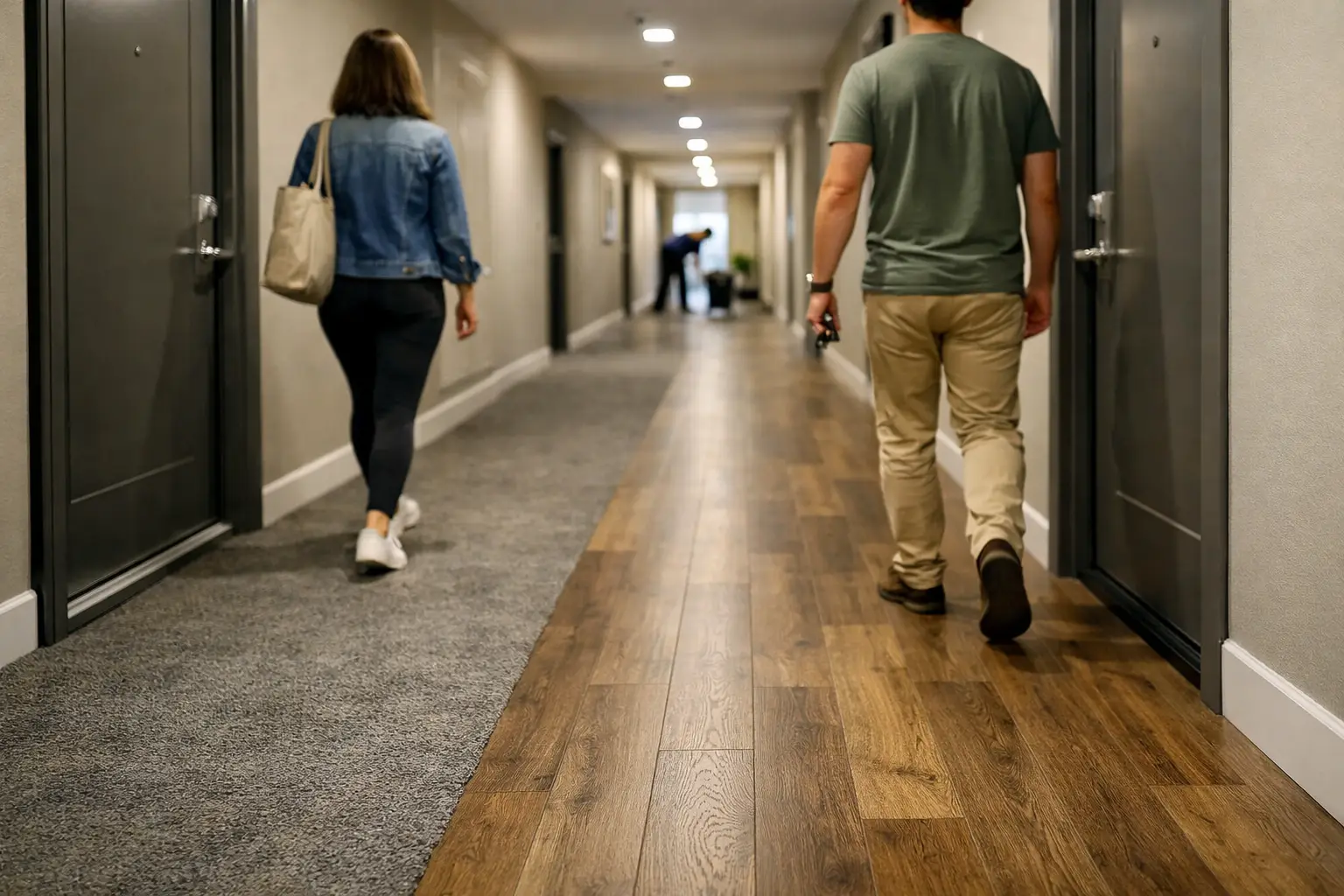
A hallway floor can look acceptable at turnover and still become a liability six months later. It takes the concentrated traffic of every resident, delivery driver, maintenance cart, pet, and moving day - often with far less square footage to distribute the wear. For property professionals, choosing the best flooring for apartment hallways is less about a showroom sample and more about protecting operations, safety, and long-term asset value.
The right choice depends on whether the corridor is enclosed or open-air, climate-controlled or exposed to rain, and served by elevators, stairwells, or exterior entries. It must also fit the building’s maintenance plan and applicable code requirements. A floor that performs well inside a quiet garden-style property may be the wrong material for a high-traffic, mid-rise corridor.
What the Best Flooring for Apartment Hallways Must Handle
Apartment hallways experience a unique mix of abuse. Dirt and grit act like sandpaper under foot traffic. Wet umbrellas, leaking trash bags, pet accidents, and occasional plumbing events test moisture resistance. Carts, furniture, and hand trucks can gouge a surface that seemed durable under ordinary foot traffic.
For most multifamily properties, the strongest flooring decision balances five practical requirements: wear resistance, cleanability, slip resistance, acoustic performance, and repairability. Appearance matters, especially in buildings where common areas influence leasing and resident retention, but appearance should follow performance rather than replace it.
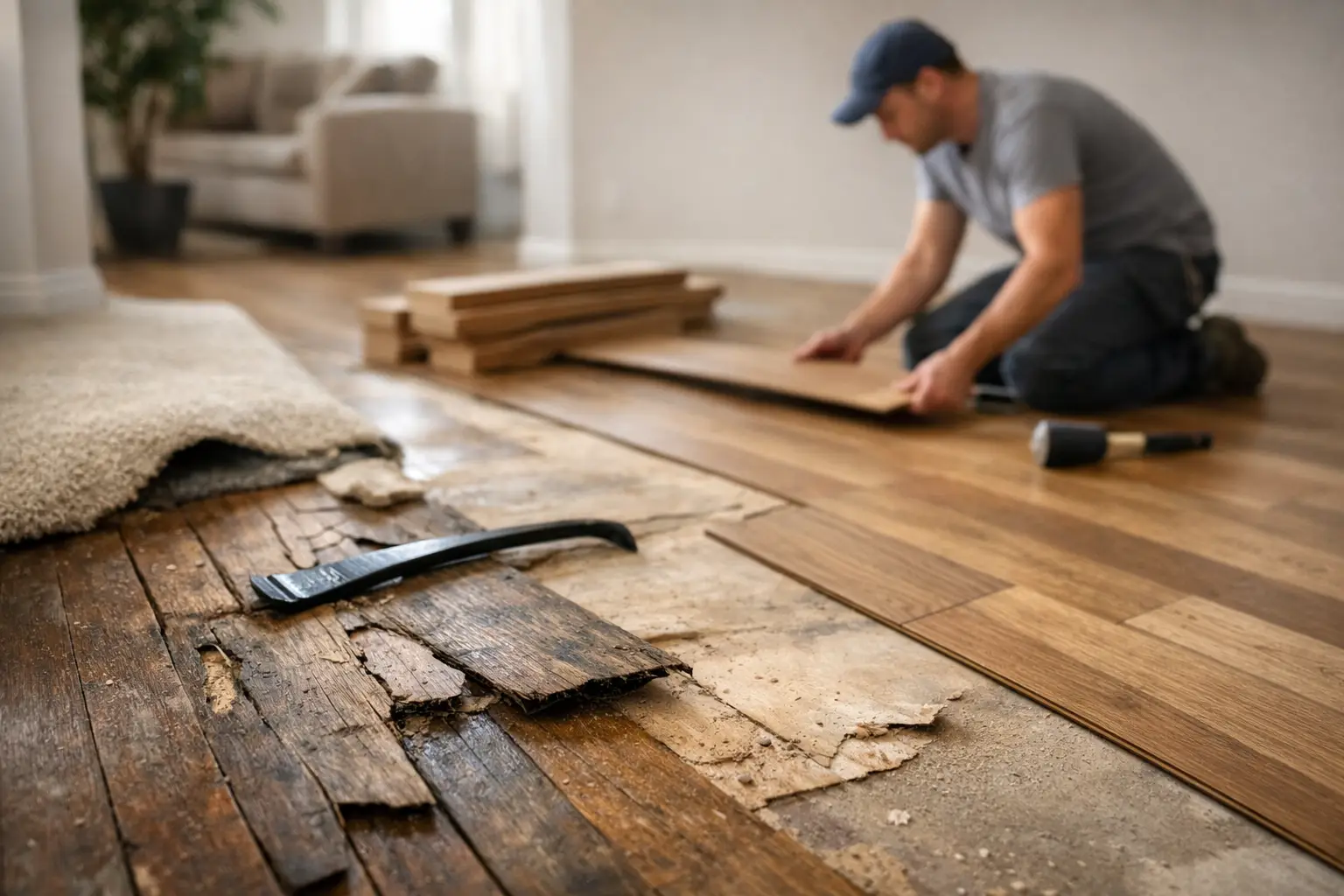
Property managers should also consider how a material behaves during partial repairs. Hallway damage is rarely uniform. If a section near an entry gets stained or damaged, can the affected area be replaced without shutting down an entire corridor or creating an obvious patch? That question can matter as much as the original installation.
Start with the corridor environment
An interior, conditioned hallway has different needs than an exterior breezeway. In enclosed corridors, comfort underfoot, sound control, and a finished appearance may carry more weight. In open-air hallways throughout Southern California, UV exposure, windblown debris, moisture, and temperature changes place greater demands on the material and installation system.
The subfloor matters, too. Concrete slabs can hold moisture, develop cracks, or have uneven areas that telegraph through certain resilient floors. Wood-framed buildings may require underlayment and sound-control measures. A professional site assessment before material selection prevents a common mistake: specifying a good product for the wrong substrate.
Luxury Vinyl Plank Is Often the Best Overall Choice
For many interior apartment hallways, commercial-grade luxury vinyl plank, or LVP, offers the most balanced solution. It provides a clean, updated look while resisting everyday scuffs and spills better than many traditional finishes. Quality commercial products are available in wood and stone visuals that can coordinate with unit interiors without requiring the maintenance of natural materials.
LVP is especially practical for buildings that need quick, controlled repairs. When installed correctly, damaged planks can often be addressed in a limited area rather than forcing a full corridor replacement. Its relatively quiet feel underfoot can also improve the resident experience compared with hard ceramic tile.
That said, not all vinyl plank is suitable for a common corridor. Residential-grade material may show wear early under dense traffic, while weak locking systems can separate when exposed to movement or moisture. A hallway specification should focus on commercial-grade wear layers, stable backing, approved adhesive or installation method, and carefully selected transitions at doorways and stair landings.
LVP is generally a better fit for enclosed hallways than for exterior walkways with constant sun and rain. It is moisture resistant, but that does not mean every product and installation method is designed for standing water, UV exposure, or open-air conditions.
Carpet Tile Brings Acoustic and Operational Advantages
Carpet tile remains a smart option for enclosed apartment corridors, particularly in properties where noise control and a softer, more residential feel are priorities. It absorbs footfall noise, reduces the sharp sound of carts and rolling luggage, and can make a long corridor feel more inviting.
Its operational advantage is straightforward: individual tiles can be replaced when staining or damage occurs. This can be valuable in a property with frequent turns, pets, or heavy resident traffic. Patterned commercial carpet tile also hides minor soiling more effectively than light, solid broadloom carpet.
The trade-off is maintenance discipline. Carpet tile needs regular vacuuming and scheduled extraction cleaning to prevent embedded dirt from shortening its life. It is not the right choice for open-air corridors, areas with recurring water intrusion, or buildings without a realistic common-area cleaning plan. If odors, moisture, or persistent staining are known concerns, resilient flooring may be the more dependable path.
Porcelain Tile Performs in Wet and Exterior Conditions
For exterior corridors, breezeways, entry-adjacent hallways, and locations exposed to recurring moisture, porcelain tile can be a strong long-term performer. It resists water, handles temperature changes well when properly specified, and stands up to intense foot traffic. Its hard surface also makes routine cleaning straightforward.
However, tile is not automatically the safest or simplest choice. The selected finish must provide appropriate slip resistance when wet, particularly near entrances, pool-adjacent areas, and stair transitions. Grout selection and installation quality matter because stained, cracked, or poorly maintained grout can undermine an otherwise durable floor.
Tile is also harder underfoot and can increase sound transmission in interior corridors. Repairs may require more labor and visual matching can be difficult if a style is discontinued. For those reasons, porcelain is often most effective where water exposure and exterior durability outweigh acoustic comfort.
Sheet Vinyl and Resinous Systems Have Specific Roles
Commercial sheet vinyl can work well in service corridors, utility-adjacent areas, and certain budget-conscious common areas where a continuous, easy-to-clean surface is needed. Fewer seams can be beneficial where moisture is a concern. The limitation is repairability: a localized gouge or tear may require a more noticeable repair than replacing a single plank or carpet tile.
Resinous flooring systems, such as epoxy-based coatings, may suit parking-adjacent walkways, back-of-house corridors, or industrial-style common areas. They can be highly durable and cleanable, but surface preparation is critical. They also need a texture or finish appropriate for slip resistance. These systems are not usually the first choice for a residential-style enclosed hallway unless the property’s design and operating needs support them.
Do Not Select Material Before Addressing Moisture and Safety
A new floor cannot solve an unresolved water problem. Before installation, inspect for slab moisture, roof or plumbing leaks, failed exterior drainage, and conditions that allow water to sit near entries. Installing new material over a damp slab or active leak can lead to adhesive failure, cupping, mold concerns, and repeat disruptions for residents.
Safety deserves the same attention. Hallway flooring should support stable walking conditions, especially where residents may track in water during rain. Entry mats, properly designed transitions, visible changes in elevation, and suitable slip resistance all work together. A beautiful finish that becomes slick when wet is not a successful common-area upgrade.
For HOA boards and managers, it is also wise to confirm applicable building, accessibility, and fire-safety requirements before finalizing the specification. Corridor projects can involve more than flooring alone, particularly when threshold heights, egress paths, or existing building conditions are involved.
Choose for Turnover Speed and Lifecycle Value
The best hallway material is one your operations team can maintain and repair without creating ongoing disruption. Consider how quickly the floor can be installed, whether residents can safely access units during work, and how easily the material can be sourced again for future repairs. Keeping attic stock from the original run can save significant time when a damaged area needs attention later.
A narrow corridor may require phased work, dust control, clear resident communication, and careful scheduling around move-ins and move-outs. These details are not extras. They are what keep a common-area flooring project from becoming a resident-relations problem.
For many enclosed multifamily corridors, commercial-grade LVP is the best all-around answer. Carpet tile is often the better choice where acoustics and replaceable sections are the priority. Porcelain tile earns its place in exterior or wet-prone areas. The material should follow the building’s actual exposure, traffic, maintenance capacity, and repair expectations.
At V&S Management Services Inc., our approach is to evaluate the full corridor condition before recommending an installation path, from substrate readiness and moisture concerns to phased scheduling and long-term maintenance needs. A hallway floor should do more than look refreshed on opening day. It should help your property remain safer, cleaner, and easier to operate through the next cycle of residents and repairs.