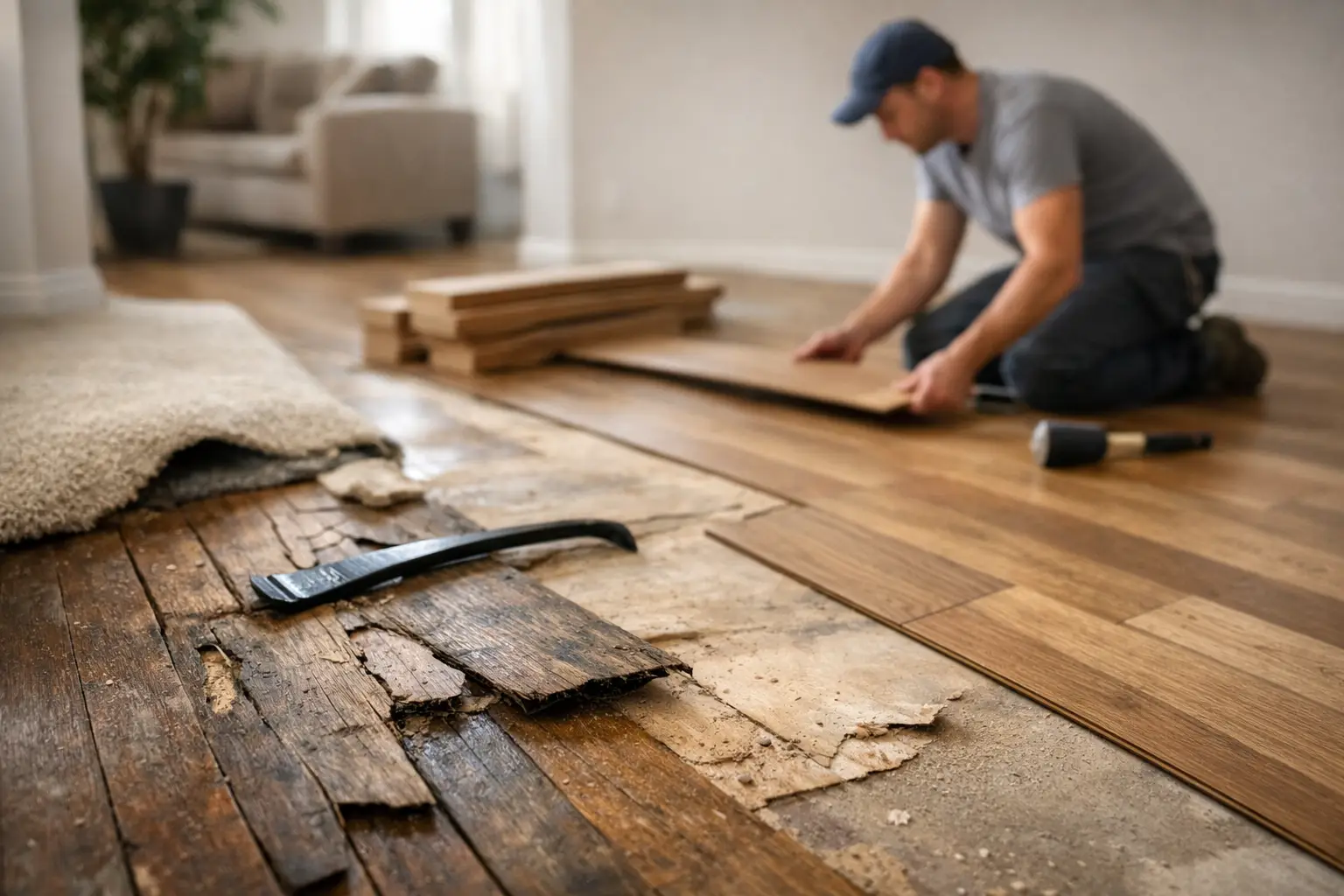
A floor choice can quietly affect everything in an office - tenant impressions, cleaning schedules, noise levels, repair frequency, and how often a space needs to be taken offline for updates. When property teams ask about the best flooring for commercial offices, they are usually balancing more than appearance. They are trying to protect asset value, support daily operations, and avoid materials that create preventable maintenance issues six months later.
That is why there is no single answer for every office. A law firm with private offices, a medical admin suite with constant foot traffic, and a creative workspace with open collaboration areas will not perform well with the exact same flooring plan. The right decision comes from matching the material to traffic patterns, subfloor conditions, cleaning demands, moisture risk, and the speed of the installation schedule.
What matters most when choosing the best flooring for commercial offices
For commercial properties, durability is only the starting point. A floor may look strong on paper but still fail if it shows wear too quickly at entry points, traps dirt in high-use corridors, or amplifies sound in open-plan work areas.
Maintenance is often the deciding factor. Property managers and facility teams need flooring that can be cleaned consistently without specialized care routines that slow down janitorial work. If a product requires more labor than the site can support, its long-term value drops quickly.
Acoustics also deserve more attention than they usually get. Hard surfaces can create a louder office, which affects comfort and concentration. In tenant-facing environments, sound control can influence how professional the space feels. That is one reason many office flooring plans work better with a mix of materials rather than one product across the entire suite.
Then there is downtime. In active office properties, installation speed and phased replacement matter. Flooring that allows targeted repairs or section-by-section installation can reduce disruption and help keep turnovers moving on schedule.
Best flooring for commercial offices by material type
Carpet tile
Carpet tile remains one of the strongest choices for many office interiors, especially in private offices, conference rooms, and open work areas where sound reduction matters. It softens foot traffic noise, creates a more comfortable underfoot feel, and can make larger office suites feel less echo-prone.
Its biggest practical advantage is selective replacement. If one area gets stained or damaged, crews can swap out individual tiles instead of replacing the whole floor. For property managers, that can make a major difference in ongoing maintenance planning.
The trade-off is that carpet tile is not ideal everywhere. Entry vestibules, break rooms, and copier areas often collect moisture and debris that shorten carpet life. It also needs consistent cleaning to maintain appearance in high-traffic settings.
Luxury vinyl tile and luxury vinyl plank
Luxury vinyl has become a leading option for office properties because it handles wear well, cleans easily, and offers a polished appearance without the maintenance demands of some harder surfaces. In administrative offices, corridors, reception areas, and mixed-use suites, it often gives property teams a strong balance of function and presentation.
It performs especially well where spills, tracked-in dirt, and frequent cleaning are part of the daily reality. It is also useful when a property needs a contemporary look that can hold up during repeated tenant cycles.
Still, product quality and installation quality matter. A lower-grade material or poorly prepared subfloor can lead to premature edge issues, telegraphing, or uneven wear. In busy commercial settings, that is not a small detail. The floor may look finished on day one and still create avoidable callbacks later.
Sheet vinyl
Sheet vinyl is sometimes overlooked in office conversations, but it can be a smart choice for back-office functions, medical administrative areas, and spaces where moisture resistance and easy sanitation are priorities. Because it has fewer seams, it can be easier to keep clean and can perform well in support areas that need practical durability over design flexibility.
Its limitation is aesthetic versatility. It may not deliver the same upscale visual effect as other materials in front-of-house office environments. For that reason, it often works best in combination with more design-forward products in public-facing zones.
Polished concrete
Polished concrete can be a strong fit for modern office environments, especially creative spaces, converted industrial buildings, and high-traffic common areas. It is durable, straightforward to clean, and capable of handling heavy use without frequent material replacement.
But it is not always the most forgiving office floor. It can be louder underfoot, harder on staff who stand for long periods, and less welcoming in spaces where warmth and acoustic comfort matter. It also requires that the slab condition be suitable. If the underlying concrete has moisture or finish issues, that must be addressed before the floor can truly perform.
Ceramic or porcelain tile
Tile is usually better reserved for limited office areas rather than the full workplace. Lobbies, restrooms, break rooms, and certain common areas benefit from its moisture resistance and long life. In those settings, it can be an excellent support material within a broader flooring plan.
Across large office workspaces, though, tile often creates a harder, louder environment than many tenants prefer. Grout maintenance is another factor. It is durable, but not always the most office-friendly solution where comfort and acoustics are priorities.
How to match office flooring to the actual use of the space
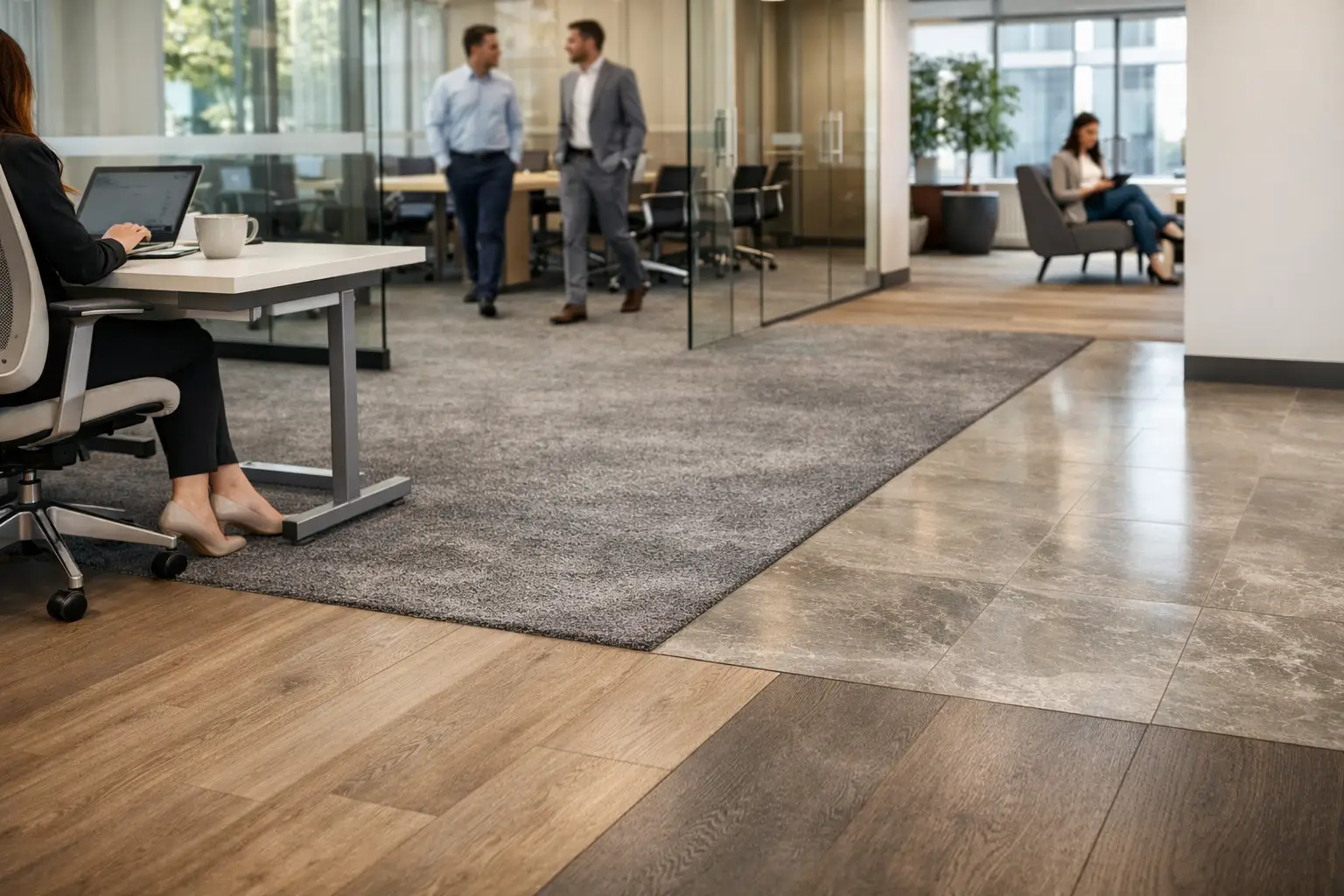
The best results usually come from zoning the office instead of forcing one material everywhere. Reception areas need a strong first impression and resistance to tracked-in dirt. Hallways need durability. Private offices may benefit from quieter, softer surfaces. Break rooms and copy rooms need easier cleanup and better moisture resistance.
That is why mixed-material plans are often the most effective. Carpet tile in work zones and conference rooms, paired with luxury vinyl or tile in entry points and service areas, can create better performance across the whole suite. It is a more strategic approach than choosing one product based only on appearance.
For multi-tenant buildings, this matters even more during turnovers. Flooring should support faster re-leasing, easier touch-ups, and fewer disruptions between occupants. A floor that photographs well but complicates maintenance is usually not the best commercial decision.
Common mistakes that lead to flooring problems
One of the biggest mistakes is choosing flooring based on showroom appearance rather than building conditions. Moisture issues, uneven subfloors, and heavy sun exposure can all affect performance. If those factors are ignored, even a well-regarded product can fail early.
Another mistake is underestimating traffic. A material that works in a low-use executive suite may not hold up in a high-density office with visitors, rolling chairs, deliveries, and constant daily movement. Matching the wear layer and installation system to real traffic is critical.
Maintenance assumptions can also create problems. Some office owners choose flooring that looks low-maintenance but actually shows soil quickly or requires more frequent attention to stay presentable. In commercial settings, appearance retention matters almost as much as physical durability.
Finally, rushed installation planning can erase the value of a good product. Commercial flooring is only as reliable as the prep work under it. Proper surface preparation, moisture testing, and phased scheduling are what help protect the finished result.
A practical answer to the best flooring for commercial offices
If an office needs the safest all-around recommendation, luxury vinyl and carpet tile are usually the strongest contenders. Luxury vinyl works well where durability, easy cleaning, and a polished look are priorities. Carpet tile works well where acoustics, comfort, and selective replacement matter more.
In many properties, the best flooring for commercial offices is not one material but a coordinated combination. That gives building owners and property managers more control over maintenance, tenant satisfaction, and lifecycle performance.
For Southern California offices, that strategy can be especially useful because buildings often deal with heavy foot traffic, varied suite layouts, fast turnover expectations, and the need to keep spaces operational during improvement work. Experienced contractors such as V&S Management Services Inc. typically evaluate the office as a working asset first, then recommend flooring based on how the space actually functions, not just how it looks in a sample book.
A well-chosen office floor should make operations easier, not harder. If the material supports your maintenance team, holds up through tenant use, and keeps the space looking professional without constant intervention, it is doing its job long after installation day.