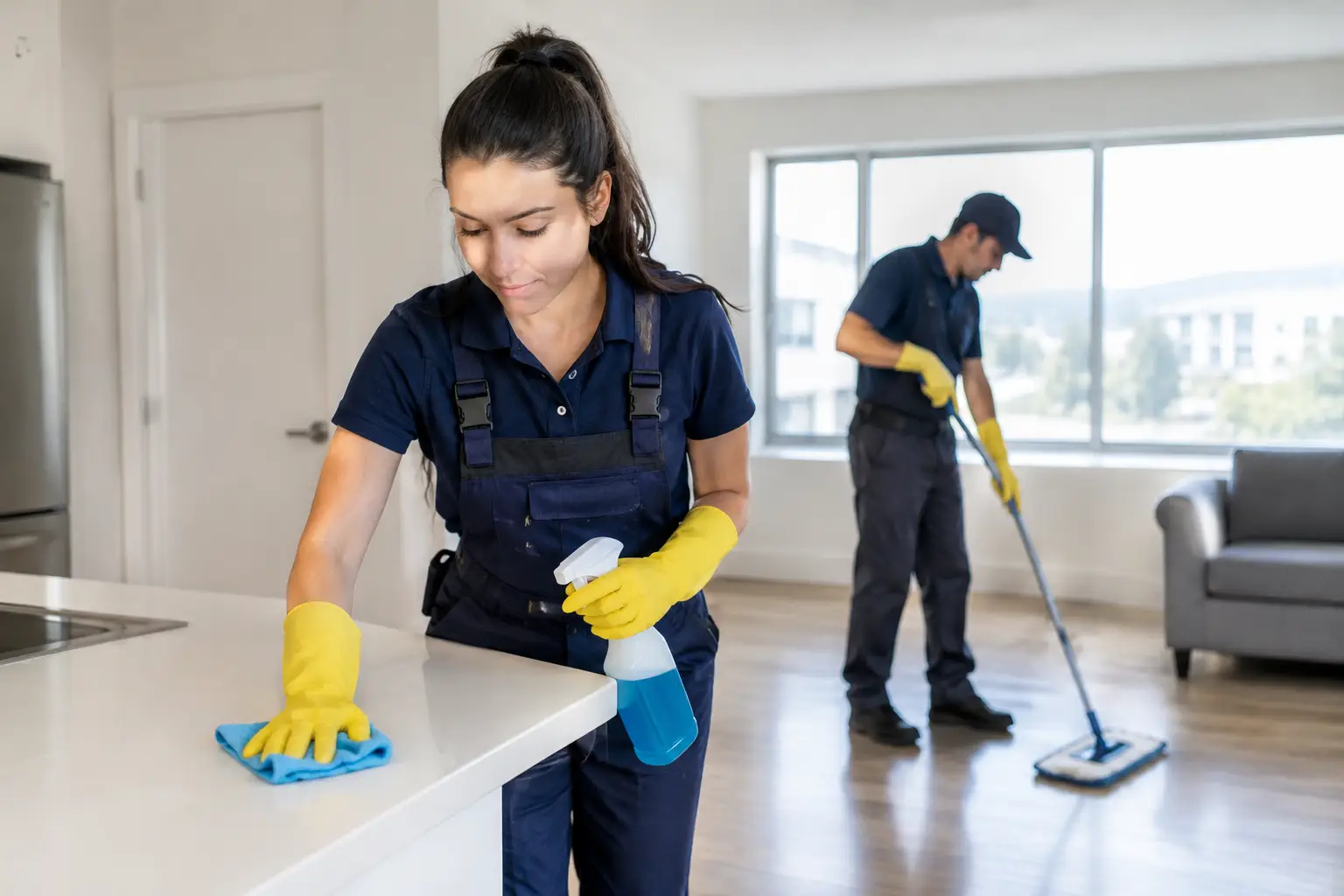
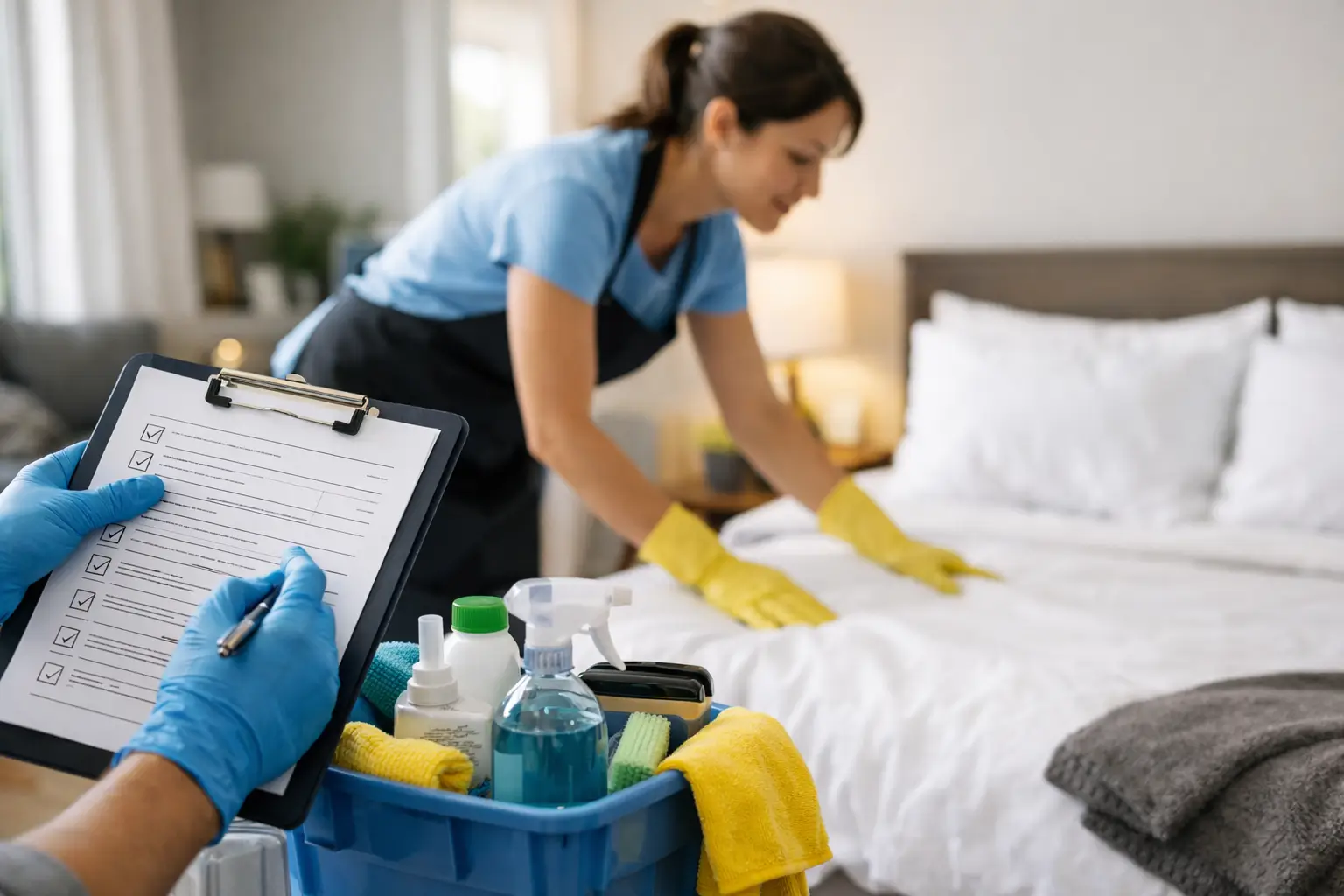
Every extra day a unit sits dirty is a day of lost revenue, delayed leasing, and unnecessary friction between teams. The best turnover cleaning checklist is not just a housekeeping tool. For property managers, realtors, and multi-unit owners, it is an operations tool that helps move units from move-out to rent-ready with fewer callbacks, faster inspections, and better asset protection.
A weak turnover process usually shows up in predictable ways. Dust gets missed on ledges and vents, kitchens look clean until cabinet interiors are opened, bathroom buildup reappears under bright light, and flooring issues are discovered after the cleaning crew has already left. Then maintenance, cleaning, and leasing start stepping on each other. That is where a structured checklist earns its value.
What the best turnover cleaning checklist should actually do
The best turnover cleaning checklist should do more than tell a crew to wipe, mop, and vacuum. It should create a repeatable standard across properties, unit types, and teams. It should also clarify handoff points between cleaning, maintenance, painting, flooring, and final inspection.
For multifamily and commercial residential portfolios, the right checklist has three jobs. First, it protects speed by making sure crews follow the same sequence every time. Second, it protects quality by reducing missed items that trigger rework. Third, it protects accountability by showing exactly what was included before a unit is released for leasing or sale.
That is especially important in Southern California, where vacancy pressure, labor coordination, and resident expectations can all move fast. A rushed turn may look acceptable on the surface, but if odor, residue, or overlooked damage remains, it costs more later.
Start with the turnover condition, not the cleaning cart
Not every turn needs the same level of cleaning. That sounds obvious, but it is one of the biggest reasons schedules fall apart. A lightly used condo turnover is different from a heavily worn apartment with pet odor, grease buildup, and deferred maintenance.
Before cleaning begins, the unit should be classified. Standard turns may need detailed cleaning and touch-up support. Heavy turns may need trash-out, stain treatment, odor control, flooring replacement, wall repair, or water damage review before the cleaning crew can even do meaningful work. If the condition is misjudged at the start, the checklist becomes unrealistic.
This is where experienced property service partners save time. A trusted general contractor or turnover provider can identify what needs to happen first, what can happen in parallel, and what should wait until after repairs are complete.
Best turnover cleaning checklist by area
Entry, walls, and common interior surfaces
First impressions matter, especially when a prospect walks in within minutes of a completed turn. Entry doors should be wiped on both sides, including handles, frames, thresholds, and visible scuffs. Light switches, outlet covers, thermostats, door jambs, baseboards, and window sills need detailed attention because these are the areas most often skipped and most often noticed.
Walls do not always require full washing, but spot cleaning should be part of every turnover. Cobwebs should be removed from corners, ceiling lines, and behind doors. Interior windows, tracks, blinds, and mirrors should be cleaned so the space feels bright rather than simply empty.
Kitchen cleaning standards
The kitchen is where turnover quality is tested. Countertops and backsplashes should be degreased, not just wiped down. Cabinet fronts, pulls, hinges, shelves, and drawer interiors should be cleaned thoroughly. If crumbs, liners, or sticky residue remain inside cabinets, the unit will not feel move-in ready.
Sinks, faucets, and drains should be cleaned and polished. Appliances need full interior and exterior cleaning, including stovetops, oven interiors, drip pans, range hoods, microwave interiors, refrigerator shelves, bins, gaskets, and the area behind or beneath units if accessible. Grease buildup around cooking surfaces and dust on appliance vents are common inspection failures.
If the turnover includes older appliances, the checklist should account for realistic restoration limits. Some staining is permanent. The key is knowing whether the appliance is clean, functional, and acceptable for leasing, or whether replacement is the smarter decision.
Bathroom cleaning standards
Bathrooms reveal whether a turnover was done professionally or rushed. Toilets, tubs, showers, sinks, vanities, mirrors, and fixtures should be sanitized and polished. Soap scum, mildew, hard water staining, and hair in corners are small misses that create a big negative impression.
Crews should clean behind the toilet base, around plumbing penetrations, inside vanity drawers, medicine cabinets, and exhaust fan covers. Grout condition should also be reviewed. Cleaning can improve appearance, but damaged caulking, broken tile, or persistent moisture staining should trigger a maintenance item, not a second cleaning appointment.
Bedroom and living area details
Bedrooms and living spaces often seem simple, but they carry plenty of turnover risk. Closet shelves, rods, tracks, mirrored doors, and corners should be detailed. Ceiling fans, vent covers, smoke detector exteriors, and blinds should all be dust-free.
Carpeted units may need more than vacuuming. Spot treatment, odor treatment, or full replacement may be necessary depending on wear. Hard flooring should be swept, detailed at edges, and cleaned with the right product for the material. The checklist should not assume one flooring method fits every unit.
Utility and overlooked areas
The best turnover cleaning checklist includes the places residents do not notice until they are dirty. Laundry hookups, water heater closets, utility shelves, return air vents, and exterior-facing thresholds all matter. Trash should be removed completely, including patio debris, leftover items in storage spaces, and small forgotten items in cabinets or drawers.
If the property includes balconies or private exterior spaces, those areas should be swept and checked for stains, cobwebs, and abandoned belongings. For managed communities, curb appeal does not stop at the front door.
The right order of operations matters
A checklist is only useful if the workflow makes sense. Cleaning should usually follow trash-out, maintenance rough work, painting, and major flooring or construction activity. Final detail cleaning should come after dusty trades are finished.
This sounds basic, but many turnover delays happen because vendors are not coordinated. A unit gets cleaned, then a plumber opens the vanity, a painter sands patchwork, or flooring crews track debris through the kitchen. The result is duplicated effort and a unit that still fails final inspection.
That is why many portfolio operators prefer a single-source partner. When cleaning, flooring, maintenance, and remodeling are coordinated under one accountable team, vacancy days are easier to control. V&S Management Services Inc. has built its reputation around that exact operational need across Southern California.
What to add for heavy-turn or high-risk units
Some units need more than a standard checklist. Pet odor, smoking residue, pest-related contamination, biohazard concerns, hoarding conditions, and water damage all require adjusted protocols. In those cases, cleaning alone is not the fix.
Odor issues may require sealing, material removal, or HVAC attention. Water-damaged areas may need moisture assessment and restoration before surfaces can be safely cleaned and restored. Heavily impacted flooring may be beyond salvage. The trade-off is straightforward: trying to save money with surface-level cleaning can extend vacancy and create resident complaints after move-in.
For higher-end rentals or sale listings, the checklist may also need to include staging-level details such as glass perfection, appliance polishing, and presentation lighting checks. That level of finish is not necessary for every property, but for premium units, the standard should match the rent target.
How property managers can use the checklist without slowing down
The best checklist is short enough to use and detailed enough to matter. If it is too broad, crews interpret it differently. If it is too long, people pencil-whip it. The right balance is a room-by-room standard supported by photo documentation, a defined scope, and a final walk process.
It also helps to separate cleaning notes from repair notes. If a chipped countertop is written as a cleaning issue, the wrong team gets blamed and the unit stalls. Clean turns move faster when everyone knows what belongs to cleaning, what belongs to maintenance, and who signs off at the end.
For larger portfolios, consistency matters more than perfection on paper. A checklist should be trainable, inspectable, and realistic across dozens or hundreds of units. That is what keeps service quality stable when volume increases.
A clean unit should also be an inspection-ready unit
The strongest turnover cleaning process supports leasing, maintenance, and risk management at the same time. It helps prospects see value, helps managers catch damage early, and helps ownership protect the long-term condition of the asset.
If your current turnover cleaning checklist only asks whether the unit looks clean, it is probably too weak. The better question is whether the unit is truly ready for the next resident, the next showing, or the next inspection without another round of vendor coordination.
That is the standard worth aiming for. When cleaning is treated as part of a bigger turnover strategy, units move faster, teams communicate better, and the property performs the way it should.