A floor failure rarely starts with the finish. It starts when a turnover timeline gets compressed, moisture gets missed, the wrong material is specified, or installation is handed to a vendor who treats a commercial property like a spare bedroom. That is why commercial floor installation services matter far beyond appearance. For property managers, asset teams, and HOA decision-makers, the floor is part of daily operations, tenant retention, liability control, and long-term asset protection.
In commercial and multi-unit environments, flooring has to perform under pressure. It needs to hold up to foot traffic, cleaning chemicals, rolling loads, furniture movement, and changing occupancy. It also has to be installed on schedule, with clear communication, documented compliance, and minimal disruption to surrounding units or business activity. A clean-looking floor on day one is not enough if it starts failing six months later.
What commercial floor installation services should actually include
A dependable flooring partner does more than deliver materials and crews. The real value comes from planning the project around your property operations. That means evaluating the substrate, identifying moisture risks, confirming the right flooring type for the use case, and coordinating the work so you are not extending vacancy days or creating unnecessary downtime.
For commercial clients, installation should begin with field conditions, not product samples. Concrete condition, levelness, previous adhesive residue, cracks, and moisture content all affect performance. If those issues are ignored, even a premium floor system can fail early. The installation process has to address preparation first, because prep work is what determines how well the finished surface holds up.
Scheduling matters just as much. In an occupied property, flooring work often needs to be phased around tenant access, maintenance windows, leasing activity, or turnover deadlines. In a common area, timing can affect resident experience and safety. In a retail or office setting, every extra day of disruption has operational consequences. The contractor needs to understand that flooring is not an isolated task. It is part of a larger property management strategy.
Choosing the right floor for the space
Not every commercial floor should be selected for maximum durability alone. The best choice depends on how the property is used, how quickly the space needs to return to service, and what kind of maintenance burden your team can realistically support.
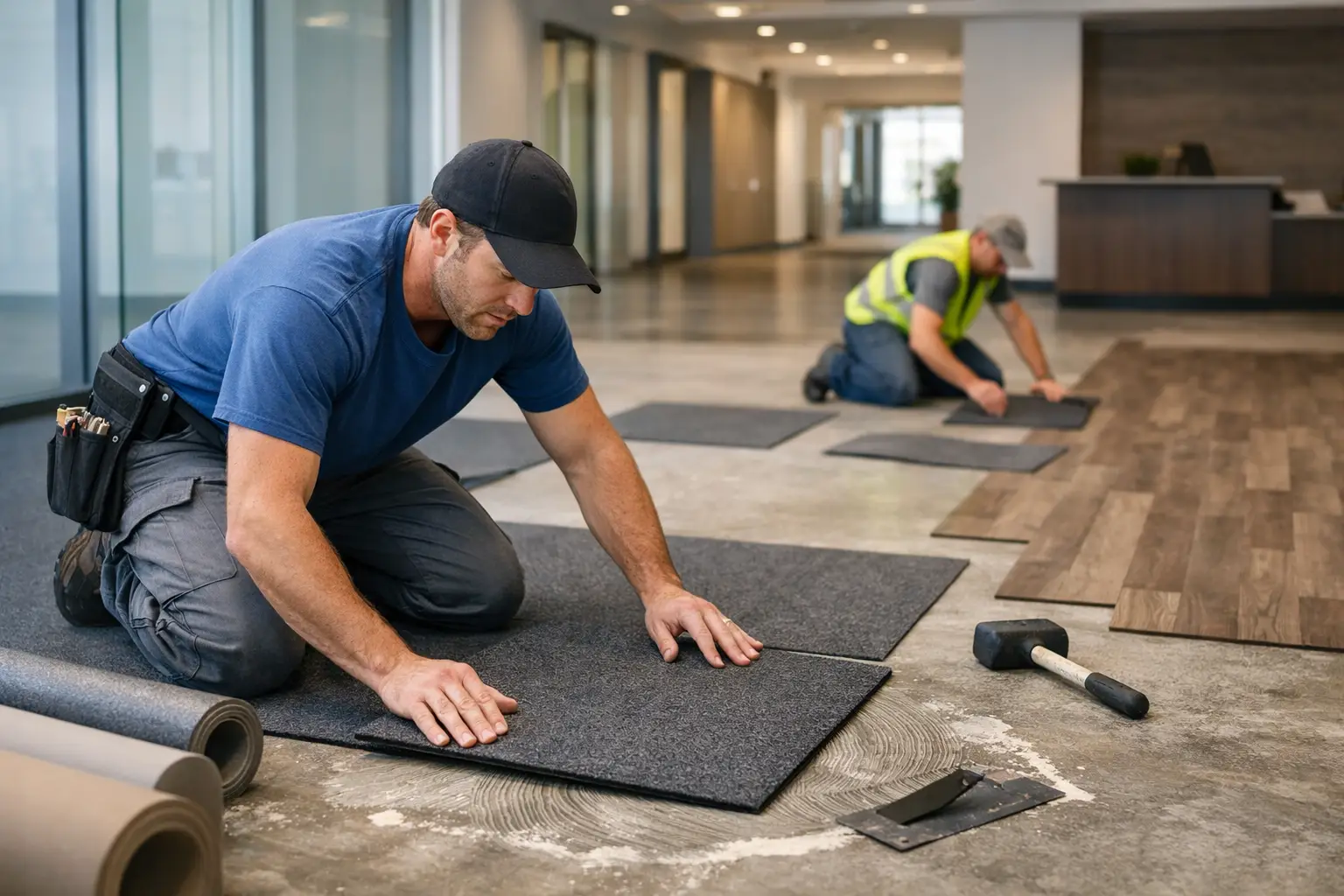
Luxury vinyl plank and tile are popular for a reason. They offer a clean, updated look, solid wear performance, and practical maintenance in offices, common areas, and multi-unit turnovers. Carpet tile may still make sense in certain professional settings where acoustics matter and replacement needs to be localized. Sheet vinyl can be useful where hygiene and moisture resistance are priorities. In some commercial settings, a hard surface may look right on paper but create noise or comfort issues once tenants move in.
This is where experience matters. A good recommendation accounts for traffic patterns, slip resistance, cleaning requirements, and the expected lifecycle of the space. A floor in a leasing office has different demands than a hallway, break room, retail suite, or apartment unit turnover. The right installer should be able to explain those trade-offs clearly rather than pushing a one-size-fits-all option.
Why subfloor preparation is where projects are won or lost
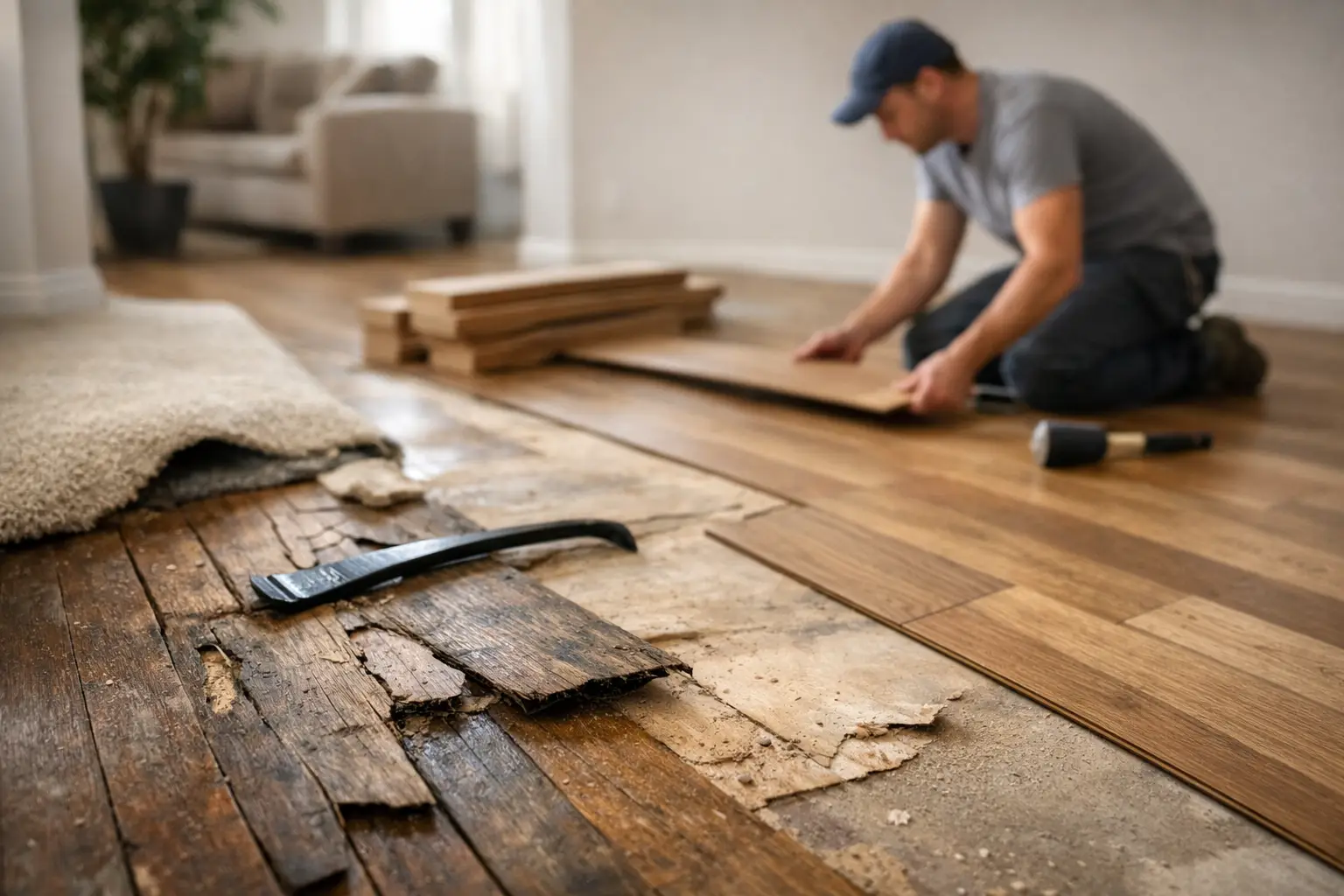
Property professionals often see the finished surface, but the subfloor tells the real story. Uneven surfaces, hidden moisture, leftover adhesive, and damaged concrete can all compromise adhesion, appearance, and longevity. If a contractor rushes through prep to save time, the problem usually returns as bubbling, cracking, lifting, or premature wear.
Commercial floor installation services should include a serious review of substrate conditions before material goes down. In some cases, that means moisture testing. In others, it means patching, leveling, grinding, or removing failed materials from a prior installation. None of that is glamorous, but it is the work that protects your schedule and your budget later.
This is especially relevant in Southern California properties where quick turnovers can tempt teams to move straight to finish work. If there has been a leak, flood event, or long-term moisture intrusion, flooring decisions should not happen in a vacuum. Coordination with water damage restoration and drying work can prevent repeated failures. When one contractor can assess those conditions in context, the process becomes more efficient and accountability becomes much clearer.
Commercial floor installation services and turnover speed
For property managers, speed matters, but speed without control creates rework. The goal is not simply to install faster. It is to complete the work correctly, with fewer handoff issues, fewer delays, and fewer callbacks.
That is why single-source coordination often makes a measurable difference. If the same trusted general contractor can handle flooring alongside turnover cleaning, restoration-related repairs, and broader unit-ready work, your team spends less time chasing updates across multiple vendors. That saves administrative time, reduces scheduling conflicts, and gives you one accountable point of contact when timelines tighten.
V&S Management Services Inc. has built its reputation around that kind of coordination. For busy portfolios, that approach is not just convenient. It helps reduce vacancy days and keeps projects moving when units or commercial spaces need to be returned to service quickly.
Compliance is not a detail
A commercial flooring project may look straightforward, but vendor compliance is a serious operational concern. Property managers and boards need contractors who are fully licensed, bonded, and insured, especially when work is happening in active buildings or as part of a larger capital improvement plan.
That matters for risk management, but it also matters for consistency. A compliant contractor is more likely to follow documented processes, maintain jobsite standards, and communicate clearly with management teams, tenants, and other trades. In commercial environments, professionalism shows up in the details - site protection, safety practices, scheduling discipline, cleanup standards, and accurate scope execution.
If a flooring vendor cannot operate at that level, the burden shifts back to your staff. That defeats the purpose of hiring outside support in the first place.
What property managers should ask before approving a flooring project
The best flooring conversations are operational, not cosmetic. Before moving ahead, it helps to clarify how the contractor will assess substrate conditions, what installation methods will be used, how long the area will be offline, and what protections will be in place for adjacent spaces.
You should also ask how the team handles unexpected conditions. If there is hidden moisture, damaged underlayment, or a change in scope after demo, does the contractor have the capacity to address it quickly? Or will the project stall while another vendor is brought in? The answer often determines whether your schedule holds or slips.
Communication is another practical filter. Commercial clients need updates that are concise, timely, and useful. If you manage multiple units or properties, you do not need vague progress notes. You need to know what was completed, what is next, and whether anything threatens the timeline.
When replacement makes more sense than repair
There are cases where spot repairs are appropriate, especially in localized damage situations. But in heavily used commercial spaces or repeated turnover environments, patching old flooring can become the more expensive choice over time. Mismatched materials, recurring edge failure, and inconsistent wear can all create a poor impression and add avoidable maintenance headaches.
Replacement makes more sense when the existing floor is no longer supporting the use of the space, when underlying conditions keep causing failure, or when your team is spending too much time managing repeat issues. The right contractor should be honest about that distinction. Not every floor needs to be torn out, but not every aging system is worth preserving either.
The long-term value of getting it right the first time
A good floor supports the property quietly. Tenants notice that the space feels clean, stable, and well maintained. Staff notice fewer complaints and easier upkeep. Ownership notices fewer avoidable replacements and a stronger presentation during leasing, inspections, or sale preparation.
That is the real return on professional commercial floor installation services. You are not just buying material and labor. You are buying schedule control, risk reduction, and a finished result that fits the way the property actually operates.
For commercial real estate professionals, the best vendors are the ones who make complex work feel controlled. Flooring should be approached that way - with clear planning, careful prep, compliant execution, and respect for the pace of your property. When that happens, the floor does its job and your team can stay focused on the rest of the portfolio.