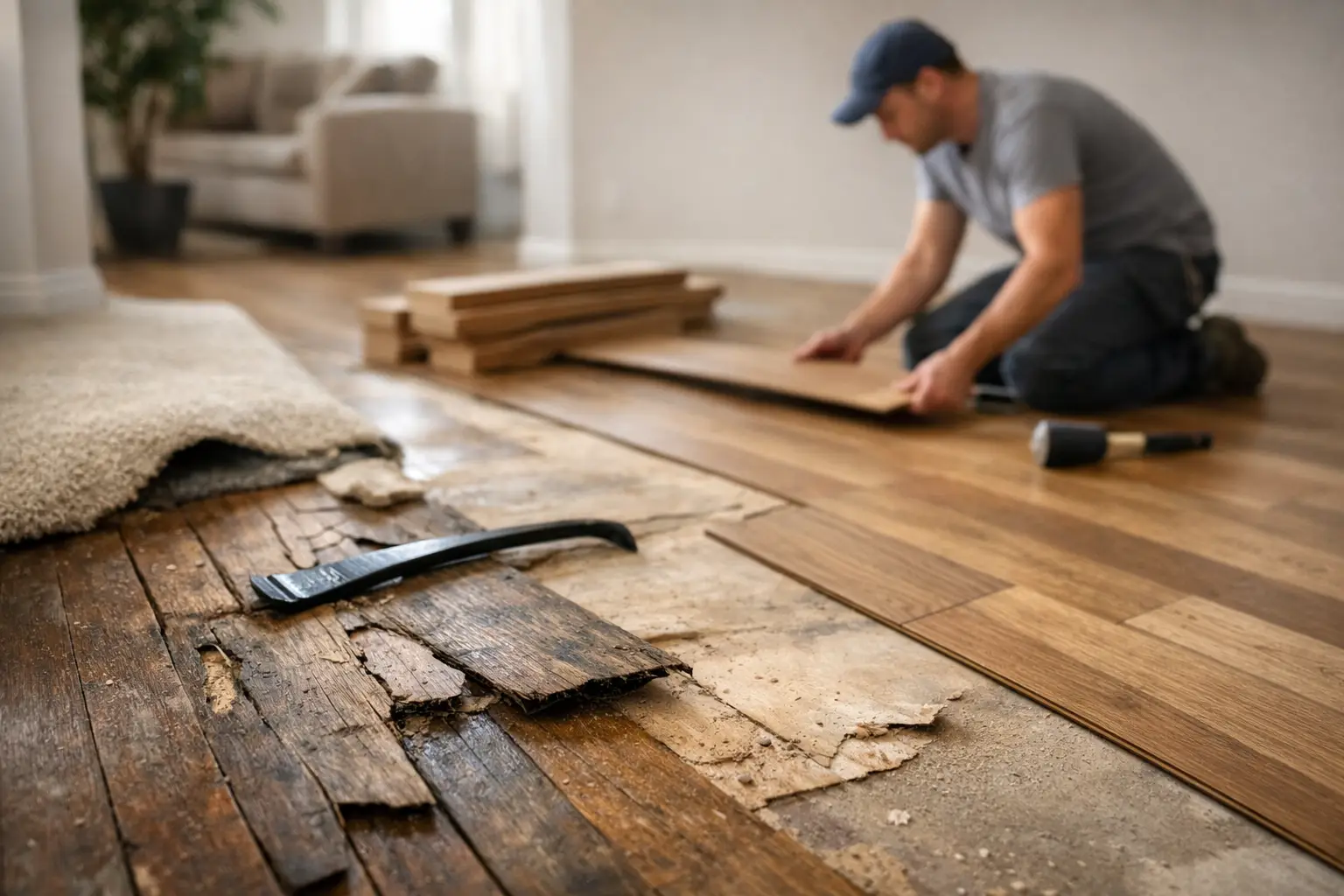

A flooring failure rarely stays contained to one unit or one hallway. A lifted transition strip can become a trip hazard. Moisture beneath worn carpet can point to a larger leak. A dated lobby floor can weaken a prospective tenant’s first impression before a lease conversation begins. This commercial flooring replacement guide is built for property managers and commercial owners who need to protect the asset, keep operations moving, and avoid creating a larger disruption while solving the immediate problem.
For multi-unit and commercial properties, replacement is not simply a design choice. It is an operational decision involving tenant access, building safety, moisture conditions, material performance, and a realistic installation schedule. The best outcome is a floor that fits the space and the service demands placed on it, not just one that looks good on installation day.
Start With the Reason for Replacement
Replacement should begin with an assessment of what failed and why. Cosmetic wear may justify a planned upgrade, but recurring stains, loose flooring, persistent odors, water damage, uneven surfaces, and damaged seams can require faster action. In occupied properties, safety and sanitation concerns move the project from a capital improvement discussion to a risk-management priority.
Look beyond the visible surface. Carpet that repeatedly develops odors may have moisture below the backing. Cracked tile can result from substrate movement or an improperly prepared surface. Vinyl that curls at the edges may signal adhesive failure, temperature changes, moisture, or heavy rolling loads beyond the product’s intended use. Installing a new finish over an unresolved condition often leads to an early failure and a second round of disruption.
Document the affected areas before work begins. Photos, room counts, measurements, damage notes, and records of prior leaks help clarify the scope. This is especially useful when the condition may involve an insurance claim or when multiple stakeholders need to approve the work.
Commercial Flooring Replacement Guide: Plan Before Ordering
Material selections should follow the use of the space. A leasing office, a high-traffic corridor, a fitness room, a retail suite, and a vacant apartment turnover have different performance needs. The right floor is the one that can be cleaned, maintained, and repaired within the realities of the property.
Luxury vinyl plank and luxury vinyl tile are often practical choices for common areas, offices, and turnover units because they offer a clean appearance, strong wear resistance, and easier spot replacement than some continuous flooring options. Carpet tile can work well in offices and certain commercial settings where acoustic comfort matters and localized replacement is valuable. Broadloom carpet may still make sense in lower-impact areas, but it requires more careful attention to spills, staining, and moisture. Tile can provide long-term durability in appropriate locations, though substrate preparation and grout maintenance should be part of the decision.
Do not choose based on appearance alone. Consider cleaning protocols, rolling traffic, slip resistance, sunlight exposure, expected service life, noise control, and the availability of matching replacement material later. For HOA boards and asset managers, material consistency across recurring turnovers can also simplify inventory and reduce decision time.
Before materials are ordered, confirm the full scope. A dependable scope addresses more than the square footage of the finished floor. It should account for demolition, disposal, substrate preparation, moisture testing where conditions warrant it, baseboards or cove base, transitions, furniture movement, access restrictions, and post-installation cleanup. These details are where schedules are protected or lost.
Investigate Moisture and Subfloor Conditions
Water is one of the most expensive variables in flooring work because it can damage both the existing finish and the installation beneath it. In Southern California properties, moisture issues can come from slab conditions, plumbing leaks, appliance failures, damaged waterproofing, exterior intrusion, or a past water event that was never fully addressed.
If water damage is suspected, the source should be identified and corrected before replacement. A new floor installed over damp material, compromised concrete, or an improperly dried subfloor can trap the problem rather than solve it. That can lead to odors, adhesive problems, mold concerns, and another closure later.
The same principle applies to uneven substrates. Flooring is only as stable as the surface beneath it. Leveling, patching, crack repair, moisture mitigation, and removal of old adhesive may be necessary before installation. These steps can feel invisible compared with the finished product, but they are often what determine whether the replacement performs as expected.
Build a Schedule Around Occupancy and Access
A flooring project can affect leasing, tenant satisfaction, employee productivity, and building access. The schedule should be built around the property’s actual operating conditions, not an idealized installation window.
For vacant units, flooring should be coordinated with cleaning, painting, repairs, appliance work, and final inspection so trades do not damage a newly completed surface. The order of work matters. Heavy repairs and painting generally come before final flooring installation, while final turnover cleaning follows installation.
For occupied commercial spaces, divide the work into manageable phases whenever possible. Clear communication should identify which areas will be inaccessible, when furniture or equipment needs to be moved, what noise or odor to expect, and how tenants or staff will enter safely. After-hours work may reduce disruption in some settings, but it can also require additional coordination for access, security, and building rules.
Allow time for material acclimation, substrate work, installation, curing, and return to service. A floor may appear finished before adhesives, sealants, or coatings are ready for heavy traffic. Rushing that window can compromise the installation and create avoidable warranty concerns.
Protect Safety, Compliance, and Accountability
Commercial flooring replacement involves more than product selection and labor. Property managers should work with a contractor that can operate responsibly in an occupied or multi-unit environment. That includes appropriate licensing, insurance, bonding, site protection, clear communication, and accountability for the full scope.
Safety planning should address dust containment, trip hazards, exposed edges, work-zone signage, debris removal, and safe access routes. In older buildings, demolition may also require added caution around potentially hazardous materials. A qualified contractor can help identify when testing or specialized procedures are needed before work starts.
For properties with staff, residents, tenants, or visitors moving through the building, bilingual communication can be especially valuable. Clear instructions in English and Spanish help reduce confusion around closures, access changes, and safety expectations.
Avoid the Common Replacement Mistakes
The most costly flooring mistakes are usually planning mistakes. Replacing only the visible damaged area without investigating moisture can create a repeat failure. Selecting a residential-grade product for a commercial traffic pattern can shorten its useful life. Skipping transition details can create trip hazards and an unfinished appearance.
Another common issue is treating flooring as an isolated project. If a unit also needs repairs, paint, cleaning, or water damage restoration, coordinating those services through separate vendors can lengthen the vacancy period and make responsibility unclear. A single-source approach helps sequence the work correctly and gives the property team one point of accountability from assessment through final cleanup.
It also helps to retain extra material from the same production run when feasible. Future spot repairs are easier when matching planks, tiles, or carpet squares are available. This small planning step can preserve a consistent appearance and prevent a minor repair from becoming a full replacement decision.
Choose a Partner Built for Property Operations
The best flooring contractor is not simply the one that can install a product. It is the one that understands the pressure behind the request: a unit must return to market, a tenant needs a safe path of travel, a leak has disrupted operations, or an HOA needs a durable upgrade with minimal resident impact.
Ask how the contractor handles site assessment, moisture concerns, occupied spaces, scheduling, cleanup, insurance documentation, and communication with the property team. Those answers reveal whether the provider is prepared for the real conditions of commercial and multi-unit work.
For Southern California property professionals, V&S Management Services brings flooring installation into a broader property-care process, with licensed, bonded, and insured service designed to reduce handoffs and protect turnaround timelines. The strongest flooring decision is one that solves the present condition while making the next turnover, repair, or renovation easier to manage.