A rushed turnover can leave more behind than dust, odors, or a bad first impression. It can leave a new resident questioning whether the unit was truly prepared for move-in. Knowing how to disinfect rental units gives property managers a repeatable way to protect resident health, support maintenance teams, and keep turnover standards consistent without adding unnecessary vacancy days.
Disinfection is not the same as routine cleaning. Cleaning removes visible soil and residue. Disinfection uses an appropriate product, applied correctly, to reduce germs on hard, nonporous surfaces. Both matter, but the order matters just as much: a disinfectant cannot reliably do its job on a surface still covered in grease, grime, or debris.
How to Disinfect Rental Units Without Delaying Turnover
The most efficient process begins before the cleaning crew enters the unit. During the move-out inspection, document the condition of the property, identify health and safety concerns, and separate normal turnover work from repairs that require licensed trade professionals. Water intrusion, sewage backups, pest activity, mold-like growth, damaged flooring, and heavily soiled carpet may require more than standard cleaning and disinfection.
Start by ventilating the space when conditions allow. Open windows, run approved exhaust fans, and make sure workers have the personal protective equipment required by the products and conditions involved. Never assume that stronger chemicals mean better results. Mixing cleaners or disinfectants can create hazardous fumes, damage finishes, and expose staff to unnecessary risk.
A dependable turnover sequence usually moves from high work to low work and from clean areas toward dirtier areas. Remove trash and abandoned belongings first. Complete repairs, patching, and dust-producing work before final cleaning. Then clean surfaces, disinfect targeted high-touch areas, and finish with floors and final quality control.
This order keeps teams from contaminating surfaces they have already addressed. It also prevents a common mistake: disinfecting a bathroom or kitchen before maintenance work sends dust, drywall residue, or dirty footwear back through the space.
Clean First, Then Disinfect
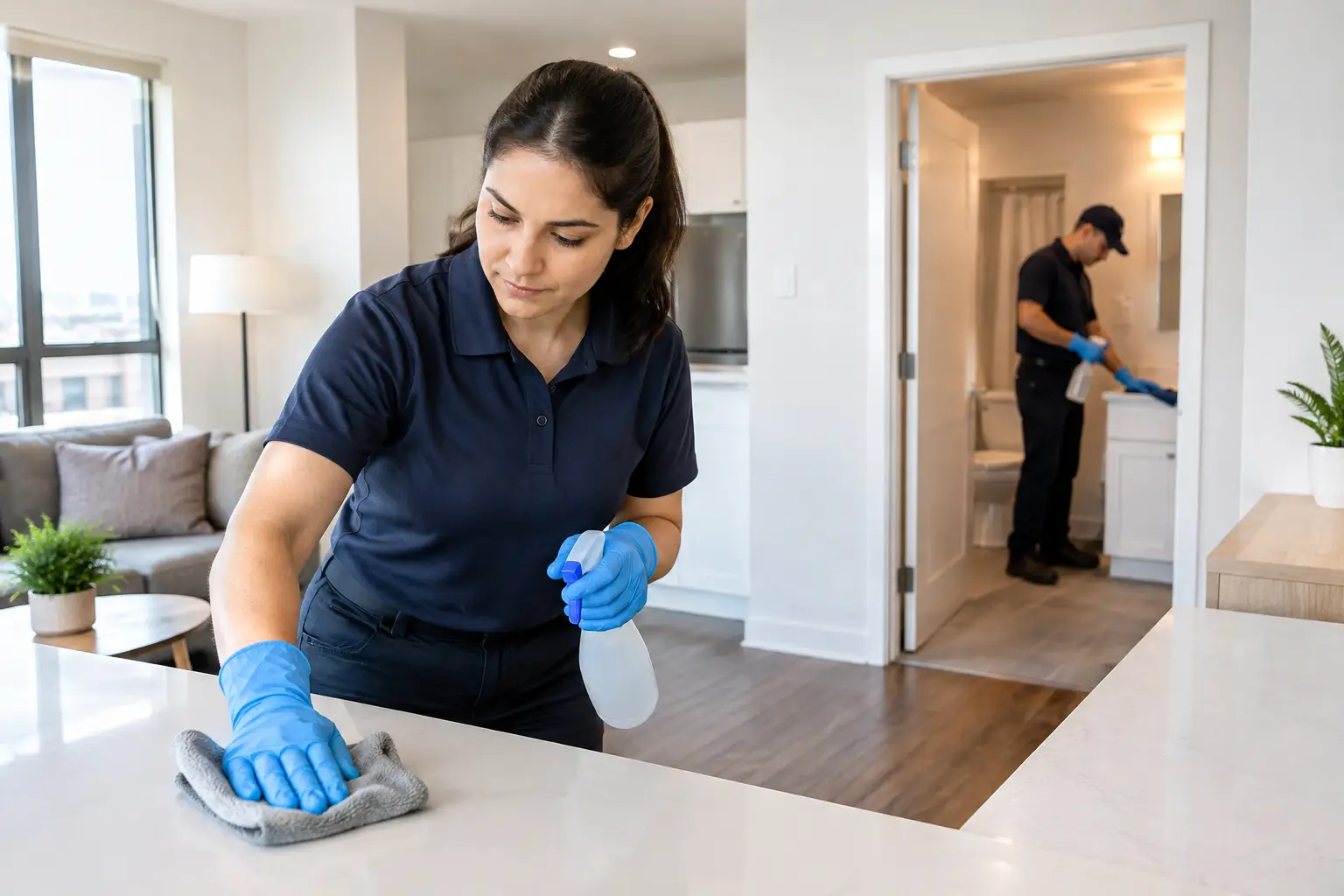
Disinfectants are most effective when the surface has already been cleaned. In kitchens, remove grease and food residue from counters, cabinet pulls, appliance handles, and sink fixtures. In bathrooms, remove soap film, mineral deposits, and visible debris from toilets, faucets, shower controls, and vanity surfaces before disinfecting.
Use products that are labeled for the intended surface and follow the manufacturer instructions exactly. The label identifies where the product can be used, whether it needs dilution, whether it requires rinsing, and how long the surface must remain visibly wet. That last point is often missed during fast turnovers.
If a label calls for a five-minute contact time, spraying and immediately wiping the surface does not complete the disinfection process. Apply enough product to keep the area wet for the stated time, then allow it to air dry or wipe it only if the instructions permit. Food-contact surfaces, such as kitchen counters, may have separate rinsing requirements.
Avoid using one product as a universal solution. Some disinfectants can discolor natural stone, dull finished wood, damage certain metals, or weaken flooring finishes. For occupied buildings and renovated units, product selection should protect both residents and the asset.
Focus on High-Touch Surfaces
A full unit cleaning is necessary, but high-touch surfaces deserve focused attention because they are handled repeatedly. Crews should disinfect items such as:
- Entry door handles, locks, keys, and key fobs
- Light switches, thermostats, outlet covers, and intercom panels
- Cabinet pulls, appliance handles, and remote controls
- Faucet handles, toilet flush levers, shower controls, and vanity pulls
- Closet knobs, window latches, handrails, and laundry controls
Do not overlook shared or operational touchpoints outside the unit. Elevator buttons, gate controls, package room handles, laundry rooms, trash enclosures, and leasing-office surfaces may require their own documented cleaning schedule, especially in multifamily communities with frequent resident traffic.
Address Kitchens, Bathrooms, and Appliances Carefully
Kitchens and bathrooms carry the highest sanitation expectations at move-in. They also tend to reveal whether the turnover team followed a real process or simply performed a quick visual clean.
In the kitchen, pull out removable refrigerator shelves and drawers when practical, clean spills and residue, and disinfect hard interior surfaces according to the product label. Pay attention to refrigerator handles, microwave touchpads, dishwasher controls, stove knobs, and sink sprayers. If an appliance has signs of leakage, standing water, or persistent odor, resolve the source before closing the turnover.
In bathrooms, clean and disinfect the toilet inside and out, including the seat hinges, flush handle, surrounding floor area, and nearby wall surfaces if visibly soiled. Shower doors, tubs, sinks, and fixtures should be cleaned for residue before they are disinfected. Replace worn caulking or damaged grout when moisture intrusion is likely. Disinfection helps with sanitation, but it does not correct the building conditions that allow water damage or microbial growth to return.
Know When Standard Disinfection Is Not Enough
Some conditions require a more controlled response. A unit affected by a clean-water supply line leak may need drying, moisture inspection, material removal, cleaning, and repairs before it is ready for final disinfection. A sewage backup, floodwater intrusion, or significant mold-like growth demands more caution and a properly equipped restoration plan.
The same principle applies to carpet and flooring. Vacuuming and spot cleaning can improve appearance, but they are not always enough after pet contamination, heavy smoke exposure, water damage, or strong odors. Depending on the condition of the material, professional extraction, odor treatment, repair, or replacement may be the responsible choice. The goal is not to mask a problem long enough for move-in. It is to return the unit to a safe, rent-ready condition that protects the property and the resident relationship.
For Southern California portfolios, rapid response is especially valuable when a water event affects multiple units or creates a risk of delayed leasing. A trusted general contractor with restoration, flooring, maintenance, and turnover capabilities can reduce handoffs between vendors and help property teams keep accountability clear from emergency response through final punch work.
Build a Repeatable Disinfection Standard
Consistency is what turns a good turnover into a manageable portfolio process. Create a written scope that identifies who performs cleaning, who handles repairs, which products are approved, and which areas require final inspection. Your standard should be detailed enough that a new supervisor can verify the work without relying on guesswork.
Photographs are useful for documenting pre-existing damage and confirming completed repairs, but they should support, not replace, an in-person final walk. During the final inspection, check for visible residue, odors, missed touchpoints, product damage, standing water, appliance issues, and incomplete repairs. Confirm that smoke and carbon monoxide alarms are addressed according to your established compliance process as well.
It also helps to distinguish between a standard turnover and a health-related incident. A standard turnover may call for routine cleaning and targeted disinfection. A unit with biohazard concerns, pests, sewage, extensive contamination, or water damage needs a different scope, safety controls, and potentially specialized vendors. Treating every situation the same can either waste time or create avoidable liability.
Protect Staff, Residents, and the Property
Disinfection programs work best when teams are trained on the basics: read labels, wear required protective equipment, use correct dilution ratios, allow contact time, and store chemicals safely. Keep products in original labeled containers whenever possible. If a product must be transferred to a secondary container for operational use, it needs clear labeling and proper handling procedures.
Property managers should also consider timing. When a unit is vacant, teams have more flexibility to ventilate rooms and allow products to dry. When work occurs in an occupied building, communicate clearly about access, odors, wet floors, and areas temporarily closed for service. Professional communication reduces complaints and helps residents see that the property is being maintained with care.
A disinfected rental unit should feel more than clean at the final walk-through. It should show that the owner or manager has addressed the details, corrected the underlying issues, and prepared the home with the same care they expect residents to bring to it.