If you are comparing bids for a business property, it is easy to ask, is commercial and office cleaning the same, and assume the answer is yes. On paper, both involve keeping a workplace clean, safe, and presentable. In practice, office cleaning is usually one part of the broader commercial cleaning category, and that distinction matters when you are hiring for a real building, real tenant needs, and real liability.
A small professional office with desks, break rooms, and conference areas needs a different cleaning plan than a medical suite, retail space, warehouse office, church, school, or mixed-use property. When the scope is mismatched, you end up paying for the wrong service or missing the work your building actually requires.
Is commercial and office cleaning the same in practice?
The short answer is no. Office cleaning typically refers to routine cleaning services for administrative and professional workspaces. Commercial cleaning is a broader term that can include offices, but it also covers many other business environments with different traffic patterns, surfaces, sanitation standards, and scheduling needs.
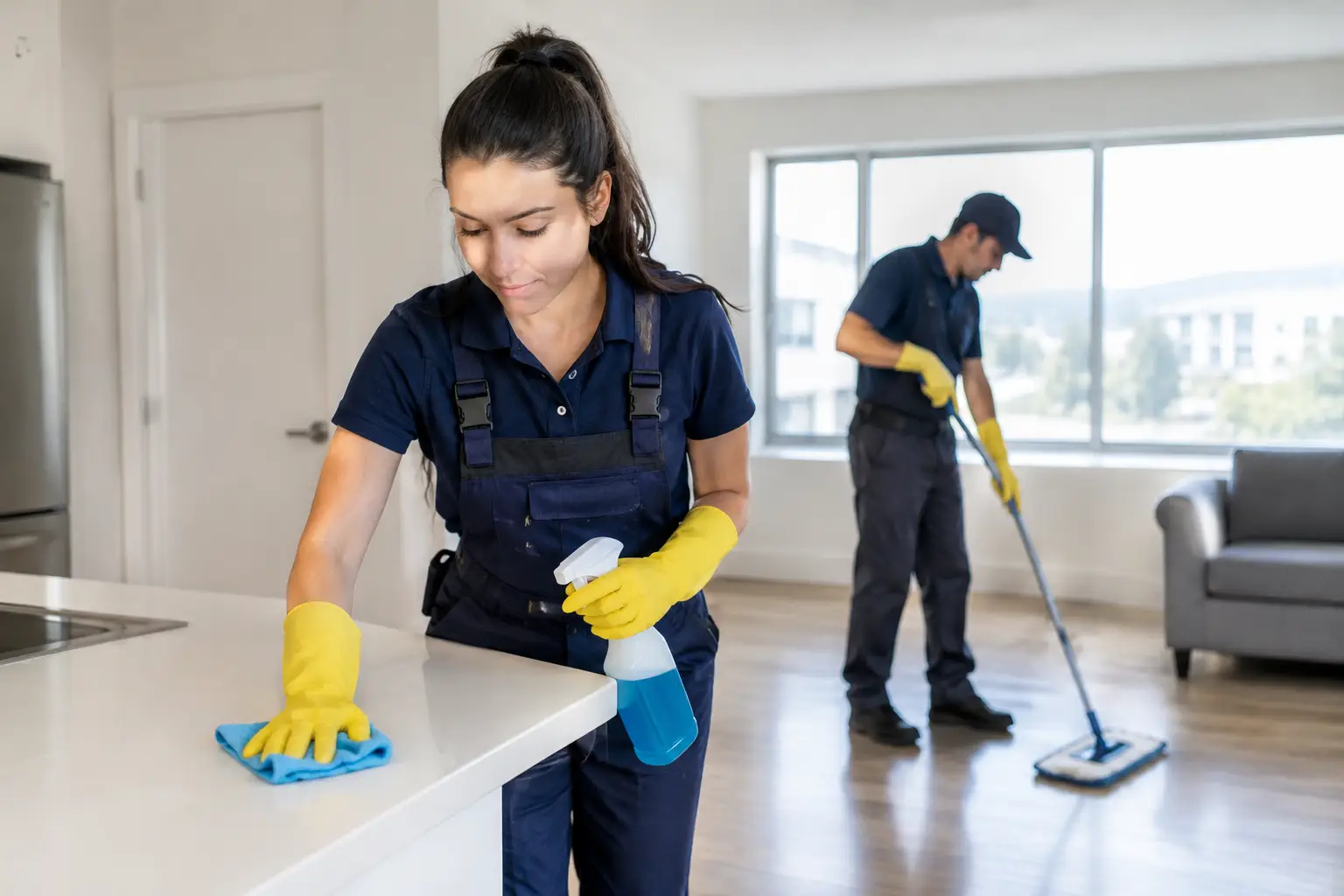
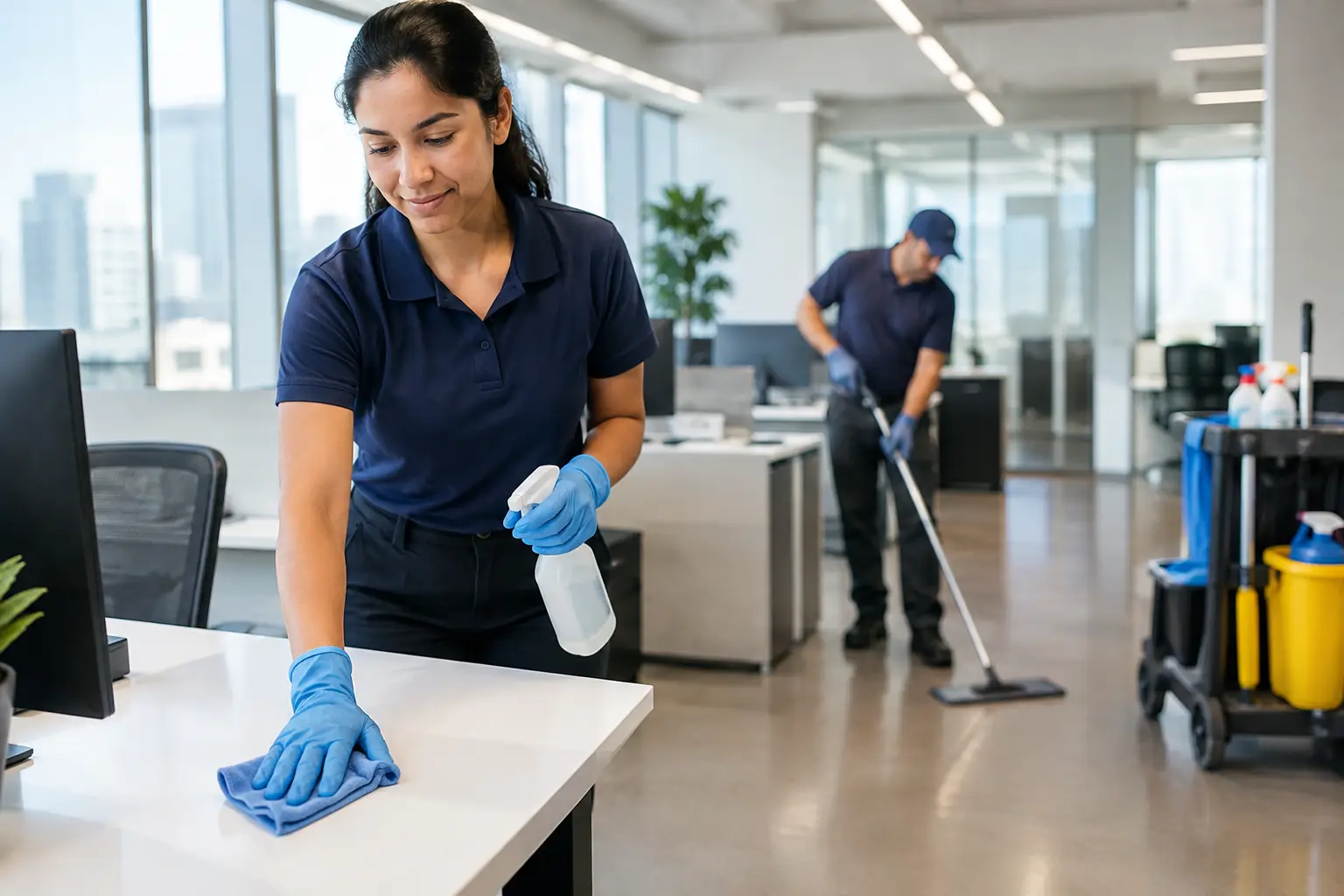
An office cleaning crew might focus on emptying trash, dusting workstations, vacuuming carpets, cleaning restrooms, wiping break room surfaces, and maintaining common areas. That is the day-to-day work most people picture when they think of janitorial service.
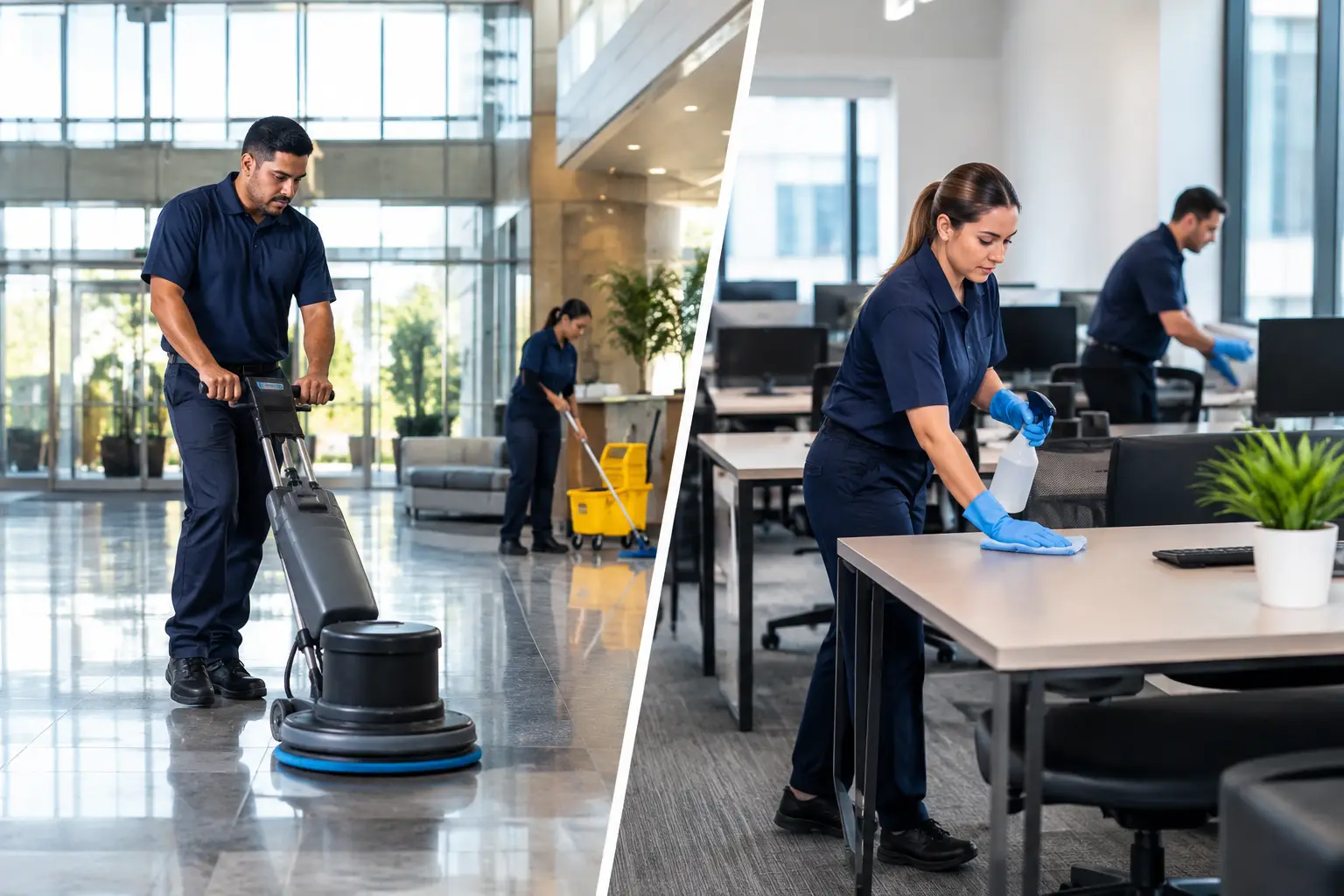
Commercial cleaning may include those same tasks, but it can also extend to floor stripping and waxing, post-construction cleanup, high-touch disinfection, warehouse floor care, cleaning after water damage, move-in and move-out service for tenant turnovers, and deeper work tied to a facility’s use. In other words, all office cleaning can be commercial cleaning, but not all commercial cleaning is office cleaning.
Where office cleaning fits inside commercial cleaning
Office cleaning is generally narrower in scope and more predictable. Most office spaces follow a similar rhythm. Employees arrive in the morning, use desks and shared areas throughout the day, and leave behind the usual mix of fingerprints, dust, restroom use, food crumbs, and trash.
That makes scheduling easier. Many office cleaning programs are performed after hours on a nightly, two- or three-times-weekly, or weekly basis. The work is routine, which helps with budgeting and consistency.
Commercial cleaning covers a wider range of property types, and the work often changes based on the building’s function. A retail storefront may need more glass cleaning and entry maintenance. A property manager overseeing a vacancy may need turnover cleaning plus flooring repair. A facility with water intrusion may need emergency extraction first, followed by sanitation and restoration. The label stays "commercial," but the service plan changes significantly.
That is why business owners and property managers should not rely on the service name alone. The better question is what kind of building you have, how people use it, and what condition it is in right now.
The biggest differences property owners should pay attention to
The first difference is scope. Office cleaning usually supports a standard business environment. Commercial cleaning can include specialized equipment, larger square footage, heavier soil levels, and property-specific tasks that go beyond basic janitorial work.
The second difference is training. Cleaning a typical office suite is not the same as cleaning a medical-adjacent space, a post-remodel site, or a facility dealing with moisture issues. Some environments require extra care around flooring materials, cleaning products, safety procedures, and scheduling.
The third difference is frequency and intensity. Office cleaning tends to be recurring and maintenance-based. Commercial cleaning can be recurring, one-time, project-based, or emergency-driven. A business may need daily office cleaning, but only quarterly floor treatment or occasional deep cleaning after tenant improvements.
The fourth difference is coordination. In many commercial properties, cleaning overlaps with maintenance, repairs, flooring, and restoration needs. That matters because cleaning is rarely isolated from the condition of the property itself. A stained carpet might actually be a leak issue. Dust complaints might follow construction work. A neglected restroom may need repairs, not just more frequent wiping.
Why the difference matters when you request a quote
If you ask for office cleaning when you really need broader commercial cleaning, the quote may look attractive at first but fail to cover key work. That creates confusion later when the crew arrives and certain tasks are excluded. It can also lead to change orders, delays, or a service plan that never fully solves the problem.
On the other hand, if you ask for full commercial cleaning when your building only needs straightforward office maintenance, you may end up with a more complex proposal than necessary. The best providers will narrow the scope instead of overselling it.
A good estimate should account for your building type, occupancy, flooring, restroom count, break areas, touchpoints, special concerns, and timing. If there has been a recent leak, renovation, tenant move-out, or flooring issue, that should be part of the conversation too. Cleanliness is visual, but the work behind it is operational.
Examples that show the difference clearly
A law office in Orange County may only need standard evening cleaning three times a week. The main priorities are dust control, restroom care, trash removal, and keeping reception areas presentable for clients. That is classic office cleaning.
A multi-tenant commercial property in Los Angeles County may need lobby cleaning, stairwell maintenance, restroom sanitizing, vacant suite cleanup, hard floor care, and occasional post-repair cleanup after plumbing or water damage issues. That falls under commercial cleaning because the scope goes beyond a simple office routine.
A real estate professional preparing a property for lease may need debris removal, deep cleaning, touch-up work, and new flooring before the next occupant moves in. Again, that is commercial cleaning, even if the space itself includes offices.
These examples show why terminology alone is not enough. Two buildings can both contain desks and conference rooms, yet require completely different service plans.
When office cleaning is enough
Office cleaning is usually enough when the property is stable, occupied, and functioning normally. There are no unusual contamination concerns, no recent construction, no active maintenance issues affecting cleanliness, and no need for heavy floor restoration or turnover work.
For many professional offices, this is the right fit. The goal is to maintain a healthy, organized environment for employees and visitors while preventing dust, odors, and restroom issues from building up. A consistent office cleaning plan can go a long way when the space is in good condition and the needs are predictable.
When you need commercial cleaning instead
You likely need commercial cleaning when the property has more moving parts. That can include larger common areas, multiple suites, heavy foot traffic, specialty flooring, recent remodeling, vacancy turnover, or health and safety concerns tied to the condition of the building.
You may also need broader commercial support when cleaning is tied to another service need. For example, after water damage, cleaning is not just cosmetic. It may follow extraction, drying, sanitation, and repair. If flooring is worn or damaged, cleaning alone will not restore the appearance or safety of the space. In those cases, working with a provider that understands both cleaning and property improvement can save time and reduce handoffs.
For that reason, many property managers and business owners prefer a trusted general contractor that can handle cleaning as part of a larger property solution rather than treating every issue as a separate vendor call.
How to choose the right provider
Start with experience in the type of property you manage or occupy. A provider should be able to explain what is routine, what is specialized, and what may need a separate scope. Clear communication matters just as much as the service list.
It also helps to work with a company that can respond when conditions change. A normal office cleaning schedule is one thing. A same-day need after a leak, tenant move-out, or flooring issue is something else. In those moments, reliability matters more than marketing language.
For local owners and managers, that is where an established company like V & S Management Services Inc can make the process easier. When one team can support cleaning, restoration, flooring, and broader property needs, you spend less time coordinating multiple vendors and more time keeping the property ready for business.
So, is commercial and office cleaning the same? Not quite. Office cleaning is a subset of commercial cleaning, and the difference comes down to scope, building use, and the real condition of the property. If you match the service to the space instead of the label, you are far more likely to get results that hold up after the crew leaves.