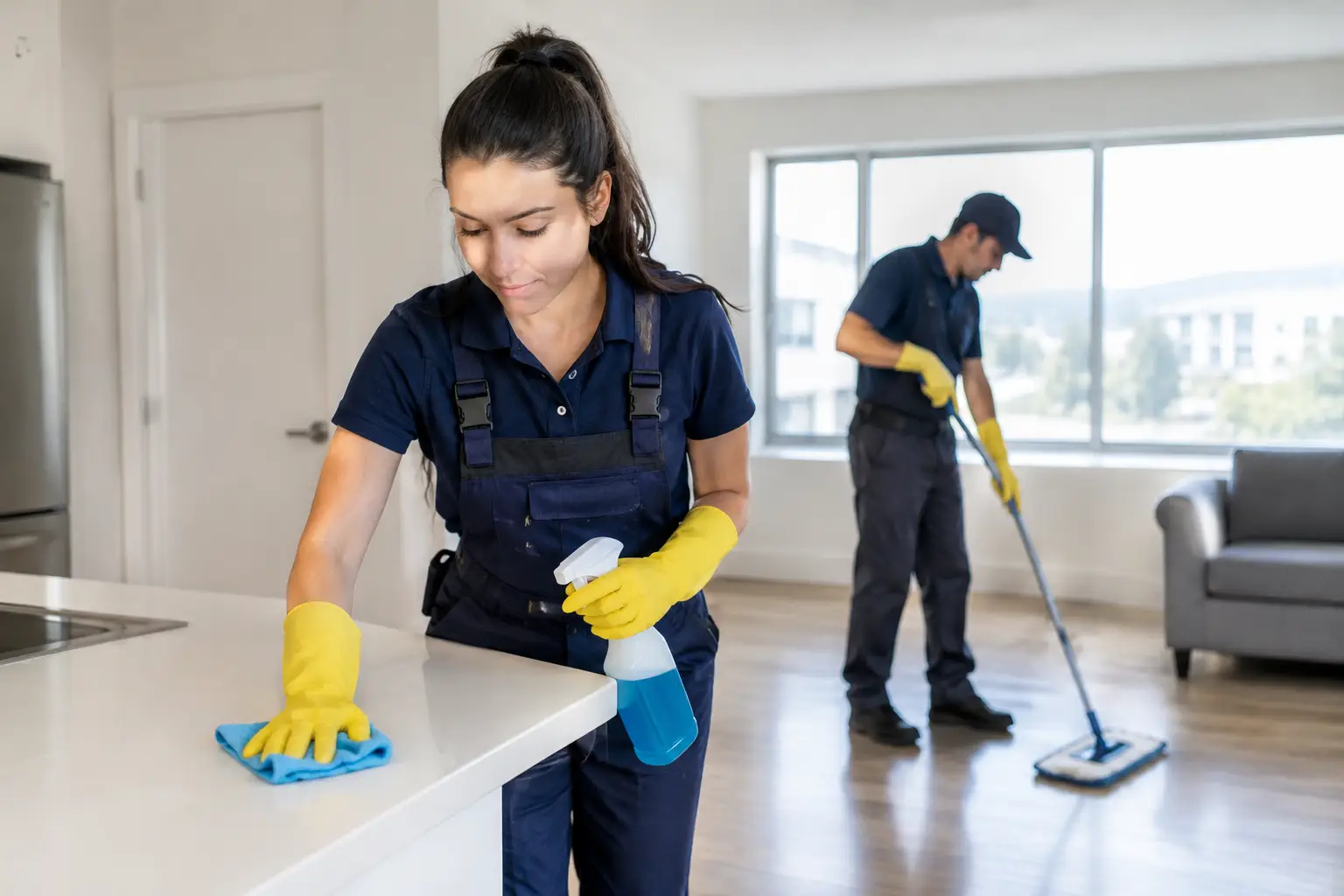
A missed cleaning window rarely stays a cleaning issue for long. It turns into delayed showings, frustrated owners, vendor rescheduling, and extra vacancy days that chip away at NOI. That is why a strong property manager cleaning services guide matters - not as a checklist for housekeeping, but as an operating standard for protecting unit readiness, tenant experience, and portfolio value.
For property managers, cleaning is not a cosmetic task. It sits right in the middle of leasing velocity, maintenance coordination, and risk control. The right cleaning partner helps you move faster between move-out and move-in, spot problems earlier, and reduce the scramble that happens when one vendor finishes late and the next vendor cannot start on time.
What a property manager cleaning services guide should actually cover
A useful guide starts with the reality of the job. Property managers are not hiring cleaning crews for a single apartment in isolation. They are managing unit turns, common areas, amenity spaces, post-maintenance cleanup, and sometimes emergency conditions after leaks or property damage. Each of those needs a different scope, timeline, and level of documentation.
Move-out and turnover cleaning usually carries the highest urgency because it directly affects vacancy time. The expectation is not just that a unit looks clean. It needs to be rent-ready, which means surfaces, appliances, bathrooms, flooring, and touchpoints must present well under showing conditions. A rushed surface clean may save a few hours on day one, but it often creates rework after inspections or applicant walkthroughs.
Common-area cleaning has a different purpose. Here, consistency matters more than one-time intensity. Hallways, entryways, laundry rooms, stairwells, leasing offices, and shared amenities shape how residents and prospects judge the property. In multifamily and HOA environments, these spaces also affect complaint volume and board satisfaction.
Post-construction or post-maintenance cleaning is another category managers should define separately. Dust from repairs, flooring work, plumbing access, or remodeling can spread far beyond the original work area. If your cleaning scope does not account for that, your maintenance work may technically be complete while the unit still feels unfinished.
Why vendor selection affects more than cleanliness
A dependable cleaning vendor should fit your operation, not just your calendar. For property managers, the real question is whether a contractor can work within occupied properties, vacant units, tight deadlines, and compliance requirements without creating more oversight work for your team.
Licensing, insurance, and bonding matter because they reduce your exposure. So does experience in multi-unit environments, where access protocols, resident communication, and scheduling discipline are part of the job. A residential house cleaner may do acceptable work in a home, but that does not automatically translate to apartment turns, HOA common areas, or commercial properties with multiple stakeholders.
Responsiveness also matters more than many managers expect. A cleaning provider that takes a day to confirm a schedule can throw off flooring crews, painters, maintenance techs, and leasing staff. That is especially true when a property is trying to compress a turnover schedule into a narrow window.
There is also a practical advantage in working with a broader property solutions partner when the situation calls for it. Cleaning often overlaps with maintenance, flooring replacement, water damage response, and final punch work. When those services live under separate vendors with separate timelines, delays multiply. When one accountable partner can coordinate the handoff, the property manager gains time and clarity.
The right scope depends on the asset and the turnover condition
Not every vacant unit needs the same cleaning plan. A standard turnover after a stable tenancy is different from a heavy clean after deferred housekeeping, pet issues, smoke residue, or unauthorized alterations. Treating them the same usually leads to underbidding, missed expectations, or disputes about what was included.
This is where a property manager cleaning services guide should push managers to define condition tiers. A light turnover clean may focus on kitchens, baths, floors, windowsills, fixtures, and appliance wipe-downs. A moderate or heavy turnover may involve deeper degreasing, odor treatment, trash-out coordination, stain mitigation, or prep after repair work. The more clearly those conditions are identified upfront, the easier it is to schedule the right labor and sequence other trades around it.
The same logic applies to occupied properties. Routine janitorial support for common areas needs a repeatable scope and reporting rhythm. Special event cleanup, seasonal traffic spikes, or board inspections may require a temporary increase in service frequency. Good planning leaves room for both without forcing your team to renegotiate the basics each time.
How to evaluate cleaning quality without slowing your team down
Property managers need quality control, but they also need speed. If every turnover requires a long punch walk because the cleaning standard is inconsistent, the vendor is not saving your team time. A better approach is to agree on clear completion standards before work begins.
In practical terms, that means defining what rent-ready looks like for your portfolio. Are interiors expected to be free of dust on blinds and baseboards? Are appliances detailed inside and out? Are cabinets wiped, empty, and presentation-ready? Are hard floors cleaned to showing condition, or just free of debris? Those details matter because many disputes come from assumptions rather than poor intent.
Photo documentation can help, especially for remote ownership groups or fast-moving unit turns. So can a simple service verification process tied to your make-ready workflow. The goal is not bureaucracy. The goal is fewer callbacks, fewer surprises, and faster approvals.
Timing is everything in unit turnover cleaning
Cleaning works best when it is scheduled as part of a turnover sequence, not treated as the final task someone will fit in later. In most multifamily environments, cleaning should be coordinated with maintenance completion, paint curing time, flooring installation, and utility readiness. If it happens too early, later trades undo the work. If it happens too late, leasing loses momentum.
That is why experienced property service partners ask operational questions, not just square footage questions. Is the unit still occupied? Has maintenance signed off? Will new flooring be installed? Was there water intrusion? Are appliances in place? Those answers shape the cleaning schedule and prevent unnecessary return visits.
In Southern California markets where vacancy days carry real financial pressure, compressed timelines are normal. The challenge is staying fast without lowering standards. That usually comes down to coordination, not guesswork.
When cleaning and restoration need to work together
Some of the most expensive turnover delays start with an issue that looks simple at first. A water leak under a sink or behind a wall may appear to be a cleanup problem until moisture damage spreads into flooring, drywall, or adjacent units. At that point, cleaning alone will not solve the readiness issue.
This is where single-source accountability becomes valuable. When your cleaning vendor is disconnected from restoration or repair teams, the property manager ends up acting as the go-between during an already time-sensitive event. When one trusted general contractor can handle emergency response, cleanup coordination, repair, and final cleaning, the process becomes easier to control.
That matters for documentation too. Insurance-related events often require a clearer chain of activity than routine turnovers. The less fragmented your vendor stack is during a loss event, the easier it is to keep communication moving and get units back online.
A cleaner property is also a better-managed property
Residents, owners, and boards rarely separate cleaning from overall management performance. They read building condition as a sign of responsiveness. Clean common areas suggest order, care, and follow-through. Poorly maintained spaces suggest the opposite, even when the management team is working hard behind the scenes.
That is why cleaning should be treated as part of your asset strategy, not just your turnover budget. It supports leasing, retention, inspections, and reputation at the same time. For commercial and multifamily properties alike, the visual standard of the site affects how every other service is perceived.
For managers who oversee multiple buildings, consistency may matter even more than perfection. A vendor that can reliably meet scope across locations, communicate clearly, and adapt during urgent situations helps protect your time as much as your properties. That is the standard V&S Management Services Inc. has built its reputation on as a fully licensed, bonded, and insured partner for Southern California property professionals.
The strongest cleaning programs are not the ones with the longest task lists. They are the ones built around turnover speed, clear accountability, and the reality of how properties operate day to day. If your current process creates callbacks, delays, or too many moving parts, that is usually a sign the scope is not the only thing that needs cleaning up.