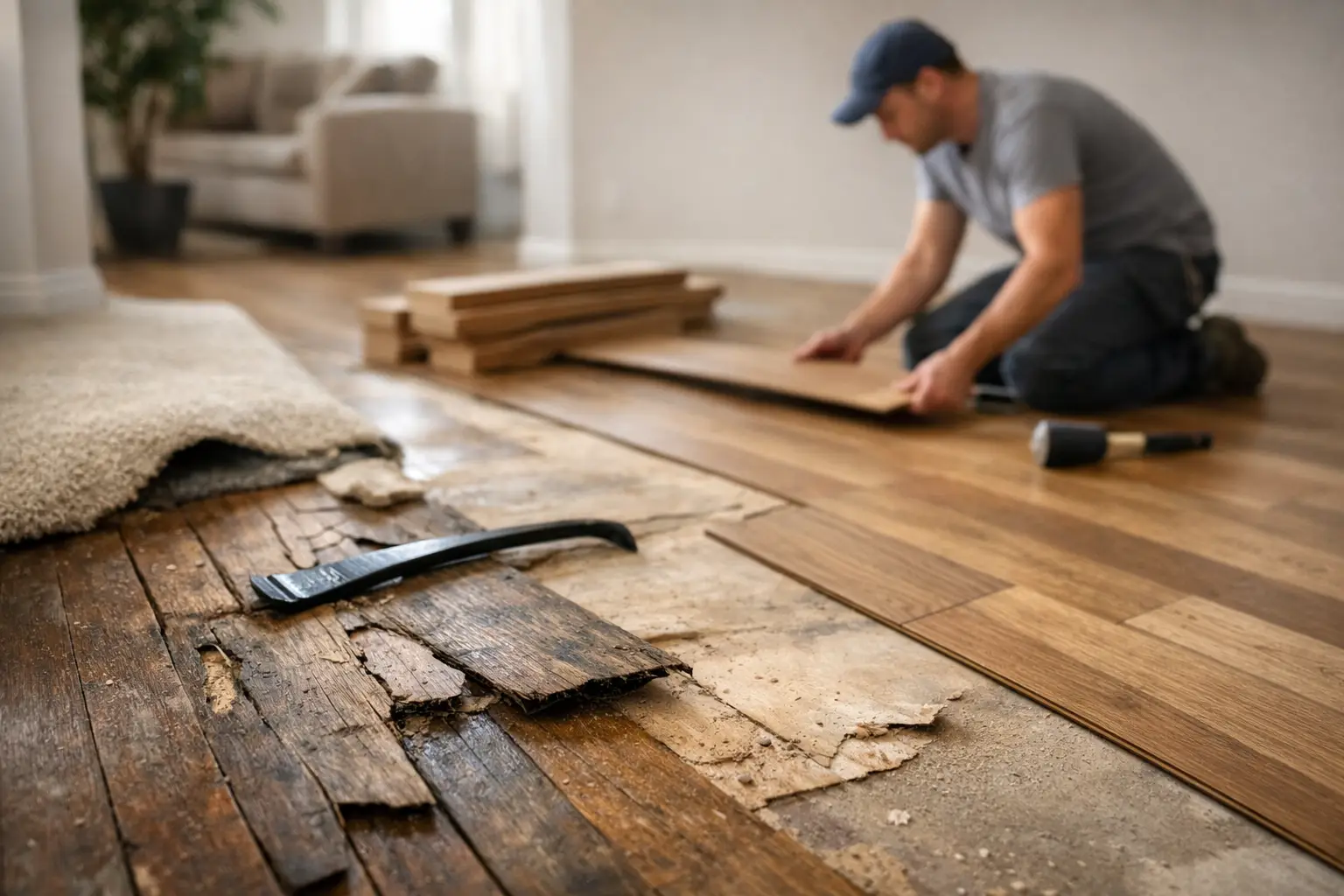

A carpet issue rarely shows up at a convenient time. It appears during a unit turn, after a leak, before a listing goes live, or right after a tenant complaint. When you need to decide whether to repair or replace carpet, the real question is not just cost. It is how fast you can restore the space, how the flooring affects rent-ready standards, and whether the fix protects the asset or delays a larger problem.
For property managers, HOA boards, and commercial owners, carpet decisions are operational decisions. Flooring affects appearance, safety, odor control, leasing velocity, and the perception of maintenance quality. A cheap repair that fails in 60 days can cost more than replacement once you factor in vendor coordination, downtime, and resident dissatisfaction.
When to repair or replace carpet in a managed property
The right answer depends on the type of damage, the age of the carpet, and the condition of the surrounding unit. If the carpet is fairly new and the damage is isolated, repair often makes sense. If the damage is widespread, the backing is compromised, or the carpet is making the whole unit feel tired, replacement is usually the better business decision.
Repair is most practical when the issue is limited to a small area and the rest of the carpet still presents well. That might include a burn mark, a localized stain, a lifted seam, minor rippling, or damage around a doorway. In these cases, a professional patch, seam repair, or stretch can extend the carpet's life without disrupting the full turnover schedule.
Replacement becomes the stronger option when the carpet has multiple problem areas or when one issue points to deeper deterioration. Heavy matting, widespread staining, pet odor, sun fading, delamination, and recurring wrinkles all suggest the material is nearing the end of its service life. If the unit already needs paint, cleaning, and other turnover work, full replacement may create a cleaner path to rent-ready delivery.
Damage type matters more than square footage
Not all carpet damage carries the same risk. A visible stain in a bedroom is different from moisture damage near a wall, and both are different from loose flooring in a corridor with foot traffic. The cause of the damage often tells you whether repair is smart or short-sighted.
Surface-level issues are the best candidates for repair. A single bleach spot, one torn transition, or a seam opening up in a closet usually does not justify replacing an entire apartment or office suite. If matching material is available, a skilled installer can often make the repair difficult to notice.
Water exposure changes the equation. If clean water was addressed immediately and the carpet dried properly, repair or partial replacement may still be possible. But if there was delayed response, contamination, pad saturation, or odor migration, replacement is often the safer move. In multi-unit properties, hidden moisture can create a larger liability than the visible stain itself.
Pet damage is another category where managers often lose money by trying to save too much. If the problem is one isolated spot, repair may hold. If urine has reached the pad or subfloor, the carpet itself is only part of the issue. Odor can return after cleaning, especially in warm Southern California units that sit vacant between turns.
The age of the carpet should shape the decision
A five-year-old carpet with one damaged section is not the same as a twelve-year-old carpet with “just a few issues.” Older carpet may still be technically serviceable, but that does not mean it supports your leasing or resale goals. If prospects walk in and the flooring looks worn, the unit starts at a disadvantage.
As carpet ages, colors fade, fibers crush, and repairs become harder to conceal. Even a well-executed patch can stand out if the surrounding carpet has changed over time. That is why age matters. You are not just comparing repair cost versus replacement cost. You are comparing a short extension of life versus a full reset of the unit’s appearance.
For portfolio owners, consistency also matters. If one unit in a community has clearly dated flooring while comparable units have been refreshed, the older finish can affect pricing, absorption, and resident expectations. In that case, replacement may support broader asset-positioning goals beyond the single repair ticket.
Downtime, not just material cost, should guide the budget
This is where many flooring decisions go wrong. Teams focus on the invoice and ignore the turnover calendar. A repair may be cheaper on paper, but if it requires return visits, color-matching delays, or another service call after move-in, the savings disappear fast.
Replacement often provides more certainty. Once scheduled, the crew can remove the old material, address the pad if needed, and install new carpet on a predictable timeline. In a coordinated turnover, that matters. Flooring has to align with paint, cleaning, punch work, and inspections.
Repair can still be the right budget move when speed is critical and the damage is straightforward. But if your team is already managing cleaning, maintenance, and possible water mitigation, there is value in choosing the option with fewer variables. Property operations run better when the scope is clear and the finish line is realistic.
Aesthetics are not cosmetic when vacancy is on the line
In multifamily and commercial settings, appearance has financial consequences. Worn carpet makes a space feel older, even when walls are freshly painted and surfaces are clean. That impression can shape how quickly a unit leases and how much confidence a prospect has in the property overall.
This is especially true in common areas, model units, and sale-prep environments. Carpet that shows traffic lanes, ripples, or uneven repairs communicates deferred maintenance. For realtors and asset managers preparing a property for market, replacement may be the cleaner strategy because it removes one more objection before it comes up.
That does not mean every imperfection requires a full flooring reset. It means the visual standard should match the business goal. If the space needs to compete, replacement often pays off in presentation. If the unit simply needs a professional, durable fix to stay on schedule, repair may be enough.
How to make the call without overcomplicating it
A practical way to decide is to ask four questions. First, is the damage isolated or systemic? Second, can the repair blend well enough to meet your standard? Third, will the carpet likely hold through the next lease cycle or planned hold period? Fourth, does repair reduce downtime, or does it risk creating more of it?
If the answer to most of those questions points toward uncertainty, replacement is usually the better operational choice. If the issue is clearly limited and the carpet still supports the look and function of the unit, repair is a smart way to control costs.
In occupied properties, resident experience should also factor in. Repeated attempts to fix the same flooring issue can frustrate tenants and increase administrative work. One decisive replacement can be less disruptive than multiple repair visits spread over weeks.
Why vendor capability matters in carpet decisions
The quality of the recommendation depends on the quality of the inspection. A contractor who only installs may lean toward replacement. A handyman may understate moisture, pad damage, or subfloor concerns. What property professionals need is a trusted general contractor or flooring partner who understands turnover schedules, compliance, and how flooring issues connect to bigger building conditions.
That is particularly important after leaks, tenant damage, or emergency calls. Carpet decisions are better when the same team can evaluate moisture impact, coordinate adjacent repairs, and keep the unit moving toward completion. For Southern California portfolios, that kind of single-source accountability reduces delays and finger-pointing.
At V&S Management Services Inc., that practical, portfolio-first approach has been central to how multi-unit and commercial flooring work gets done. The goal is not to sell more scope than necessary. It is to recommend the option that protects the asset, keeps the schedule intact, and delivers a clean result the next tenant or buyer will notice.
The best carpet decision is usually the one that solves the immediate problem without creating a second one. If repair buys meaningful life and preserves your schedule, take it. If replacement gives you a cleaner finish, fewer callbacks, and a stronger unit presentation, it is probably the more cost-effective move over the life of the asset.