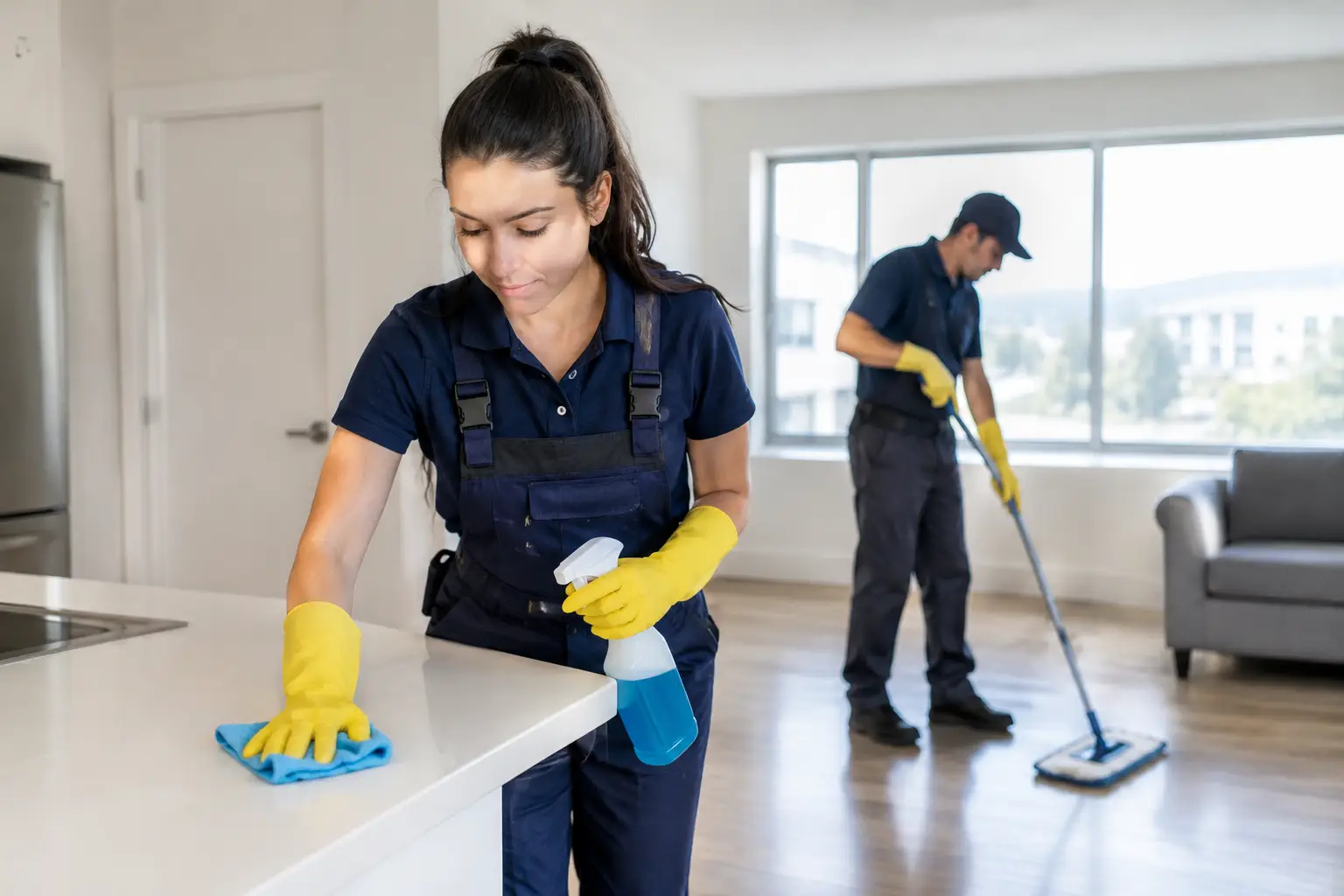
When a unit is almost ready, cleaning is often treated like the last box to check. That is usually where delays, callbacks, and missed leasing windows start. A solid residential cleaning service guide helps property managers avoid that bottleneck by treating cleaning as an operational function, not a cosmetic extra.
In multifamily and rental housing, the standard for cleaning is different from what a single-home owner might expect. The goal is not simply to make a space look better for an hour. The goal is to support turnover speed, protect surfaces, present the unit well for showings, and hand off a rent-ready space without creating another round of work for maintenance, flooring, or paint teams.
What a residential cleaning service guide should actually cover
For property professionals, a residential cleaning service guide needs to do more than explain what gets wiped down. It should clarify how cleaning fits into turnover sequencing, vendor accountability, risk management, and resident expectations.
A useful guide starts with scope. Not every vacancy needs the same level of service. A lightly used condo coming off a short tenancy may need detailed surface cleaning and appliance attention. A harder-worn apartment may need debris removal, odor treatment, stain remediation, and closer coordination with repair crews. If the scope is vague, the result is predictable - crews underbid the labor, finish too quickly, and leave your team to catch what should have been handled the first time.
It should also define the handoff standard. "Clean" means different things to a cleaner, a site manager, a leasing agent, and an incoming resident. The more exact the standard, the fewer disputes you will have. That means identifying finish expectations for kitchens, baths, flooring edges, interior glass, cabinet interiors, fixtures, and areas that often trigger complaints, such as baseboards and lingering odors.
Why cleaning affects vacancy more than most teams realize
Cleaning rarely happens in isolation. It sits between multiple trades, and if the schedule is off by even half a day, the entire turnover timeline can slip. That matters when a ready unit can be shown, leased, and occupied faster.
If cleaning happens too early, dust from patching, paint touch-ups, or flooring work can undo it. If it happens too late, showings get pushed back. The right approach is to treat cleaning as part of the turnover plan from day one, with a clear sequence and one point of accountability.
This is where experienced property vendors stand apart from basic cleaning crews. A trusted general contractor or integrated property services partner understands that cleaning has to align with punch work, flooring completion, lock changes, and final inspection. That coordination reduces idle time and helps avoid sending multiple vendors back into the same unit.
Choosing the right residential cleaning service partner
A cleaning provider for occupied homes is one thing. A cleaning provider for rental operations is another. Property managers need a vendor that understands deadlines, documentation, and compliance.
Start with licensing and risk coverage where applicable to the broader scope of work. If the same vendor may also handle turnover repairs, maintenance, restoration, or flooring, full compliance matters even more. Fully licensed, bonded, and insured partners reduce exposure and simplify vendor management. For multifamily portfolios, especially in Southern California, that is not a nice extra. It is table stakes.
The next issue is capacity. A vendor may perform well on one unit a week and still fail when asked to support several turnovers across multiple sites. Ask whether they can scale for high-volume needs, emergency turns, and last-minute schedule changes. Speed without structure is not real capacity.
Communication matters just as much. Property teams need updates that are direct, fast, and useful. If a cleaner notices water damage under a sink, mold indicators in a bathroom, or flooring issues hidden by debris, they should escalate immediately. That kind of field awareness can prevent a cosmetic turn from becoming a missed restoration issue.
Scope matters more than low bids
One of the most common turnover problems starts with a cheap quote attached to an unclear scope. On paper, the job looks covered. In practice, crews skip behind appliances, avoid heavy soap buildup, leave cabinet interiors untouched, or treat odor as someone else’s problem.
A stronger scope of work should identify what is included in standard turnover cleaning and what triggers additional labor. That may include heavy grease, post-construction dust, pet hair accumulation, adhesive residue, interior refrigerator cleaning, or stain treatment. It should also make clear whether trash-out, basic disinfecting, and spot treatment are built into the assignment or approved separately.
This does not mean every unit needs an exhaustive cleaning package. It means the vendor and the manager should agree on the condition category before work begins. That protects timeline, quality, and accountability all at once.
Turnover cleaning versus deep cleaning
These are often treated as the same thing, but they serve different operational goals. Turnover cleaning is designed to make a vacant unit show-ready and move-in ready within a strict schedule. It is production-oriented and tied to leasing velocity.
Deep cleaning is more labor-intensive and may be necessary after long tenancies, deferred maintenance, resident damage, or extended vacancy. It often includes detailed buildup removal and higher attention to neglected surfaces. The trade-off is time. If you ask for deep-clean results on a same-day turnover schedule, quality will usually suffer somewhere.
The practical move is to assess condition honestly during the initial walk. If a unit needs more than a standard turn, label it early, schedule accordingly, and coordinate with the rest of the turnover team. Waiting until final inspection to upgrade the cleaning scope is what creates avoidable delays.
Quality control is where most cleaning programs break down
Even with a good vendor, quality can drift if the inspection process is inconsistent. A cleaner may follow their own checklist, while your team evaluates based on leasing presentation. That gap leads to rework.
The easiest fix is a repeatable inspection standard. Every turned unit should be reviewed the same way, whether it is a single condo, a multifamily apartment, or an HOA-managed rental. Focus on the areas that create the most visible friction: appliance interiors, sinks and fixtures, tub and shower condition, toilet bases, window tracks, floor edges, cabinet shelves, and odor.
Photo documentation can help, especially across distributed portfolios. It creates a record of condition, helps resolve disputes, and gives regional managers a faster way to verify completion. It also improves vendor accountability without turning every turnover into a long back-and-forth.
When cleaning reveals bigger property issues
Cleaning crews often see problems before anyone else does. Once the dust and debris are cleared, signs of water intrusion, swelling base material, cracked caulking, hidden mildew, pest activity, or damaged flooring become easier to spot.
That is why single-source accountability has real value. If the vendor cleaning the unit can also flag maintenance needs, coordinate restoration response, or hand off directly to repair teams, your staff spends less time chasing separate contractors. For managers handling multiple vacancies, that operational efficiency adds up quickly.
Companies such as V&S Management Services Inc. are built around that broader property-services model. For multifamily operators, that can mean fewer handoff errors and faster progress from vacancy to rent-ready status.
What property managers should expect from a professional process
A professional residential cleaning service process should begin with a clear assessment, not a generic assumption. The vendor should understand occupancy status, unit condition, access logistics, timeline, and whether other trades are still active.
From there, the work should be scheduled in the correct order, documented clearly, and closed out with a defined inspection standard. If issues are found outside cleaning scope, they should be escalated quickly. If touch-ups are needed, the turnaround should be fast, not pushed to another week.
That level of execution matters most during high-turnover periods, insurance-related disruptions, and portfolio-wide refresh projects. In those moments, managers do not need a vendor that simply cleans. They need a partner that supports operations, protects deadlines, and understands how one delayed unit affects the larger asset.
The standard should match the asset
A workforce apartment, a luxury condo, and an HOA-managed unit should not all be cleaned to the same visual standard or production pace. Asset class, resident expectations, and leasing strategy all shape what “ready” means.
That is the practical takeaway from any residential cleaning service guide: the best cleaning plan is not the cheapest or the most aggressive. It is the one built around your actual turnover volume, property standard, and risk profile. When cleaning is scoped correctly, sequenced properly, and backed by a responsive, fully compliant vendor, it stops being a recurring problem and starts doing what it should - helping your properties move forward.