A leaking riser at 2:00 a.m. rarely stays a plumbing issue for long. By morning, it can become a tenant relations problem, a flooring replacement job, an insurance claim, and a vacancy risk. That is exactly why professional property maintenance services matter for property managers, HOA boards, and commercial owners who cannot afford operational gaps.
For multi-unit portfolios, maintenance is not a side task. It is part of asset protection, occupancy strategy, and risk control. The right service partner does more than handle work orders. They help reduce downtime, keep vendors accountable, and protect the condition of the property before small issues turn into expensive disruptions.
What property maintenance services should actually cover
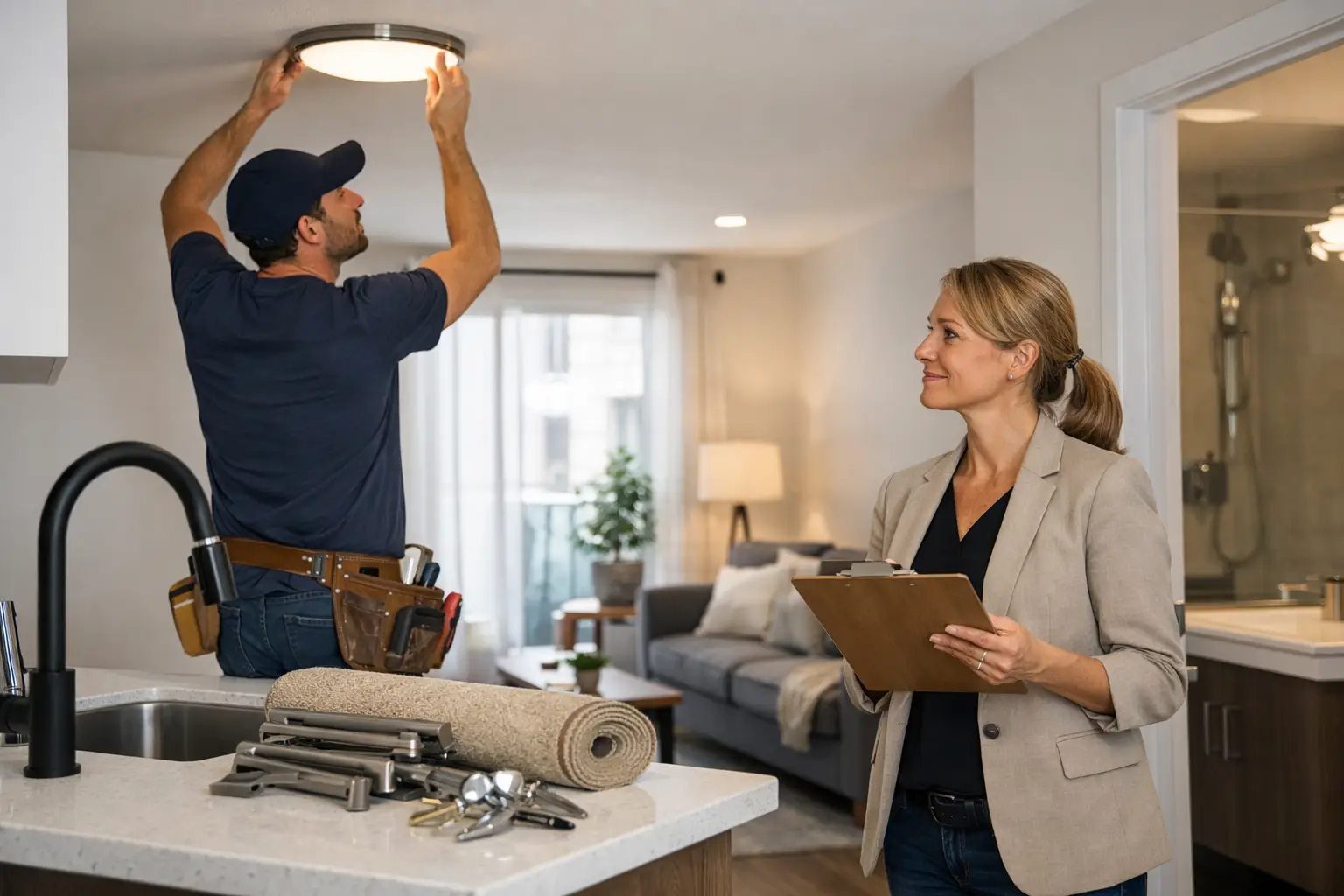
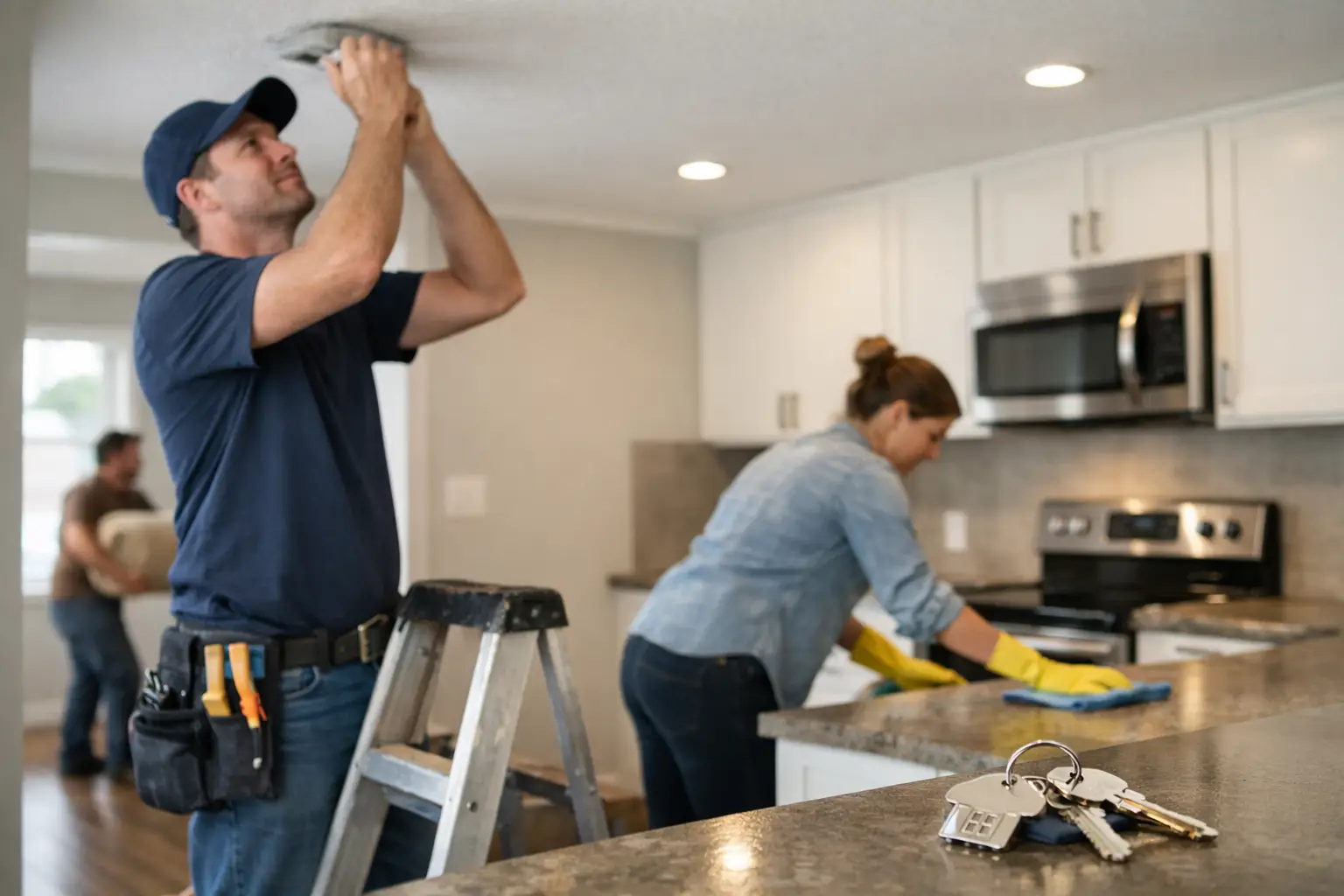
A lot of providers use the phrase broadly, but not every company delivers the same scope or the same level of accountability. For professional real estate operators, property maintenance services should cover both routine needs and urgent response. That usually includes common area upkeep, unit-ready repairs, cleaning coordination, flooring replacement, minor and major repairs, turnover support, and fast action when water intrusion or damage threatens the building.
That range matters because property operations do not happen in clean categories. A move-out can reveal damaged subflooring. A plumbing incident can trigger mitigation, demolition, reconstruction, and scheduling issues across multiple units. An HOA maintenance issue may start with a complaint and end with insurance documentation, emergency response, and contractor coordination.
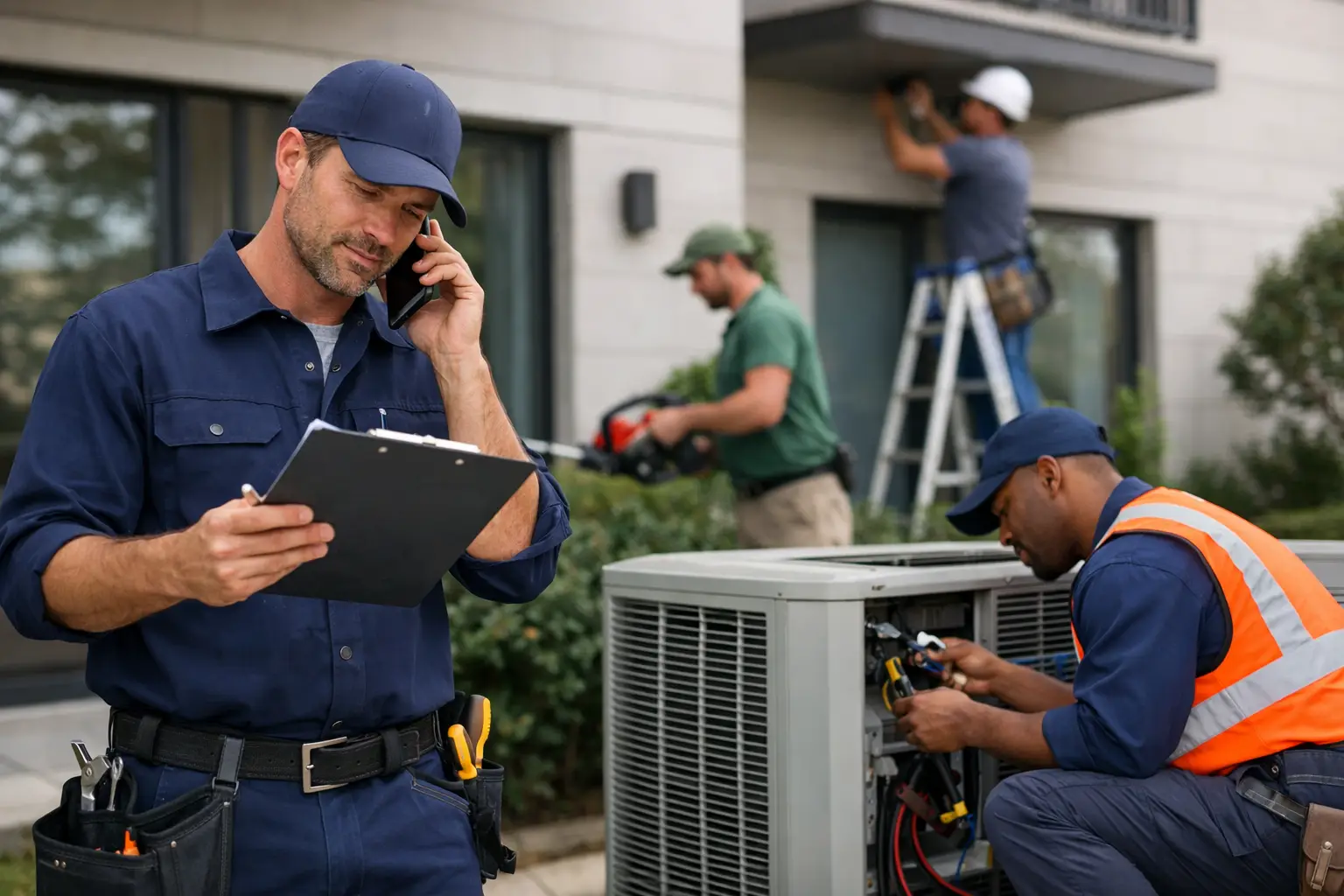
When those tasks are split between multiple vendors, delays are common. One trade finishes late, another does not show, and your internal team spends the day chasing updates instead of managing the property. A single-source contractor changes that equation by making one team responsible for the handoff from problem to completion.
Why single-source property maintenance services save time
Property managers are often told to collect separate specialists for every category of work. In theory, that sounds efficient. In practice, it creates scheduling gaps, finger-pointing, and duplicated communication.
Single-source property maintenance services work better when speed and accountability matter. If one trusted general contractor can handle turnover cleaning, flooring, repairs, remodel coordination, and urgent water damage response, your team has fewer moving parts to manage. There is less time lost between inspection, approval, mobilization, and completion.
This matters most during high-pressure moments. If a unit needs to be turned quickly for a new lease, every extra day affects revenue. If a commercial tenant experiences water damage, every hour can affect business continuity and the extent of the loss. A maintenance partner with 24/7 emergency response and the capacity to move from mitigation into restoration provides a practical advantage, not just convenience.
The trade-off is that not every all-in-one contractor is built for this level of execution. Some promise broad capability but rely heavily on subcontractor layers, which can reintroduce the same coordination problems. Property professionals should look for a provider with proven field capacity, compliance documentation, and a track record managing multi-step work under real deadlines.
The compliance question is not optional
Experienced property professionals already know this, but it is still worth stating plainly. Maintenance work is not just about fixing what is broken. It is about doing it with a fully licensed, insured, and bonded partner who can operate responsibly on occupied properties and commercial sites.
That protects your organization in several ways. First, it reduces liability exposure. Second, it creates a clearer standard for workmanship and accountability. Third, it gives owners, boards, and stakeholders confidence that the work is being handled professionally.
For HOA boards and portfolio managers, compliance also affects vendor approval and internal reporting. If a contractor cannot provide the right documentation quickly, that becomes your delay. If they are not prepared to work within building rules, tenant communication standards, or access protocols, your staff absorbs the operational cost.
This is one reason many real estate professionals prefer a long-term maintenance partner over a rotating list of low-visibility vendors. Consistency helps. The contractor learns the property, understands expectations, and can respond with fewer surprises.
Routine maintenance and emergency response need the same strategy
Some teams treat preventive maintenance and emergency restoration as separate worlds. On the ground, they are closely connected.
A contractor who understands the property during routine service is usually better positioned when something urgent happens. They know the building layout, access points, unit conditions, and communication channels. That familiarity can speed up response and reduce confusion during an already stressful event.
Water damage is the clearest example. Fast mitigation is critical, but speed alone is not enough. The process often requires documentation, communication with insurance stakeholders, moisture control, demolition decisions, and a clear path toward rebuilding affected areas. If your emergency vendor disappears after the initial phase, your team still has to solve the reconstruction problem.
A more effective setup is continuity from emergency response to final repair. That does not mean every issue should be handled the same way. Some properties need only a quick fix. Others need a broader restoration plan. The point is that your maintenance strategy should account for both everyday wear and high-impact events without forcing your team to start over each time.
How property maintenance services affect vacancy and portfolio value
Maintenance quality shows up in leasing performance more than many owners realize. Delayed repairs, inconsistent turnovers, and unfinished punch lists extend vacancy and create friction with incoming tenants. On the commercial side, visible property issues can shape tenant confidence and renewal conversations.
Good property maintenance services support rent-ready standards and asset value at the same time. Clean turnovers, durable flooring installation, timely repairs, and coordinated remodel work all contribute to faster occupancy and stronger presentation. They also help prevent the gradual decline that turns manageable upkeep into major capital expense.
There is an it depends factor here. A newer asset with stable occupancy may need a lighter maintenance cadence than an older multi-unit property with frequent turnover. An HOA may prioritize common area appearance and resident communication, while a commercial client may care most about response time and minimal disruption to operations. The service model should fit the asset, not the other way around.
That is where an experienced contractor adds value. They are not just showing up to complete isolated tasks. They are helping the client make practical decisions about timing, scope, and long-term upkeep.
What to look for in a maintenance partner
The strongest maintenance relationships are built on reliability that can be measured. Can the contractor respond after hours. Can they manage both basic maintenance and larger corrective work. Can they communicate clearly with managers, tenants, boards, and ownership groups. Can they help move a project from issue identification to completed repair without creating more administrative work for your team.
For many Southern California portfolios, bilingual communication is also a real operational benefit. It helps reduce confusion, improve tenant interactions, and keep projects moving across diverse communities and work environments.
Depth matters too. A provider that can support turnover cleaning, flooring, repairs, water damage response, and remodeling creates continuity that standalone vendors often cannot. V&S Management Services Inc. has built its reputation around that model for a reason. When one accountable team can step in across the full life cycle of property needs, managers spend less time coordinating and more time controlling outcomes.
That does not mean every job requires a major contractor. Some small tasks can be handled simply. But for portfolios where timing, compliance, and tenant readiness affect revenue, choosing a qualified partner is usually the lower-risk decision.
A smarter standard for property maintenance services
Property operations rarely become easier with more vendors, more handoffs, and more uncertainty. The stronger approach is to treat maintenance as part of the larger performance of the asset. That means faster response, better coordination, and work completed by a partner that understands both the urgency of the moment and the long-term value of the property.
When property maintenance services are structured that way, they do more than solve immediate issues. They help protect occupancy, reduce avoidable delays, and give your team a dependable system for whatever the building throws at you next.
The best time to strengthen your maintenance strategy is before the next emergency, before the next turnover bottleneck, and before a small repair becomes a larger claim.