CALL US NOW:


How to Plan a Flooring Replacement Project
A flooring project usually feels simple until the room is empty, the old material is up, and a hidden problem slows everything down. If you want to plan flooring replacement project work the right way, the goal is not just picking a floor you like. It is making smart decisions about timing, budget, use of the space, and the condition of the subfloor before installation day arrives.
For homeowners, property managers, real estate professionals, and business owners in Orange County and Los Angeles County, flooring affects more than appearance. It influences durability, cleanup, tenant turnover, resale value, and how quickly a property can get back to normal. A good plan helps you avoid extra days of disruption and surprise costs that could have been caught earlier.
What to decide before you plan flooring replacement project details
The first question is not which color or finish you want. It is how the space is used every day. A busy family home, a rental unit between tenants, a retail space with constant foot traffic, and an office suite all place different demands on flooring.
That is why material selection should come after you define the job of the room. Hardwood may look excellent, but it is not always the best fit for areas with frequent moisture or heavy wear. Luxury vinyl plank is popular because it balances appearance, durability, and easier maintenance. Tile works well in wet zones but can feel harder underfoot. Carpet can still make sense in selected spaces where comfort matters more than moisture resistance.
This is also the stage to decide whether you are replacing flooring in one room or across the property. A single-room project may seem easier, but patchwork scheduling and multiple mobilization dates can increase inconvenience. In some cases, doing connected spaces at the same time is more efficient and creates a cleaner final result.
Start with the condition under the floor
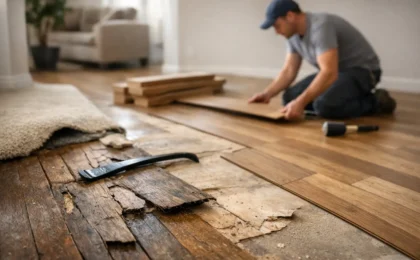
One of the biggest mistakes in a flooring replacement project is assuming the visible surface tells the whole story. The real condition of the floor often shows up only after removal begins. Uneven subfloors, past water damage, mold concerns, soft spots, and adhesive residue can all affect the installation.
This matters especially in properties that have had leaks, slab moisture issues, plumbing problems, or prior restoration work. If the subfloor is not sound, even the best flooring material can fail early. Boards can shift, vinyl can separate, tile can crack, and carpet padding can trap odors.
A professional inspection before installation helps set realistic expectations. It also gives you a chance to coordinate related work, such as moisture mitigation, baseboard replacement, minor repairs, painting, or cleanup. When one contractor can handle multiple phases, the process is usually faster and easier to manage.
Budget for more than the material
When people price flooring, they often focus on the square-foot cost of the product. That number matters, but it is only one part of the total investment. A realistic budget should include removal and disposal of old flooring, subfloor preparation, trim work, furniture moving, transitions between rooms, and labor.
If the property is occupied, you should also think about the cost of disruption. For a homeowner, that might mean temporary room shutdowns or moving schedules around children and pets. For a property manager or business owner, downtime can affect leasing, operations, or tenant satisfaction.
A lower-cost material is not always the lower-cost project. If a product requires more subfloor perfection, special underlayment, or complex installation, the overall price may climb. On the other hand, a slightly higher material cost can be worth it if it reduces maintenance or holds up longer in a high-traffic environment.
It helps to leave room in the budget for hidden conditions. Not every project runs into surprises, but older properties and water-damaged spaces often do. A small contingency can prevent a stressful decision later.
Timing can make or break the project
The best flooring schedule depends on who is using the property and how quickly the space needs to be ready. In a family home, the right time may be before a move-in, during a school break, or room by room to reduce disruption. In a rental property, the ideal window is often during turnover, when the unit is already vacant. In a commercial setting, after-hours or phased work may be the better choice.
Material lead times also matter. Some products are in stock and ready quickly. Others require ordering, delivery coordination, and more flexible scheduling. If your project is connected to a sale, lease-up, restoration claim, or remodel, those timelines need to be considered together instead of separately.
This is where experienced project coordination makes a real difference. If the property needs cleaning, repairs, moisture evaluation, baseboard work, or painting before the final floor goes in, those steps should be sequenced properly. Trying to force flooring in too early often leads to rework.
How to choose the right flooring for the property
The right flooring is not always the trendiest option. It is the one that fits the property, the level of traffic, and the maintenance expectations.
For owner-occupied homes, style and comfort may carry more weight. Many homeowners want a floor that updates the look of the home while standing up to pets, kids, and daily wear. In those cases, waterproof or water-resistant materials often provide a strong balance of appearance and practicality.
For rentals and managed properties, durability and turnover efficiency tend to matter most. Property managers usually need flooring that is easy to clean, resistant to damage, and consistent enough to install across multiple units when needed. Spending a little more on a durable product can reduce replacement frequency and maintenance calls.
For commercial spaces, the decision often comes down to traffic patterns, cleaning requirements, and safety. Slip resistance, stain resistance, and ease of maintenance may matter more than a premium look in some areas. In customer-facing spaces, visual impact may still be a priority, but it should be balanced against lifespan.
Prepare the space the right way
Good preparation protects the schedule. Before installation begins, make sure the rooms are cleared according to the scope of work, access is confirmed, and anyone using the property understands the timeline.
That includes small but important details. Will appliances need to be moved? Are there heavy furniture pieces, wall-mounted fixtures, or doors that need adjustment? Will pets or children need to stay out of certain areas? If the project is in a tenant-occupied property or business, who is responsible for access and communication?
Dust, noise, and temporary room closures should be expected. Flooring replacement is not just a design update. It is active construction. Setting those expectations early helps the project move more smoothly and reduces frustration once work begins.
Work with a contractor who sees the whole job
Flooring does not happen in isolation. It often overlaps with cleaning, restoration, repairs, insurance-related issues, or larger property improvements. That is why choosing a contractor based only on installation pricing can be shortsighted.
A trusted general contractor can look at the full picture and identify issues that might affect the floor before they become expensive problems. If there has been water damage, the source and the affected materials need to be addressed first. If the property is being prepared for sale or tenant turnover, flooring may need to align with painting, deep cleaning, and punch-list repairs.
For local property owners who want one dependable partner instead of managing multiple vendors, that broader support can save time and reduce miscommunication. V & S Management Services Inc has built its reputation on exactly that kind of practical, responsive service across residential and commercial properties.
Questions worth asking before work starts
Before approving a flooring project, make sure the scope is clear. Ask what is included in demolition, whether subfloor repairs are part of the estimate, how transitions and baseboards will be handled, and what happens if hidden damage is found.
You should also ask about labor warranty coverage, expected project duration, and how the crew will protect adjacent areas. If the property has had past moisture issues, ask how that will be evaluated before installation. Those questions are not about being difficult. They are how responsible owners and managers avoid preventable setbacks.
The best flooring replacement projects are rarely the ones rushed into with the cheapest product and the fastest promise. They are the ones planned with a clear scope, a realistic schedule, and a contractor who understands how the floor fits into the condition and function of the whole property.
If you are getting ready to replace flooring, take the extra step to plan around how the space is used, what may be hiding underneath, and what other work should happen at the same time. A little planning at the front end usually saves a lot of trouble once the old floor comes up.

YOU MAY ALSO LIKE

May 17, 2026
Learn how to handle burst pipe damage fast to protect units, reduce downtime, and limit insurance issues with the right emergency response steps.

May 17, 2026
Need commercial office cleaning services near me? Learn what to look for, what affects cost, and how to choose a reliable local team.

May 17, 2026
What is home cleaning services? Learn what it includes, who needs it, typical tasks, and how to choose a reliable local provider with confidence.

May 17, 2026
Learn the top signs of hidden water damage in walls, ceilings, and floors before small leaks turn into costly repairs, downtime, and claims.
May 16, 2026
Learn when should flooring be replaced in rentals and commercial spaces. Spot wear, water damage, safety issues, and timing to reduce downtime.

March 15, 2026
Lorem ipsum dolor sit amet, consectetur adipiscing elit. Suspendisse vitae ligula quis

March 9, 2026
Lorem ipsum dolor sit amet, consectetur adipiscing elit. Suspendisse vitae ligula quis

March 8, 2026
Lorem ipsum dolor sit amet, consectetur adipiscing elit. Suspendisse vitae ligula quis

March 14, 2019
Lorem ipsum dolor sit amet, consectetur adipiscing elit. Suspendisse vitae ligula quis

Cleaning /
March 13, 2019
Lorem ipsum dolor sit amet, consectetur adipiscing elit. Suspendisse vitae ligula quis

March 12, 2019
Lorem ipsum dolor sit amet, consectetur adipiscing elit. Suspendisse vitae ligula quis

March 10, 2019
Lorem ipsum dolor sit amet, consectetur adipiscing elit. Suspendisse vitae ligula quis