CALL US NOW:

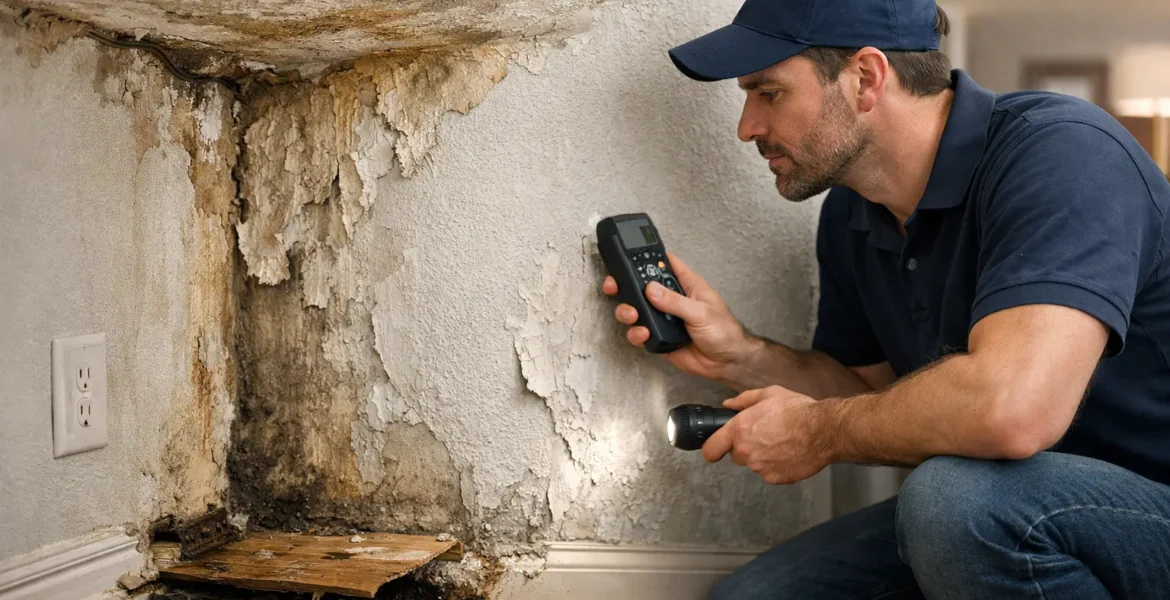
Top Signs of Hidden Water Damage
A unit looks clean, the turnover is on schedule, and the resident move-in is days away – then a soft baseboard, a faint odor, or a ceiling stain tells a very different story. The top signs of hidden water damage rarely announce themselves with a burst pipe or standing water. More often, they show up quietly, behind finishes and inside wall cavities, where delays can turn a manageable repair into drywall replacement, flooring loss, mold concerns, insurance complications, and longer vacancy periods.
For property managers, HOA boards, commercial owners, and real estate professionals, that is what makes hidden moisture so expensive. The visible damage is only part of the problem. The larger issue is how fast water can spread through adjoining units, subflooring, insulation, and shared building materials before anyone realizes there is an active source.
Why hidden water damage gets missed
In multi-unit and commercial properties, water does not always stay near the original leak. It can travel along framing, settle under flooring, collect above ceilings, or migrate from one unit to another. By the time a tenant reports a stain or odor, the source may be several feet away.
That is also why surface-level inspections are not enough. Fresh paint can temporarily disguise a problem. Carpet can feel only slightly damp. A maintenance team may fix the obvious plumbing issue, but if the surrounding materials were not properly dried, deterioration can continue after the repair is closed out.
Top signs of hidden water damage in a building
The earliest signs are usually subtle. On their own, they may not look urgent. Taken together, they are a strong signal that the property needs a more thorough inspection.
Discoloration on ceilings or walls
Brown, yellow, or copper-toned staining is one of the most recognizable signs, but it is often treated as a cosmetic issue when it is actually a moisture issue. Water stains can appear dry even when the leak is still active. In upper-floor units, hallways, and common areas, ceiling discoloration often points to plumbing lines, roof intrusion, or HVAC drainage problems.
If the stain grows, changes shape, or reappears after repainting, that usually means the source was never fully resolved. On commercial and multi-unit properties, that can quickly become a repeat service call with a larger repair scope.
Bubbling paint or peeling finishes
When moisture gets trapped behind paint, texture, or wallpaper, surfaces begin to lift. You may notice bubbling, blistering, cracking, or sections that no longer adhere cleanly to the wall. This happens because the substrate underneath is absorbing water and losing stability.
In bathrooms, kitchens, laundry areas, and around exterior-facing walls, these finish failures often show up before more obvious structural damage. They are easy to dismiss during a busy turnover, but they deserve attention because they usually mean the problem is beneath the surface, not on it.
Warped flooring or loose baseboards
Flooring tells the truth quickly. Laminate may buckle, vinyl planks may lift at the seams, hardwood may cup, and carpet tack strips can loosen. Baseboards may swell, separate from the wall, or develop soft spots that were not there before.
This is especially important in ground-floor units, slab-on-grade buildings, and properties with older plumbing lines. Water can sit below finished flooring for days or weeks. By the time the surface changes become visible, the underlayment or subfloor may already be affected.
Musty or persistent odors
One of the top signs of hidden water damage is smell. A musty, damp, or stale odor that returns after cleaning usually indicates moisture trapped in porous materials such as drywall, carpet pad, insulation, cabinetry, or framing.
Odor matters because it often appears before stains become obvious. If a vacant unit smells damp with no clear source, that is not something to mask with air freshener or routine cleaning. It is a reason to inspect for moisture intrusion, especially around supply lines, shower enclosures, water heaters, and exterior walls.
Soft drywall, sagging ceilings, or spongy surfaces
A wall that feels soft when lightly pressed or a ceiling that sags even slightly should be treated seriously. Drywall loses integrity when saturated, and ceiling materials can hold more water than they appear to from below.
In occupied buildings, residents may describe this as a wall feeling “different” or a floor feeling “soft near the edge.” Those reports are worth acting on quickly. Soft materials typically mean the water exposure is not brand new.
Unexplained increases in water bills
Not every hidden leak leaves a visible mark right away. In some cases, utility data is the first warning sign. If water usage jumps without a clear operational reason, it may point to a concealed plumbing leak behind walls, under sinks, in irrigation lines, or beneath the slab.
For portfolio managers and HOA boards, this is where trend monitoring helps. A higher bill on its own does not prove interior damage, but when it aligns with tenant complaints, staining, or odor, it becomes much more significant.
Mold spots or recurring mildew
Small areas of mold or mildew around baseboards, under windows, near vents, or inside cabinets can signal an ongoing moisture issue. The key word is recurring. If the area has been cleaned but growth returns, moisture is likely still present.
This is one of the clearest examples of why quick cosmetic fixes can backfire. Wiping down the visible area may improve appearance for the moment, but it does not solve the source problem. In multifamily buildings, that delay can expose neighboring units and common walls to the same conditions.
Rust, corrosion, or damaged cabinet interiors
Hidden water damage often shows up in the materials surrounding the leak before it appears in open view. Rusted angle stops, corroded supply lines, swollen vanity interiors, and particleboard shelves that crumble at the edges are common warning signs.
These details matter during inspections and turnovers because they point to repeated moisture exposure. Even if the current leak seems minor, the surrounding materials may already be compromised.
Where these warning signs show up first
In Southern California properties, some areas deserve closer attention than others. Kitchens, bathrooms, laundry rooms, water heater closets, roof transitions, window perimeters, and HVAC condensate lines are common problem points. In older multifamily buildings, aging supply lines and drain systems increase the risk of slow leaks that stay hidden for too long.
There is also a timing issue. Water damage discovered during a vacancy is disruptive, but hidden damage found after a new tenant moves in is worse. That adds scheduling pressure, communication issues, and possible habitability concerns. For realtors and property managers working on strict deadlines, early detection protects both the asset and the timeline.
What to do when you spot hidden water damage signs
Speed matters, but so does scope. The first step is to stop the source if it can be identified safely. After that, the focus should shift to inspection, moisture detection, and drying – not just visible cleanup. If materials remain wet behind walls or under flooring, the damage continues even when the surface looks better.
This is where many properties lose time and money. A handyman repair may address the leak itself, but not the moisture migration, damaged materials, or insurance documentation. In larger buildings and multi-unit environments, a coordinated response is usually the safer move because it reduces the chance of repeat damage, cross-unit spread, and incomplete restoration.
A trusted general contractor with 24/7 emergency response and restoration experience can help determine whether the issue is isolated or part of a wider building condition. For owners and managers juggling occupancy, claims, and vendor compliance, having one fully licensed, bonded, and insured partner manage mitigation and repairs can keep the situation from expanding into a much larger operational problem.
The cost of waiting is usually higher than the cost of checking
Hidden water damage is expensive because it stays productive while everyone assumes the problem is small. A faint stain can mean active moisture above the ceiling. A minor cabinet issue can point to a slow leak affecting the wall behind it. A musty smell in one unit can indicate migration into adjacent materials.
Experienced property teams learn to treat early warning signs as asset protection, not overreaction. If something feels off, looks inconsistent, or keeps coming back after a simple fix, it is worth getting a proper evaluation before that moisture turns into reconstruction, extended downtime, or a difficult claim.
The best time to act is usually the first time the building tells you something is wrong.

YOU MAY ALSO LIKE

May 17, 2026
Learn how to handle burst pipe damage fast to protect units, reduce downtime, and limit insurance issues with the right emergency response steps.

May 17, 2026
Need commercial office cleaning services near me? Learn what to look for, what affects cost, and how to choose a reliable local team.

May 17, 2026
What is home cleaning services? Learn what it includes, who needs it, typical tasks, and how to choose a reliable local provider with confidence.

May 17, 2026
Learn how to plan flooring replacement project steps, budget, timing, materials, and prep so your home or property upgrade stays on track.

May 16, 2026
Learn when should flooring be replaced in rentals and commercial spaces. Spot wear, water damage, safety issues, and timing to reduce downtime.

March 15, 2026
Lorem ipsum dolor sit amet, consectetur adipiscing elit. Suspendisse vitae ligula quis

March 9, 2026
Lorem ipsum dolor sit amet, consectetur adipiscing elit. Suspendisse vitae ligula quis

March 8, 2026
Lorem ipsum dolor sit amet, consectetur adipiscing elit. Suspendisse vitae ligula quis

March 14, 2019
Lorem ipsum dolor sit amet, consectetur adipiscing elit. Suspendisse vitae ligula quis

Cleaning /
March 13, 2019
Lorem ipsum dolor sit amet, consectetur adipiscing elit. Suspendisse vitae ligula quis

March 12, 2019
Lorem ipsum dolor sit amet, consectetur adipiscing elit. Suspendisse vitae ligula quis

March 10, 2019
Lorem ipsum dolor sit amet, consectetur adipiscing elit. Suspendisse vitae ligula quis