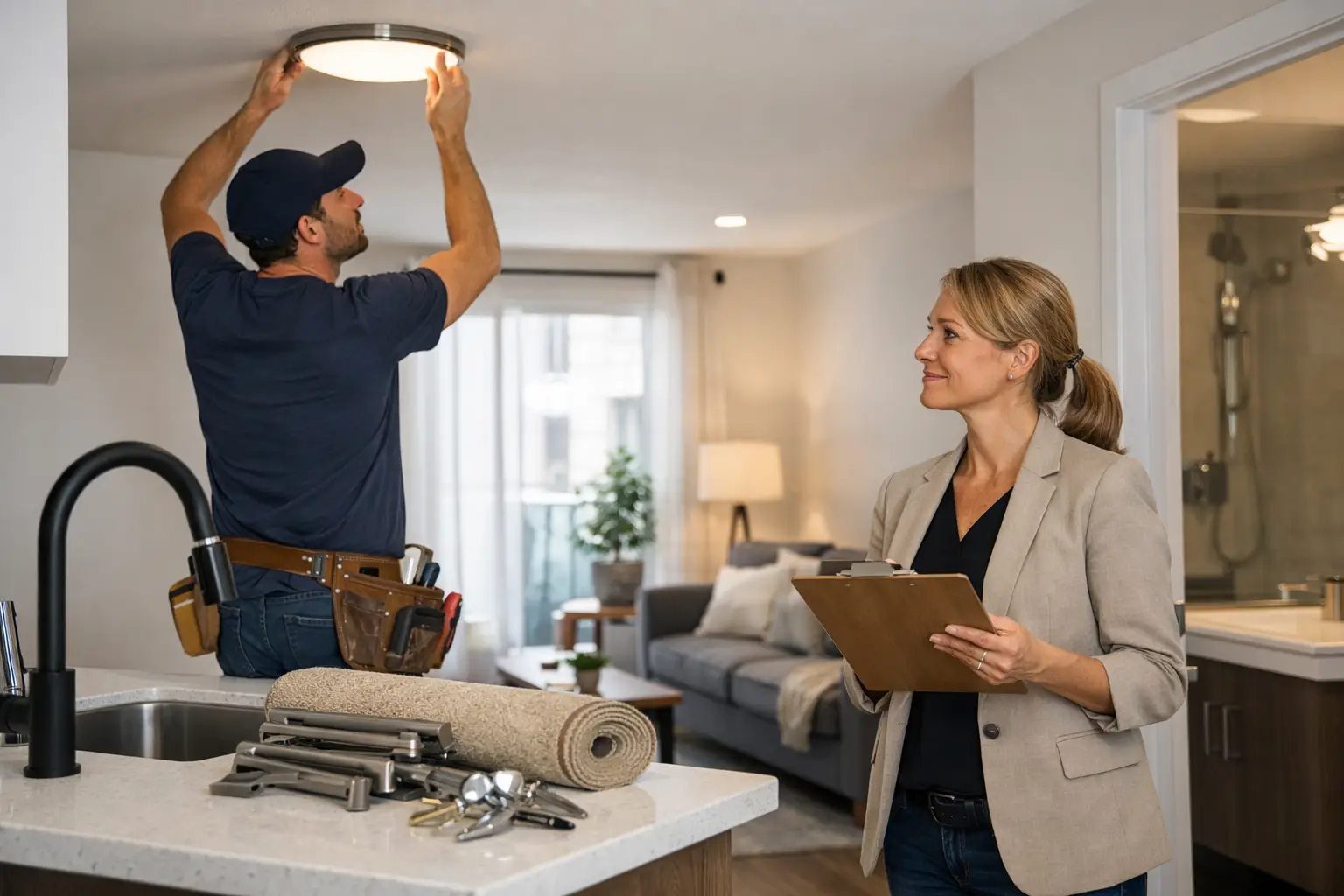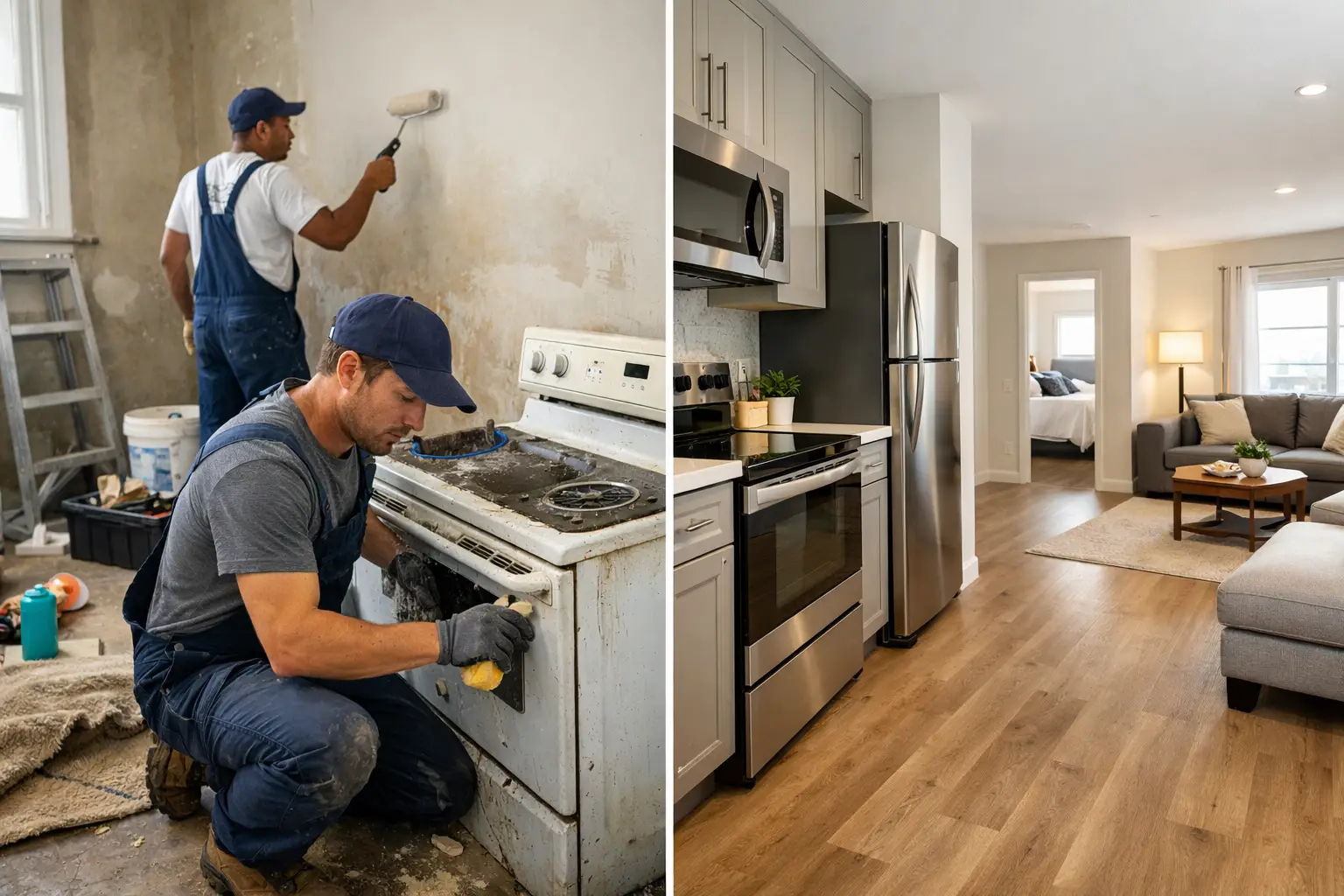
A vacant unit can look like a simple cleaning assignment until the walk-through reveals water staining beneath a sink, worn flooring at the entry, damaged blinds, and a wall repair that was never properly completed. Apartment turnover before and after is not just a visual comparison. It is a record of how well a property team protects rent readiness, resident expectations, and long-term asset value.
For property managers and multi-unit owners, the goal is not to make a unit look temporarily presentable. The goal is to return it to market quickly, safely, and consistently, without creating deferred maintenance that becomes a larger expense during the next tenancy. That requires a disciplined scope, dependable trade coordination, and a contractor that can be accountable for the finished condition.
What Apartment Turnover Before and After Should Reveal
The “before” condition tells a manager what must be addressed, while the “after” condition should prove that the work was completed to a defined standard. A rushed turnover can hide issues behind fresh paint or a quick surface clean. Those shortcuts may save a day upfront, but they can lead to early maintenance calls, dissatisfied new residents, and avoidable reputation risk.
A useful before-and-after review begins with documentation. Photos, condition notes, and a unit-specific scope make it easier to distinguish tenant-caused damage from normal wear, prioritize health and safety concerns, and keep ownership informed. They also give vendors a clear starting point, reducing the back-and-forth that slows down a vacancy.
The after condition should be more than bright walls and vacuum lines. It should show that the unit is clean, functional, safe, and ready to show. Fixtures should operate correctly, flooring transitions should be secure, cabinets and appliances should be cleaned and inspected, and the final presentation should match the standards of the building and its target resident.
This is particularly important across Southern California portfolios, where a delayed turn can quickly affect leasing momentum. A unit that sits vacant because one vendor is waiting on another is not simply an operational inconvenience. It is lost revenue and added management time.
Start With a Scope That Separates Wear From Repairs
Every efficient turnover starts with a detailed inspection shortly after move-out. Waiting several days to identify a damaged subfloor, plumbing leak, or electrical concern can derail the entire schedule. The best process assigns responsibility early and groups related work so crews are not repeatedly entering the same unit.
Normal wear may call for touch-up paint, professional cleaning, or minor hardware adjustments. Damage or aging infrastructure may require drywall repair, replacement flooring, plumbing service, or more extensive remodeling. The distinction matters because treating a repair like a cosmetic issue often creates a return visit later.
Look Beyond the Most Visible Surfaces
A clean carpet can still conceal odor, staining, or moisture concerns. Fresh paint cannot correct poorly patched drywall, loose outlets, or a leaking toilet. Before authorizing cosmetic work, inspect the systems and surfaces that will determine whether the unit stays problem-free after move-in.
Pay close attention to kitchens and bathrooms, where minor leaks can become cabinet damage, mold conditions, or insurance issues. Check drains, supply lines, shutoff valves, caulking, exhaust ventilation, and the floor around toilets and tubs. If there is evidence of water intrusion, the right response may involve moisture detection and restoration work before flooring or paint is installed.
That is one reason a single-source property partner can be valuable. Instead of having a cleaner identify a concern, a maintenance vendor assess it later, and a separate flooring crew wait for clearance, the turnover can be coordinated under one accountable scope.
The Core Work That Changes the After Condition
Not every unit requires the same level of work. A well-maintained apartment with a short tenancy may need cleaning, paint touch-ups, and a final inspection. A unit with worn finishes, neglected repairs, or water damage may require a more complete reset. The right decision depends on the condition of the unit, the building standard, the expected rent position, and the time available before marketing.
The work most often affecting the final result includes the following:
- Detailed turnover cleaning for kitchens, bathrooms, appliances, windows, fixtures, and all high-touch surfaces.
- Drywall, paint, hardware, door, cabinet, and fixture repairs that restore a consistent appearance and function.
- Carpet cleaning or replacement, along with resilient flooring installation when materials are worn, damaged, or no longer suitable for the property.
- Plumbing, electrical, and safety corrections identified during the inspection.
- Final quality control to confirm that the unit is ready for leasing, showings, and resident move-in.
Cleaning should not be treated as the last-minute step that covers up unfinished work. It works best after dusty repairs and flooring work are complete, then before the final inspection. This sequence leaves the unit genuinely ready to present rather than forcing a leasing agent to explain unfinished details during a showing.
Flooring deserves special attention because it strongly affects both appearance and durability. Carpet may be appropriate for certain bedrooms or value-focused units, while hard-surface options can support easier maintenance in high-traffic areas. The trade-off is not simply appearance. Material selection should reflect expected wear, building requirements, moisture exposure, acoustic considerations, and the consistency needed across the portfolio.
How Coordination Reduces Vacancy Days
The difference between a slow turnover and a controlled one is usually coordination, not effort. When multiple vendors operate independently, each handoff introduces scheduling risk. One missed repair can prevent cleaning. A late flooring installation can delay paint touch-ups. A final inspection can uncover an issue after the leasing team has already scheduled a showing.
A coordinated plan establishes the work order, sequence, and decision points before crews arrive. Urgent repairs are addressed first. Construction-related work follows. Cleaning and finishing work are scheduled around those activities, then the unit receives a documented final walk-through. This approach reduces duplicate visits and keeps management from having to chase separate vendors for updates.
It also creates clearer accountability. If a unit is not ready, the question should not be which contractor is responsible for the delay. A trusted general contractor can manage the scope from turnover cleaning through repairs, flooring, and larger renovation needs, giving the property team one point of contact and a more reliable completion path.
V&S Management Services Inc. has supported Southern California property professionals since 1989 with this practical, integrated approach. As a fully licensed, bonded, and insured contractor, the team can support routine turn work as well as urgent water damage response, maintenance needs, and multi-unit remodeling when the condition of a unit calls for more than a standard clean.
Quality Control Is the Real “After” Photo
A strong final walk-through should be completed from the perspective of the incoming resident and the leasing team. Open cabinets and closets. Test lights, switches, fans, faucets, toilets, garbage disposals, and appliances. Confirm that locks, smoke detectors, windows, screens, and blinds are in acceptable condition. Look for paint drips, flooring gaps, leftover debris, odors, and missed cleaning details.
The inspection should also verify that repairs are durable, not merely visible. For example, a repaired cabinet hinge needs to operate smoothly, a patched wall needs a blended finish, and a flooring repair needs proper transitions at doors and edges. These details affect how the unit photographs, shows, and performs after move-in.
Documenting the completed condition helps property teams close the turnover file with confidence. It supports internal reporting, establishes the baseline for the next resident, and gives owners a clearer picture of where capital improvements may be needed across similar units.
When a Standard Turnover Is Not Enough
Some units should not be rushed back to market with minimal work. Repeated water damage, worn finishes across several rooms, persistent odors, outdated flooring, or multiple maintenance concerns can signal that a larger refresh is the smarter decision. The added scope may extend the immediate timeline, but it can reduce repeated service calls and improve the unit’s marketability over the next lease cycle.
The decision depends on the property’s goals. A fast turnover may be appropriate when the unit is fundamentally sound and demand is strong. A more extensive renovation may make sense when the work improves durability, supports a higher-quality resident experience, or prevents recurring problems. The key is making that choice intentionally, with a clear scope and reliable execution.
The best after condition is not simply a unit that looks finished for a photo. It is a unit that allows the leasing team to move forward confidently, gives the next resident a clean start, and helps the property perform better long after the keys change hands.