A vacant unit is not just an empty apartment. It is lost rental income, a leasing deadline, and a reflection of how well the property is being positioned against nearby inventory. The best multifamily renovation upgrades help owners and property managers turn units faster while improving the durability, safety, and appeal of the building over time. The right scope is rarely about making every unit look expensive. It is about making informed improvements that hold up under real turnover conditions.
For Southern California portfolios, renovation decisions also need to account for water exposure, high tenant expectations, aging building systems, local compliance requirements, and the reality of coordinating multiple trades on a compressed schedule. A trusted general contractor can help prioritize work that supports both immediate rent readiness and long-term asset protection.
Start With the Upgrades Tenants Notice First
The kitchen and bathroom often determine whether a unit feels dated or ready to rent. These rooms receive the most daily wear, and they are where prospective tenants tend to focus during a showing. A clean, coordinated renovation in these spaces can make an older floor plan feel significantly more competitive without requiring a complete redesign.
In kitchens, durable cabinet refinishing or replacement, modern hardware, practical countertops, updated lighting, and easy-to-maintain flooring usually deliver stronger results than decorative extras. The goal is a cohesive finish package that can be repeated across units. Standardized selections simplify future repairs, speed up purchasing, and create a consistent property identity.
Bathrooms deserve the same practical approach. Replace failing fixtures, damaged vanity bases, worn surrounds, and deteriorated caulking before they create water intrusion issues. New mirrors, lighting, hardware, and water-efficient fixtures can refresh the room quickly, but underlying plumbing conditions should always be checked first. A surface upgrade will not protect the asset if a slow leak is already affecting the wall or subfloor.
Choose Finishes for Turnovers, Not Just Showings
A finish can look excellent on installation day and still create unnecessary maintenance work six months later. Multifamily materials should be selected for cleanability, replacement availability, and resilience. Neutral colors remain useful because they suit a broader range of renters and make touch-up work easier between occupancies.
For example, luxury vinyl plank flooring is often a practical choice for living areas, halls, and bedrooms because it can offer the appearance of hardwood with better resistance to common turnover damage. In wet areas, the installation details matter as much as the product itself. Proper subfloor preparation, moisture management, and transitions help prevent early failure.
This is one area where the lowest initial-cost option can become the more expensive choice. Soft flooring, low-grade paint, and fragile fixtures may reduce the first renovation invoice, but frequent replacement can disrupt operations and weaken the return on investment.
Prioritize Water Protection Before Cosmetic Work
Among the best multifamily renovation upgrades, water protection often provides the least glamorous and most valuable return. Water damage can spread beyond one unit, affect occupied residents, delay turnovers, and lead to complicated insurance coordination. A renovation is the right time to identify vulnerable plumbing connections, aging supply lines, deteriorated shower assemblies, roof-related stains, and drainage concerns.
Start with a thorough assessment of areas with known moisture exposure: bathrooms, kitchens, laundry connections, mechanical closets, balconies, common-area ceilings, and ground-level units. Address active damage immediately, then determine the source before rebuilding. Replacing drywall and flooring without correcting the cause only repeats the disruption later.
Practical upgrades may include fixture replacements, improved waterproofing at showers and tubs, new shutoff valves, repaired drain lines, refreshed sealants, and moisture-resistant materials where appropriate. For older buildings, it may also be time to evaluate whether repeated repair calls indicate a larger plumbing modernization need.
Fast response matters when an incident occurs, but prevention matters just as much. Property managers benefit from a contractor relationship that can handle 24/7 urgent water damage restoration, coordinate the necessary trades, and move from mitigation to reconstruction without creating a vendor-management burden.
Improve Lighting, Electrical Safety, and Everyday Function
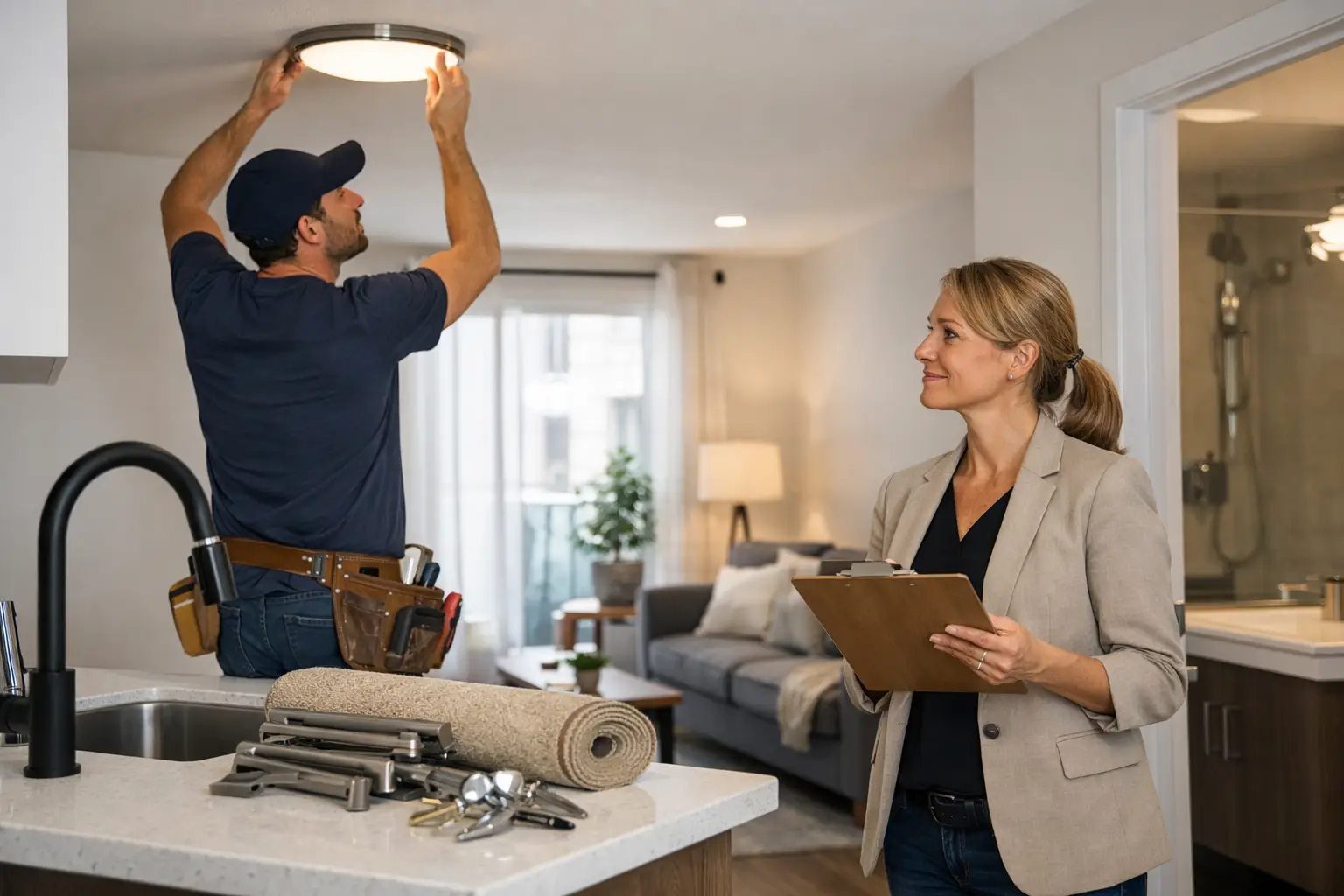
Lighting can change how tenants perceive a unit before any major remodel begins. Poorly lit kitchens, corridors, entries, and bathrooms can make otherwise clean spaces feel neglected. Updated LED fixtures improve visibility, reduce energy use, and generally require less ongoing maintenance than older lighting systems.
Focus first on functional lighting: bright, even kitchen illumination; properly lit vanities; secure exterior and entry lighting; and common-area fixtures that improve wayfinding and resident comfort. Where layouts allow, adding task lighting in kitchens or improving closet lighting can be a small upgrade with an outsized effect on usability.
Electrical work should be approached with equal care. Older properties may have insufficient outlets, aging devices, or panels that deserve evaluation before renovation work closes up walls. Ground-fault protection in required wet locations, properly functioning smoke and carbon monoxide alarms, and code-compliant devices are not aesthetic upgrades, but they protect residents and reduce avoidable liability.
It depends on the property whether a full electrical upgrade is necessary. A recently maintained building may only need targeted improvements. A building with recurring breaker issues, visibly aged components, or renovation plans that add appliances may require a deeper assessment from qualified professionals.
Refresh Common Areas That Influence Retention
Unit interiors drive leasing, but common areas shape the daily resident experience. Lobby finishes, hallways, stairwells, laundry rooms, mail areas, parking surfaces, gates, and exterior lighting tell tenants whether management is attentive to the property as a whole.
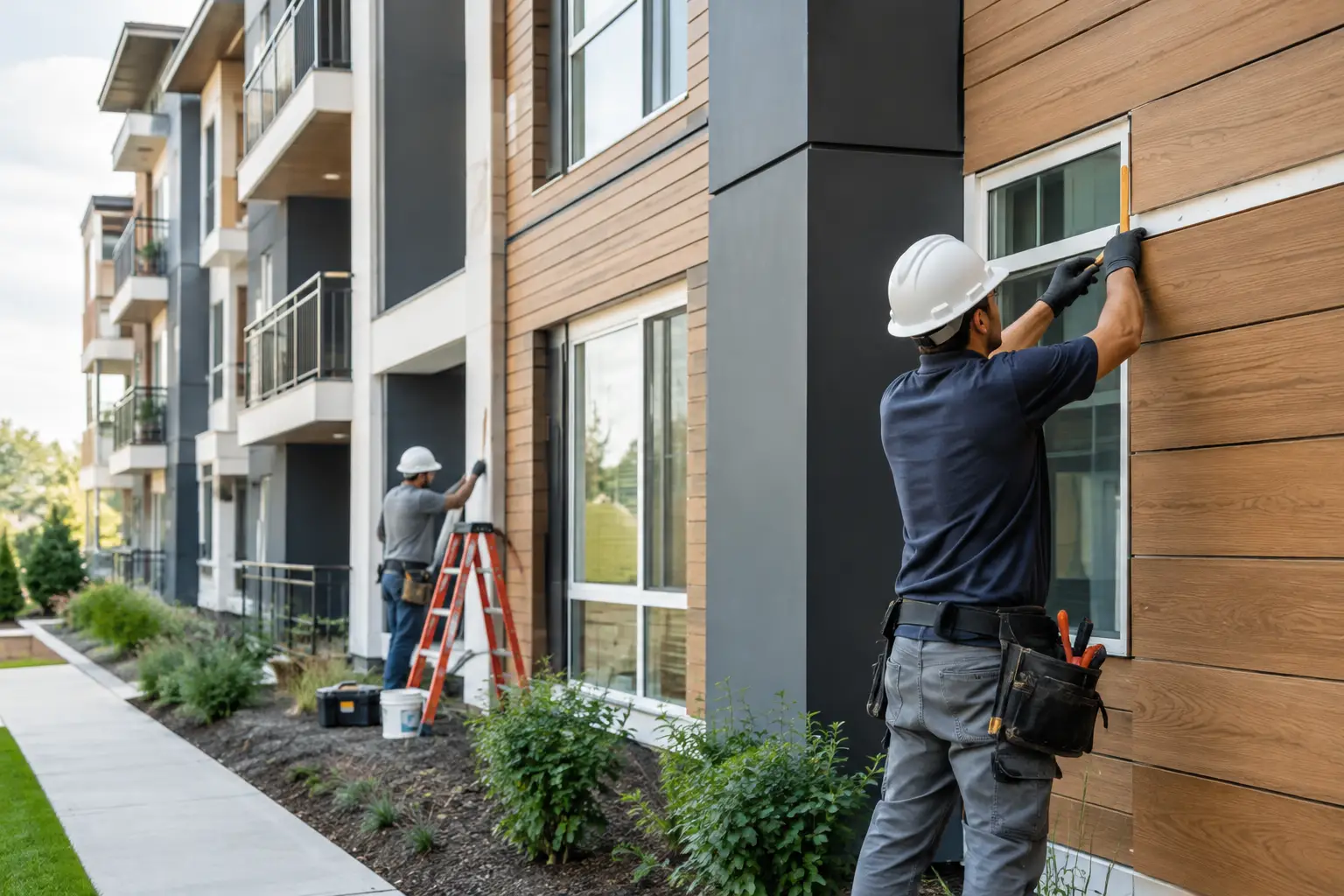
Common-area renovation should begin with safety and condition. Repair trip hazards, damaged handrails, worn stairs, failing exterior surfaces, poor drainage, and inadequate lighting before focusing on decorative details. These improvements protect the building and support a better first impression for prospects, residents, and visiting vendors.
After essential repairs, consider durable paint systems, updated flooring in high-traffic corridors, refreshed signage, secure access improvements, and landscape cleanup. The right combination depends on the building type and tenant profile. A small garden-style community does not need the same amenity package as a larger professionally managed complex, but both benefit from clean, well-maintained shared spaces.
Make Renovation Packages Repeatable Across the Portfolio
The strongest renovation strategy is often a documented set of options rather than a different design decision for every vacancy. Establish a standard turnover package, a mid-level refresh package, and a full renovation scope. Each should specify approved flooring, paint colors, cabinet hardware, fixtures, lighting, appliance requirements, and repair standards.
This approach improves predictability. Maintenance teams and contractors know what is expected, replacement materials are easier to source, and owners can compare outcomes across buildings. It also helps avoid scope drift, where a quick turnover project gradually becomes a costly renovation with no clear leasing advantage.
Standardization should not mean ignoring property-specific needs. A unit with water damage, an outdated electrical condition, or a major layout issue may require a custom scope. The value of a standardized package is that it gives the team a reliable baseline, allowing exceptions to be identified early rather than discovered after work begins.
Plan the Scope Around Vacancy Days and Occupied Work
Renovation quality and renovation speed are both important, but neither should come at the expense of coordination. Before work starts, clarify access, material lead times, permit needs, inspection points, resident communication requirements, and the sequence of trades. Flooring should not be installed before moisture repairs are complete. Cabinets should not arrive before demolition and rough-in work are verified. Final cleaning should be scheduled after construction dust is controlled, not before.
Occupied renovations require even more planning. Residents need clear notice, work areas need to be secured, and trades must be managed around noise, access, and safety. A single accountable partner can reduce confusion when a project includes demolition, plumbing, flooring, painting, cleaning, and final punch work.
V&S Management Services Inc. has supported Southern California property professionals since 1989 with licensed, bonded, and insured multi-unit renovation, maintenance, flooring, turnover cleaning, and emergency restoration services. That integrated approach is especially useful when a renovation uncovers a water issue or repair need that cannot wait for another vendor's availability.
Measure Results Beyond the Renovation Invoice
A successful multifamily upgrade should be evaluated by what happens after the work is complete. Track vacancy days, maintenance calls, leasing feedback, recurring repair categories, turnover costs, and resident retention where possible. If a flooring selection reduces replacement frequency or a bathroom upgrade prevents recurring leak calls, that operational improvement has real value even if it is not visible in a leasing photo.
The best decisions also protect future flexibility. Avoid overly specific finishes that are difficult to match, and keep records of paint colors, fixture models, flooring selections, warranties, and completed repairs. Good documentation makes the next turnover faster and gives owners a clearer picture of capital needs across the portfolio.
The most effective renovation plan is not the one with the longest wish list. It is the one that solves current building risks, gives renters a clean and functional home, and creates a repeatable standard your operations team can depend on when the next vacancy arrives.