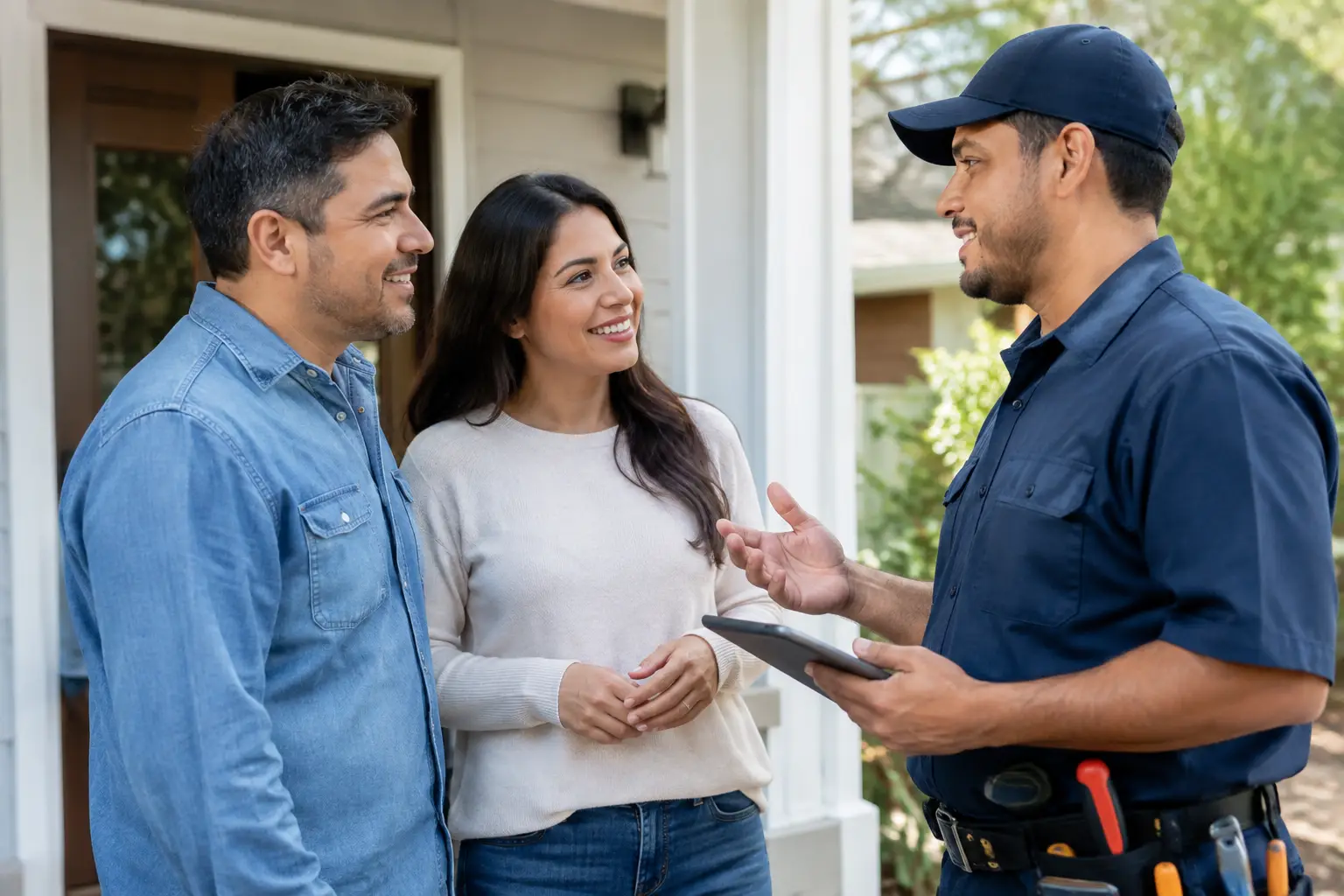
A bilingual home service contractor is not simply a convenience for a Southern California property portfolio. When a water line breaks at midnight, a tenant needs access instructions, or a turnover crew finds hidden damage behind flooring, clear English and Spanish communication can determine whether the issue is resolved quickly or becomes another day of vacancy, confusion, and avoidable cost.
For property managers, HOA boards, realtors, and multi-unit owners, language gaps rarely appear as a single obvious problem. They show up as missed access appointments, incomplete work orders, unclear approvals, frustrated residents, and repair scopes that must be explained twice. The right contractor reduces those points of friction while keeping responsibility in one accountable place.
Communication Is Part of Property Protection
Property operations move fast, especially when multiple units, residents, vendors, and decision-makers are involved. A manager may communicate the urgency of a repair in English, while an onsite resident, maintenance contact, or affected family is more comfortable speaking Spanish. If the information changes hands through several people, details can be lost.
A bilingual contractor helps preserve the facts from the first call through final completion. That includes explaining what happened, coordinating entry, documenting visible damage, confirming the immediate safety steps, and setting reasonable expectations for the work ahead. The result is not just a better resident experience. It is a cleaner operational record for the owner or management team.
This matters most when the work is time-sensitive. Water damage, plumbing failures, roof leaks, electrical concerns, and unsafe flooring conditions require decisive action. A contractor that can communicate directly with affected parties in their preferred language can often obtain access, identify concerns, and begin mitigation without unnecessary back-and-forth.
Where Bilingual Contractor Support Has the Most Value
The need is especially clear in multi-unit and commercial properties, where a single issue can affect several stakeholders at once. Language access should support the work itself, not sit apart from it as an afterthought.
Emergency water damage response
During an active leak or flood, residents may be worried about belongings, electricity, odors, or whether they can safely remain in the unit. Clear communication helps crews gain access, explain drying equipment, and identify areas requiring immediate attention. It also allows property teams to collect accurate details for incident reports and insurance claim coordination.
Speed still matters, but speed without clarity can create new problems. A rushed response that residents do not understand may lead to equipment being unplugged, access being denied, or concerns escalating to the management office. Bilingual communication helps keep emergency procedures practical and understood.
Turnovers and rent-ready preparation
Turnovers depend on timing. Cleaning, flooring, paint, repairs, appliance coordination, and final punch work all need to happen in the right sequence. When former tenants, incoming occupants, onsite staff, and vendors are communicating across languages, a bilingual point of contact can reduce scheduling errors and help ensure access instructions are followed.
For realtors and property managers, this creates a more predictable path to a market-ready or rent-ready unit. The goal is not merely to complete a checklist. It is to avoid the small coordination failures that push a turnover past its target date.
Remodeling and common-area projects
Multi-unit remodeling requires clear scopes, controlled work areas, resident notices, and consistent updates. A bilingual contractor can communicate project expectations to Spanish-speaking occupants and workers while keeping the ownership team informed in the format it needs for approvals and reporting.
This is particularly valuable for occupied properties. Residents are more likely to cooperate with access windows, parking changes, noise notices, and temporary service interruptions when they understand what work is happening, why it is necessary, and how long it is expected to last.
What Property Professionals Should Look For
Bilingual ability should be evaluated alongside the contractor qualifications that protect your portfolio. Speaking two languages is valuable, but it does not replace licensing, insurance, bonding, documentation, or proven experience with commercial and multi-unit work.
Start with accountability. Ask who receives the work order, who communicates with the property team, who speaks with residents, and who has authority to update the scope when conditions change. A bilingual team is most effective when communication does not have to be relayed through an outside interpreter or several disconnected subcontractors.
Next, look for documented processes. Can the contractor provide clear estimates, job updates, photos when appropriate, completion confirmation, and insurance-related information? A repair conversation may happen in Spanish with a resident, but the management record still needs to be complete, accurate, and easy for decision-makers to review.
Finally, confirm readiness for urgent work. A bilingual contractor with limited availability may be appropriate for scheduled maintenance, but emergency response requires a different operating standard. For water damage and other active losses, property teams need a partner that can mobilize 24/7, communicate clearly, and coordinate the next steps without waiting until business hours.
Bilingual Service Does Not Mean Lower Standards
Some property teams treat language support as a separate resident-relations feature. That approach misses the larger benefit. The best bilingual service is tied to professional execution: accurate scope development, safety procedures, compliant work, organized scheduling, and documented closeout.
There can be trade-offs. A smaller local provider may offer direct personal communication but lack the staffing to manage a major loss across multiple units. A large vendor may have broad coverage but route messages through call centers that do not understand the property history. The right choice depends on the complexity of your sites, the urgency of the work, and whether the contractor can remain accountable from first call to final invoice.
For long-term portfolios, consistency is usually more valuable than a one-time promise. A contractor that understands your approval process, unit standards, resident communication expectations, and documentation requirements will make each subsequent project easier to manage.
A Better Workflow for Managers and Boards
Property teams can get more value from bilingual contractor support by defining communication expectations before the next urgent call. Establish the preferred contacts for emergencies, approval thresholds, access procedures, and the information required after a job is complete. If your properties serve residents who speak both English and Spanish, make that expectation part of your vendor onboarding process.
It also helps to separate resident communication from owner approvals without disconnecting them. Residents need clear, respectful instructions about entry, safety, scheduling, and what to expect. Managers and board members need concise updates about scope, timeline, potential exposure, and required decisions. A capable contractor handles both conversations professionally while maintaining one reliable project record.
At V&S Management Services Inc., bilingual English and Spanish communication supports the larger commitment behind every job: licensed, bonded, insured service, coordinated property solutions, and dependable response for Southern California portfolios. Whether the need is a rapid water-damage response, turnover cleaning, flooring installation, ongoing maintenance, or a multi-unit remodel, communication should help move the work forward, not become another issue for your team to manage.
The next time you evaluate a service partner, listen for more than whether they say they are bilingual. Ask how that capability works under pressure, how they document the job, and who remains responsible when the unexpected happens. Those answers will tell you whether the contractor can protect both your residents' trust and your property's operating timeline.