A leak above a ceiling can become a multi-unit disruption before the source is even identified. This apartment water damage response guide gives property managers and owners a practical framework for protecting residents, containing the loss, and returning units to service without sacrificing documentation or safety. The goal is not simply to dry a wet area. It is to prevent a manageable incident from becoming structural damage, mold risk, tenant displacement, and a prolonged insurance claim.
Apartment Water Damage Response Guide: The First Hour
The first hour sets the direction for the entire recovery. A quick, organized response protects people first, then limits the movement of water through flooring, walls, electrical systems, and adjoining units.
Start by confirming the immediate hazard. If water is near outlets, electrical panels, light fixtures, or appliances, restrict access and arrange for the affected electrical area to be assessed before anyone enters. If a ceiling is bulging, keep residents and staff out from underneath it. A ceiling can release a significant amount of water without warning.
Next, identify whether the water source can be safely shut off. This may mean closing a unit-level supply valve, isolating a failed appliance, turning off the building's water line, or contacting the appropriate utility or plumbing professional. Do not delay emergency mitigation while waiting for a final repair diagnosis. Stopping the active flow and beginning extraction are separate but equally urgent tasks.
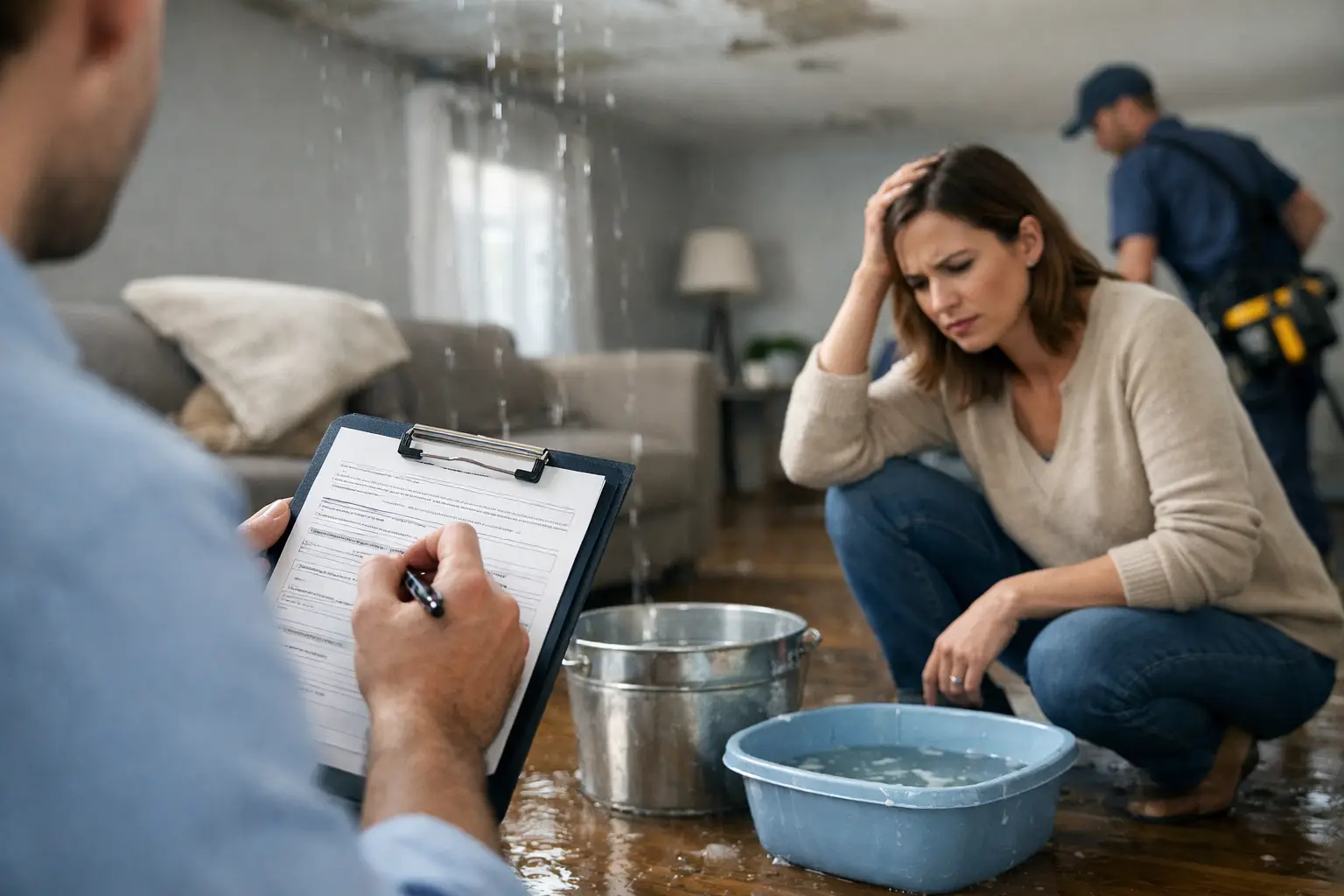
Notify affected residents promptly, even when the visible damage appears limited. Water often travels behind walls, beneath flooring, and into the unit below. A short, factual update helps tenants understand what is happening, where access may be restricted, and what the next steps will be. Clear communication also reduces repeated calls to onsite staff during an already active event.
Protect people before property
Residents should never be asked to move through standing water, handle damaged electrical equipment, or relocate heavy wet belongings without direction. For an occupied unit, explain the safety concern, document resident-owned property that may be affected, and establish a point of contact for updates.
For common-area incidents, secure the area with appropriate signage and restrict traffic. A wet corridor, stairwell, or lobby creates both a slip hazard and a liability concern. The fastest response is the one that stays controlled.
Begin mitigation, not just cleanup
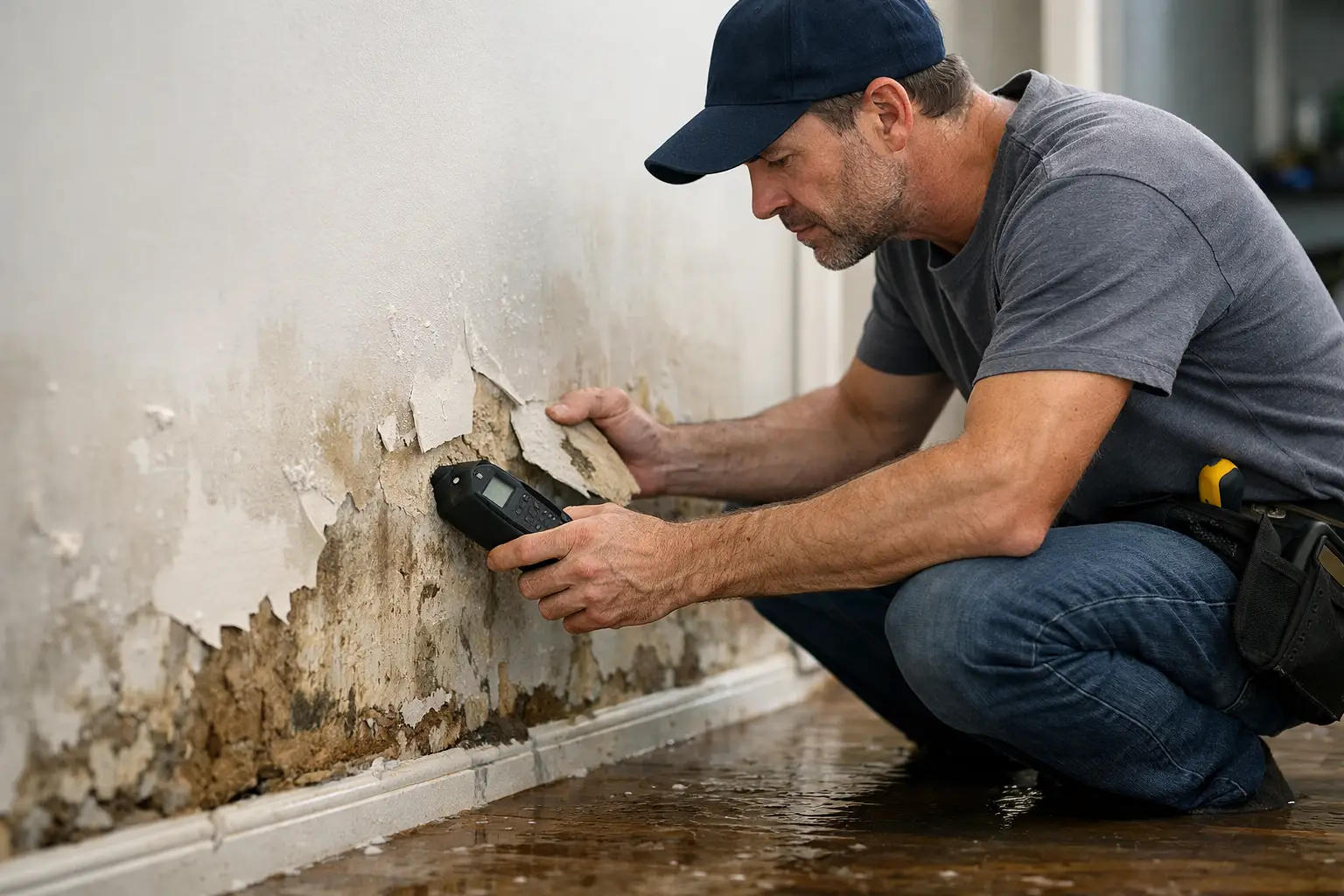
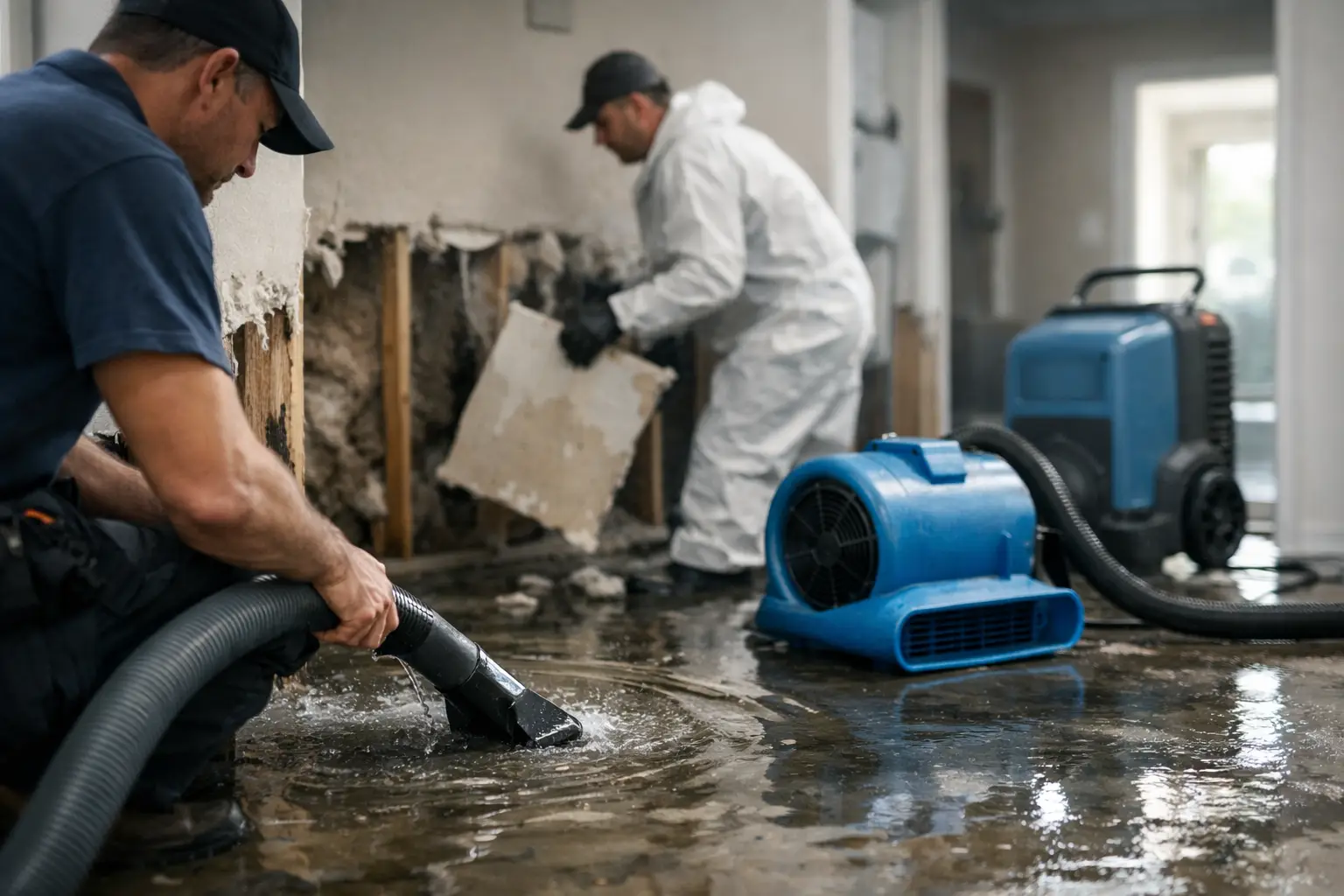
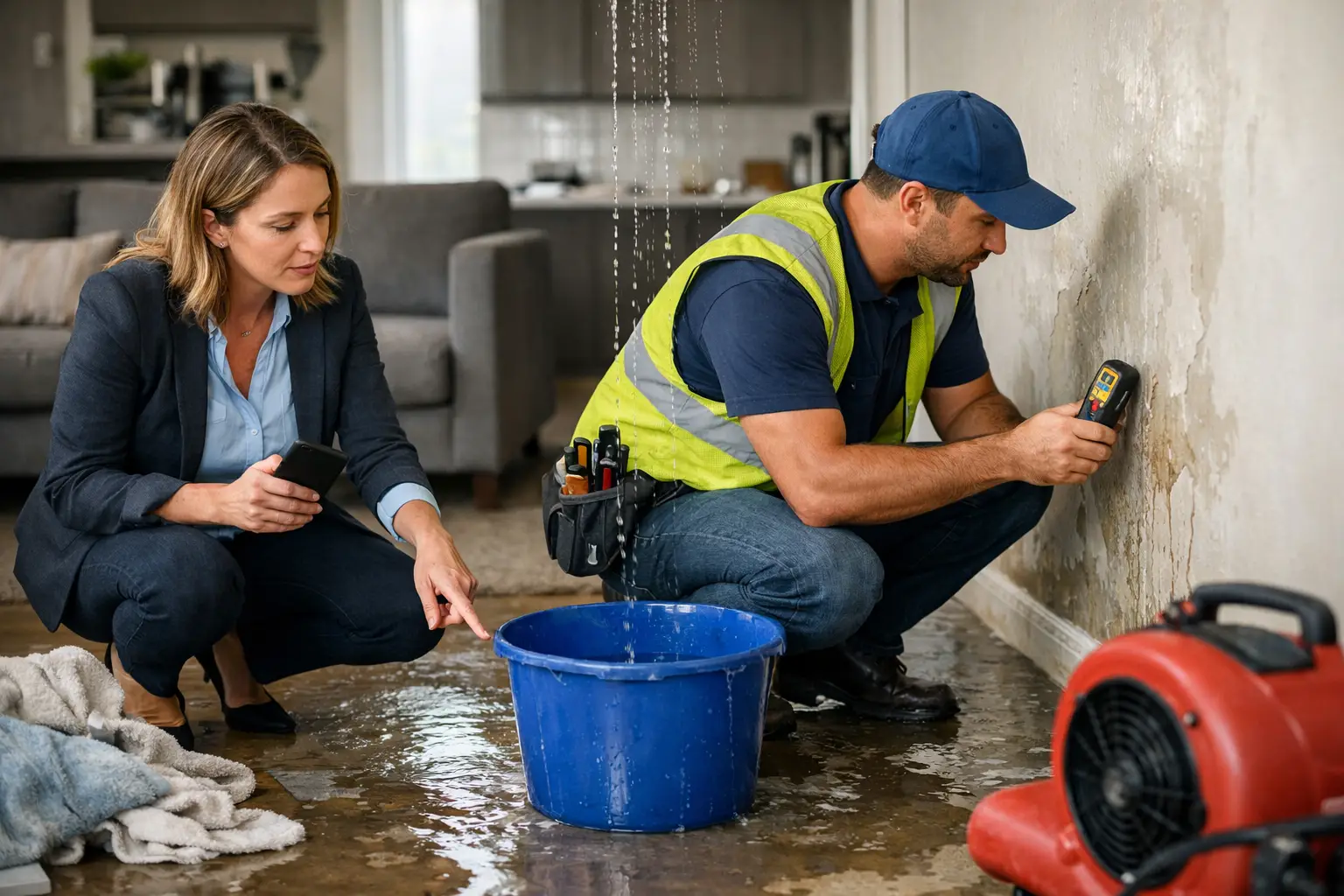
Mopping a visible puddle is rarely enough in an apartment building. Professional mitigation may require water extraction, moisture readings, removal of wet materials that cannot be dried, targeted drying equipment, and daily monitoring. The scope depends on the source, how long water was present, the affected materials, and whether moisture has moved into adjacent units.
For example, water from a clean supply line caught immediately may allow for a narrower drying plan than a drain backup that has contaminated flooring and contents. Treating these events the same can lead either to unnecessary disruption or inadequate restoration.
Establish One Clear Command Structure
Water emergencies create confusion when tenants, maintenance staff, plumbers, restoration crews, insurers, and ownership receive different instructions. Assign one property-side decision maker to coordinate access, approvals, resident communication, and records. That person should maintain a timeline beginning with the first report.
Record the time the incident was reported, who observed it, where water was found, what was shut off, which units were inspected, and when mitigation began. Include calls made to residents, vendors, and insurance contacts. A simple chronological record becomes valuable when questions arise about response time, cause, coverage, or tenant accommodations.
A dependable emergency partner should be able to work within that structure rather than adding another layer of coordination. For Southern California portfolios, V&S Management Services provides 24/7 urgent water damage restoration alongside broader maintenance and turnover support, helping property teams avoid the handoff gaps that can delay a unit's recovery.
Bilingual English and Spanish communication can also be especially useful in multi-unit communities. Residents need clear instructions in a language they understand, particularly when access, temporary relocation, or personal-property documentation is involved.
Document the Loss Before Materials Are Removed
Thorough documentation supports both restoration decisions and insurance claim coordination. Take wide photos showing the unit and affected areas, then close-up photos of the source, damaged materials, and visible water paths. Video can be useful for showing active leaks, ceiling movement, or water migrating between spaces.
Document conditions before demolition or removal begins whenever it is safe to do so. That includes damaged flooring, cabinets, drywall, baseboards, contents, and any visible signs of prior moisture. Keep photos organized by unit number and date. Avoid relying on text-message photo threads that can be difficult to retrieve later.
The incident file should also include maintenance history, plumbing invoices, restoration assessments, moisture reports, equipment logs, resident correspondence, and receipts for emergency measures. If the cause is unclear, do not speculate in written communications. State the observed facts and allow the qualified investigation to determine the origin.
Insurance coordination requires discipline
Property insurance claims are easier to manage when emergency work, repair work, and supporting evidence are clearly separated. Emergency mitigation should focus on preventing additional damage. Reconstruction addresses the repairs needed after the building is dry and the scope is approved.
A property manager should understand what work is being performed, why it is necessary, and what records support it. At the same time, delaying reasonable mitigation while waiting for claim direction can increase the loss. The right balance depends on the policy, the extent of damage, and the insurer's process, but protecting the building from further harm should remain the immediate priority.
Choose Restoration Based on Conditions, Not Appearances
Water can leave a surface looking dry while moisture remains trapped underneath. Carpet padding, laminate flooring, drywall insulation, cabinets, and wall cavities each respond differently. A restoration plan should be based on measured moisture conditions and material performance, not on whether the room looks normal after a few hours.
Clean-water events may sometimes allow materials to be dried in place if action begins quickly and moisture levels respond. Materials that have swollen, delaminated, lost structural integrity, or absorbed contaminated water may need removal. The decision is not always simple. Saving a finish can reduce downtime, but retaining compromised material can create later repair costs and resident complaints.
Drying equipment should remain in place until monitoring confirms that affected materials have returned to an appropriate dry standard. Removing equipment too early to restore quiet or access can extend the disruption. Conversely, leaving equipment longer than needed adds inconvenience and expense. Daily readings and a defined drying plan help keep decisions grounded in actual conditions.
For multi-unit properties, inspect vertically and horizontally adjacent spaces. A leak in an upstairs kitchen can affect the unit below, a shared chase, a hallway, or electrical components beyond the visible point of origin. Limiting the inspection to the reporting unit is one of the most common ways hidden damage is missed.
Plan the Return to Service
Once drying is complete, the property team must decide what is needed to make the unit safe, functional, and rent-ready. This may include drywall repair, paint, flooring replacement, cabinetry work, appliance reconnection, cleaning, and final inspection. Coordinate these tasks in the correct order so trades are not working over one another or creating avoidable rework.
Before returning an occupied unit to normal use, confirm that the water source has been repaired, moisture concerns have been resolved, electrical issues have been cleared where applicable, and removed finishes have been restored or safely contained. Give the resident a concise update on completed work, remaining repairs, and any access needed later.
For a vacant unit, integrate the restoration schedule with turnover planning. Water damage can affect leasing timelines, but a coordinated restoration, flooring, cleaning, and maintenance plan can keep the delay from spreading into additional vacancy days.
Make the Next Response Faster
The best time to improve a water damage process is after the immediate emergency is over. Review where response slowed down: Was the shutoff location unclear? Did staff lack after-hours contacts? Were unit access records outdated? Did communication with residents or the insurer become fragmented?
Every property should maintain an accessible emergency contact list, water shutoff map, vendor compliance records, unit access protocol, and resident communication template. Periodic inspections of supply lines, water heaters, roof penetrations, drains, and vacant units also help identify small failures before they affect multiple homes.
A water event will always be disruptive. A prepared response turns that disruption into a controlled operational task, protects the people who live in the community, and preserves the long-term condition of the asset.