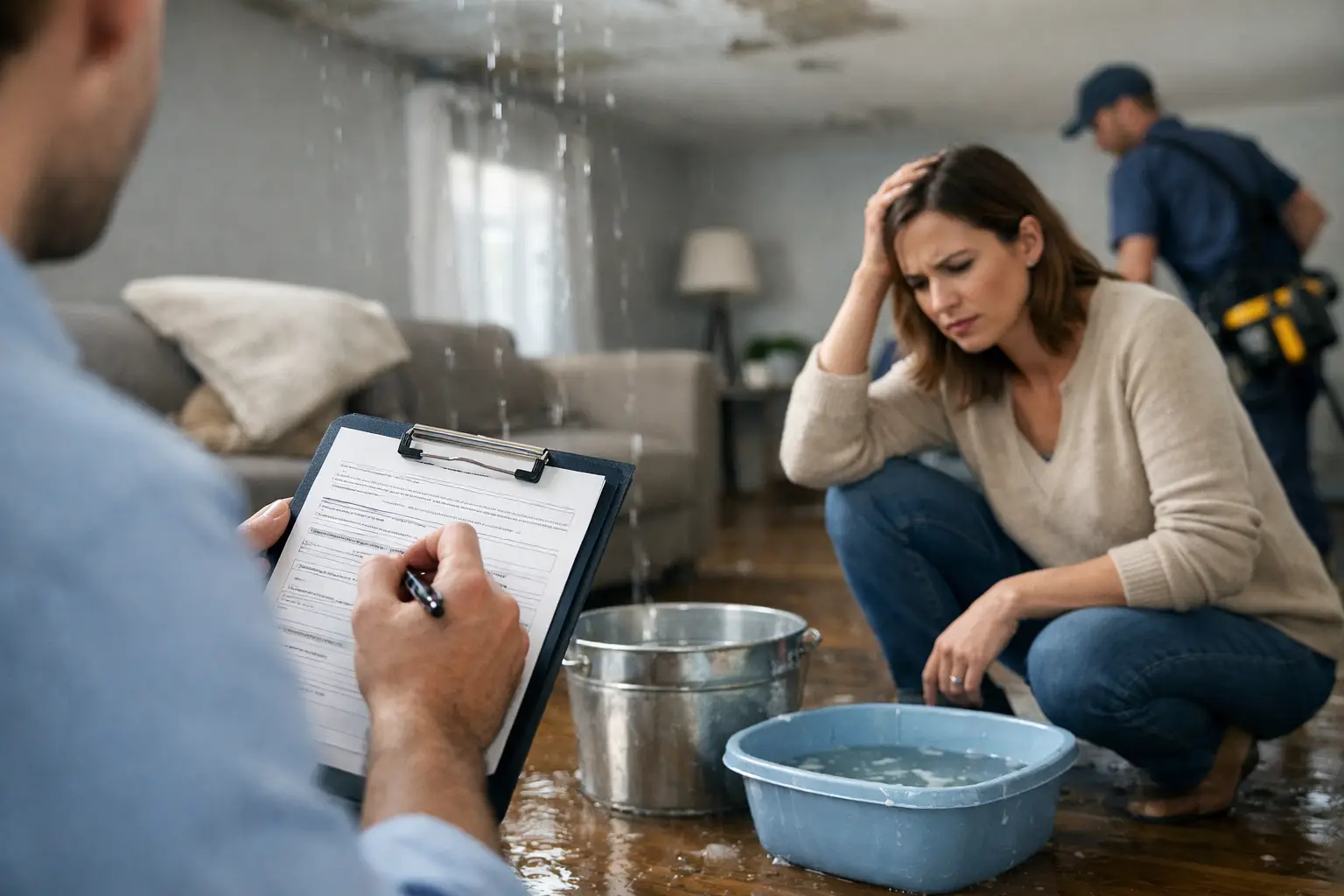
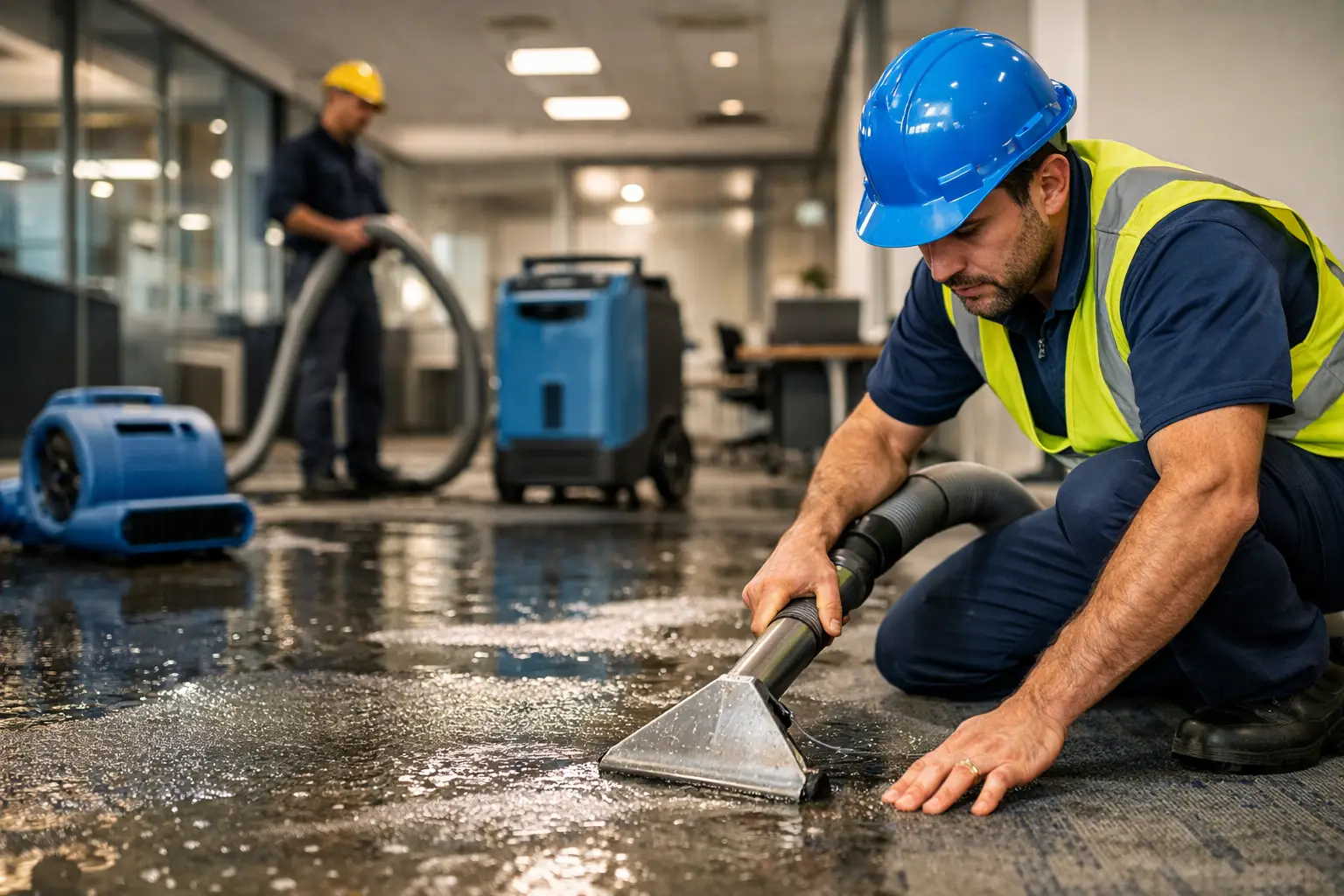
At 6:30 a.m., a maintenance call about a small ceiling stain can turn into a soaked corridor, damaged flooring, and tenants asking whether their suites will open on time. That is the reality of commercial water damage restoration. For property managers and building owners, the real issue is not just water removal. It is controlling downtime, protecting the building envelope, documenting the loss properly, and getting operations back on schedule without managing five different vendors.
In commercial properties, water travels fast and consequences spread even faster. A supply line break in one unit can affect shared walls, electrical systems, common areas, and occupied spaces within hours. In multi-unit buildings, the damage rarely stays contained. That is why the response plan matters as much as the cleanup itself.
Why commercial water damage restoration is different
Residential cleanup and commercial recovery are not the same job with a different address. Commercial buildings involve more stakeholders, more square footage, stricter timelines, and a higher cost of delay. Property managers are balancing tenant communication, lease obligations, maintenance records, insurance coordination, and safety concerns all at once.
A proper commercial response has to account for business continuity. In an office suite, that may mean isolating affected zones so neighboring tenants can stay open. In a multifamily or mixed-use property, it may mean stabilizing common areas first while planning repairs unit by unit. In an HOA setting, documentation and communication often matter just as much as drying equipment.
The trade-off is speed versus disruption. An aggressive response is necessary, but the work also has to be organized around occupancy, access, and the practical realities of a live property. Fast is good. Fast and controlled is better.
What happens in the first 24 hours
The first day sets the tone for the entire recovery. Water extraction is only one part of the process. A qualified contractor starts by identifying the source, stopping active intrusion if possible, and evaluating where the water has migrated. That includes visible surfaces and less obvious cavities behind baseboards, drywall, cabinetry, and flooring systems.
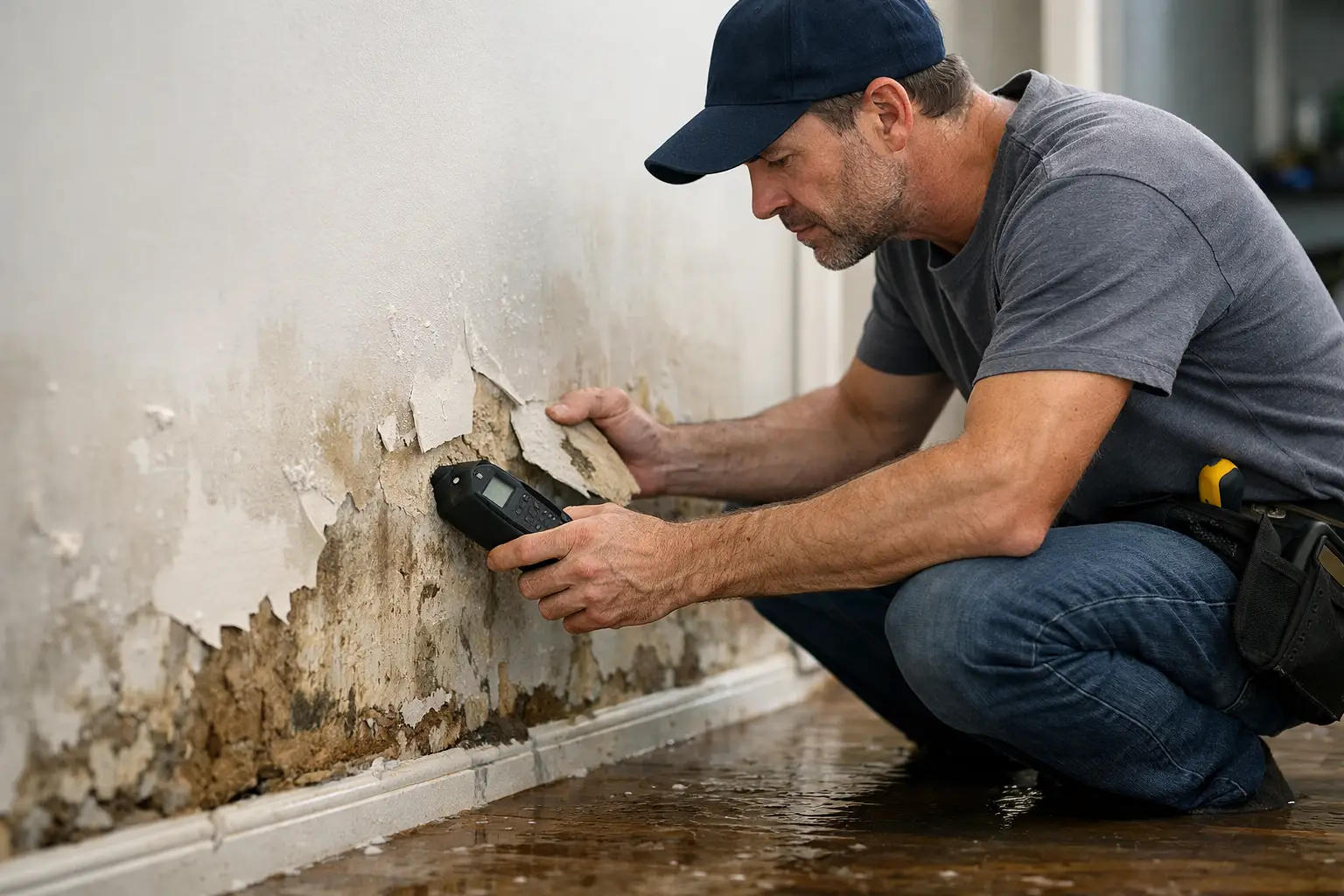
Moisture mapping is critical here. If the team only dries what is easy to see, hidden saturation can remain in subfloors or wall assemblies and create later issues. That is where many losses become more expensive than they needed to be. Secondary damage, material swelling, odor, and mold concerns usually come from incomplete assessment, not just the original leak.
Containment also matters. In commercial environments, unaffected areas often need to remain safe and usable while mitigation is underway. Clear work zones, equipment placement, and practical access planning help protect tenants, residents, staff, and vendors moving through the property.
The core phases of commercial water damage restoration
Commercial water damage restoration usually moves through mitigation, drying, demolition where necessary, and reconstruction. Those phases may overlap, but they should not be treated as separate silos if the goal is to reduce downtime.
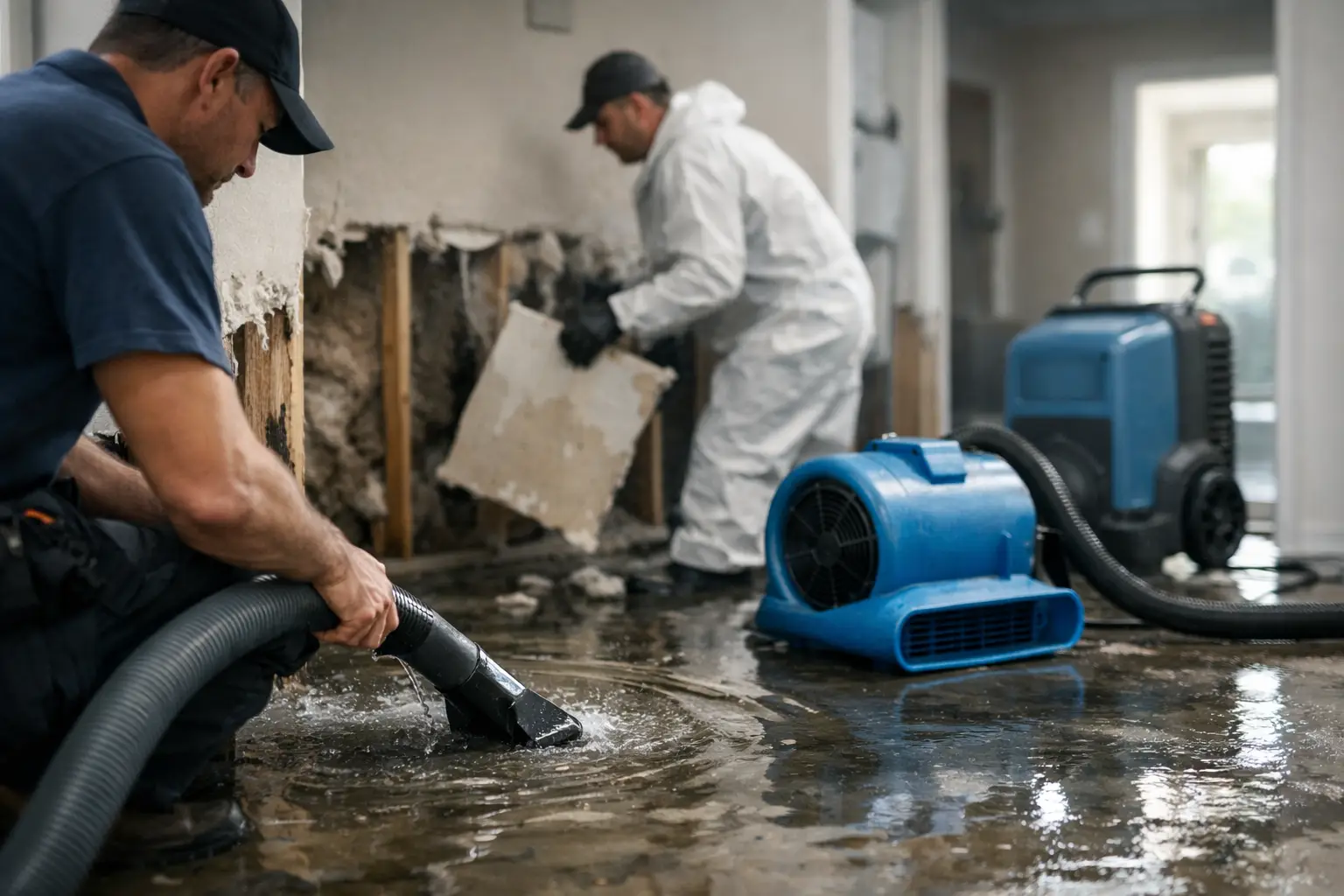
Mitigation begins with emergency response. Water is extracted, damaged materials are identified, and immediate stabilization work begins. Depending on the loss, this can include removing saturated carpet pad, opening drywall, lifting base, or protecting nearby finishes from further spread.
Drying comes next, but it is not just setting air movers and walking away. Drying plans should be based on the building materials involved, the category of water, airflow strategy, humidity control, and daily monitoring. A warehouse, retail suite, medical office, and apartment hallway will not all dry the same way.
Then there is the repair side. This is where many managers lose time. If the mitigation vendor cannot handle reconstruction, the handoff creates delays, scope gaps, and finger-pointing. A single-source partner can move from emergency work into flooring replacement, drywall repair, paint, finish restoration, and broader property repairs without forcing management to restart the process.
Where commercial projects usually get complicated
Water losses become operational problems very quickly. A leak above a tenant space may affect business hours, ADA paths, elevator access, security systems, or life safety concerns. In a multi-unit property, one source can create multiple claimants, each with a different expectation of urgency.
Insurance documentation is another pressure point. Good field documentation supports a smoother claim, but not every contractor builds that into the process. Moisture readings, photo records, affected-area notes, and clear scope reporting help the carrier understand what happened and why certain work was necessary. Without that structure, property managers end up filling the gap themselves.
There is also the question of how much demolition is appropriate. Some contractors under-demo to reduce visible disruption, while others remove more than necessary. The right decision depends on the material type, contamination level, access needs, and drying results. It is rarely one-size-fits-all.
Choosing a restoration partner for commercial properties
For commercial and multi-unit assets, qualifications are not just a formality. You need a contractor who can respond quickly, communicate clearly, and operate within the compliance standards your property requires. Fully licensed, bonded, and insured should be the baseline, not a bonus.
Beyond that, experience with occupied properties matters. The right partner understands tenant sensitivity, scheduling constraints, after-hours access, and the chain of communication between owners, managers, maintenance teams, boards, and insurance representatives. Technical skill is essential, but so is operational discipline.
It also helps to work with a contractor that can support the full lifecycle of the job. If a water loss damages flooring, base, drywall, or unit finishes, the best outcome usually comes from a team that can coordinate mitigation and rebuilding under one roof. That reduces downtime and preserves accountability.
For Southern California portfolios, response coverage is another practical consideration. A vendor may look capable on paper, but if they cannot mobilize when a pipe fails overnight or on a weekend, that capability does not help your asset when it counts.
How to reduce downtime after a water loss
The fastest recovery usually comes from early decisions, not heroic last-minute efforts. Reporting the issue immediately, approving access quickly, and giving the restoration team a clear property contact can shave hours off the response. In water damage, hours matter.
It is also worth maintaining current building information before an emergency happens. Valve locations, after-hours contacts, vendor authorization protocols, and unit access procedures all affect how smoothly a loss is handled. Properties that treat emergency planning seriously tend to recover faster because fewer decisions are being made under pressure.
A practical restoration partner should help drive that pace. That means clear updates, realistic timelines, and direct coordination as the work moves from extraction to drying to repair. V&S Management Services Inc. has built long-term relationships with property professionals by handling those transitions with the urgency and accountability commercial assets require.
Signs the job is not being managed well
Property managers usually know early when a restoration job is drifting. Communication becomes vague. Moisture data is missing or inconsistent. Equipment sits in place without explanation. Repair planning starts late. No one seems to own the transition from emergency service to final restoration.
That lack of control creates a second layer of damage - schedule damage. Vacant units stay offline longer. Commercial tenants lose confidence. Board members and owners ask for updates that are harder to give because the process is not clearly documented.
A well-run project feels different. There is a defined point of contact, a visible plan, and steady progress. Not every loss is simple, but every client should know what is happening, what comes next, and what decisions need to be made.
Commercial water damage restoration as asset protection
The best way to think about commercial water damage restoration is not as cleanup, but as asset protection under time pressure. The visible damage may be drywall, flooring, or ceiling tile. The real exposure is lost rent, delayed turnover, disrupted tenants, and building components that deteriorate if moisture remains in place.
That is why experienced property professionals look for more than extraction equipment. They want a trusted general contractor with 24/7 emergency response, practical field judgment, and the ability to carry the project through to completion. The goal is not simply to dry the space. It is to restore function, protect value, and keep the property moving.
When the next leak, backup, or burst line hits, the best outcome will come from preparation and the right partner already in place. In commercial property, recovery is rarely about doing one thing well. It is about doing every step quickly, correctly, and with full accountability from the first call to the final repair.