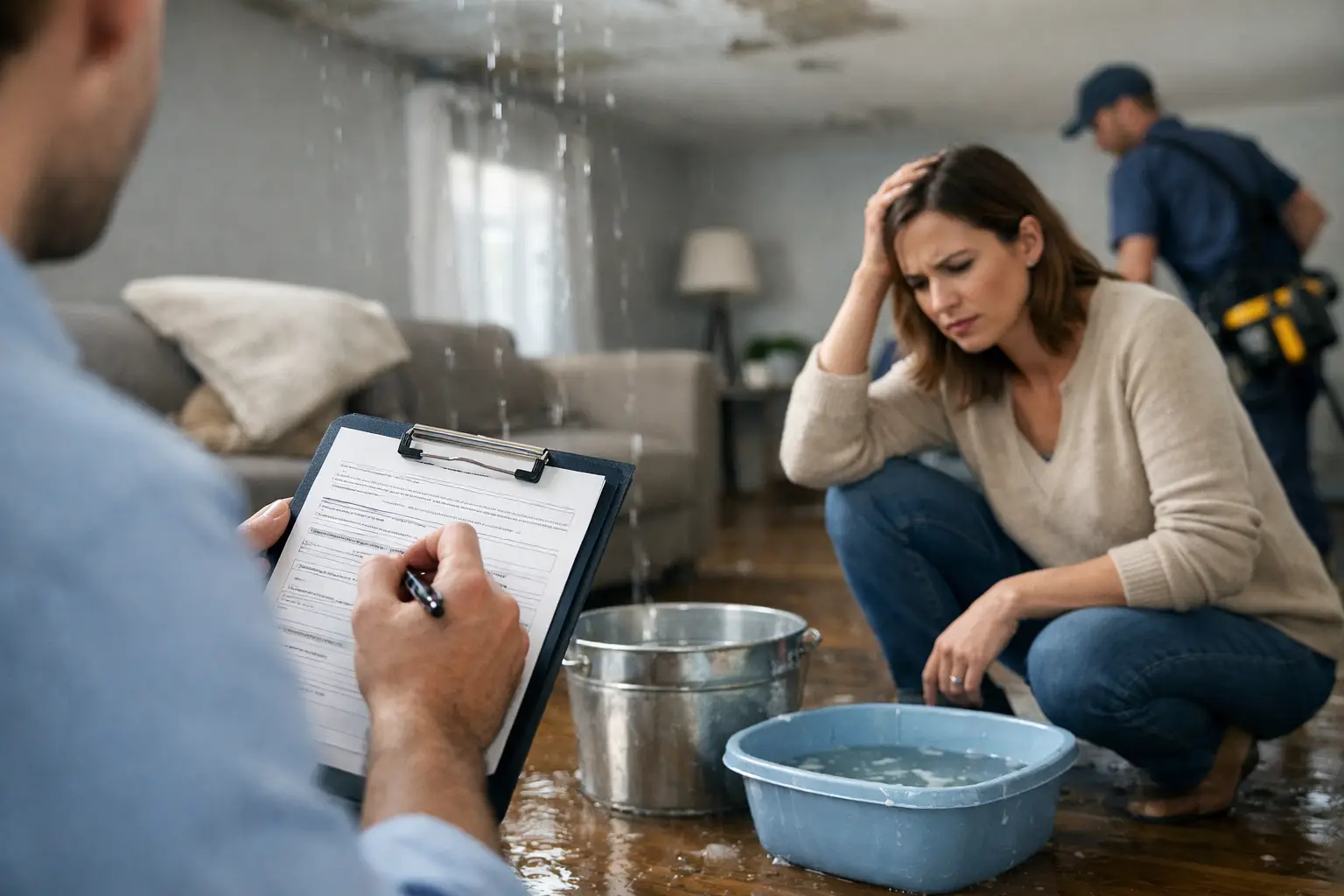
A pipe breaks at 2:00 a.m., water travels under baseboards, and by morning a manager is fielding calls from tenants, ownership, and insurance. In that moment, understanding water mitigation vs restoration is not just a technical detail. It affects response time, repair scope, vacancy days, and how well the property recovers.
For multifamily and commercial properties, these two terms are often used together, but they do not mean the same thing. Mitigation is the emergency phase that stops damage from spreading. Restoration is the repair phase that brings the property back to pre-loss condition. If you manage units, common areas, or commercial space, knowing the difference helps you make faster decisions under pressure.
Water mitigation vs restoration: what is the difference?
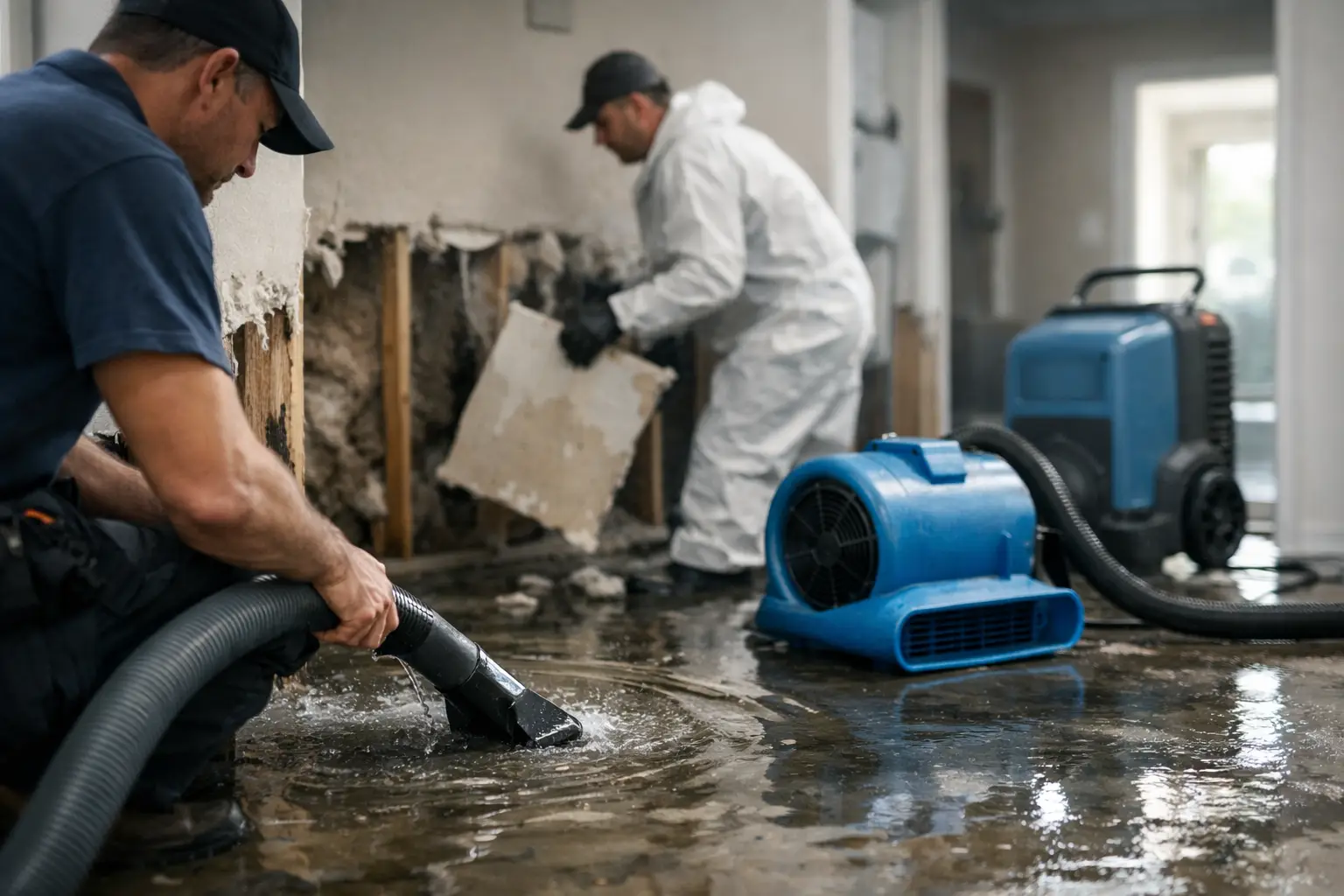
Water mitigation is the immediate action taken after a water loss. The goal is containment. That usually means stopping the source, extracting standing water, removing unsalvageable materials when necessary, setting drying equipment, and documenting conditions for insurance.
Restoration begins after the site is stabilized and properly dried. This is the rebuild side of the job. It can include drywall replacement, flooring installation, painting, trim work, cabinet repair, and any other work needed to return the space to service.
A simple way to think about it is this: mitigation prevents the loss from getting worse, while restoration repairs what the loss already damaged. One protects the structure and limits downstream costs. The other makes the unit, suite, or common area functional and presentable again.
Why the distinction matters for property managers
In a managed portfolio, delays are expensive. If the wrong vendor is called, or if the team on site can only handle one phase, the property may lose time handing the job from emergency response to reconstruction. That can slow down insurance documentation, extend vacancy periods, and create tenant frustration.
The distinction also matters for scope control. During mitigation, the focus is not cosmetic. It is about moisture control, material preservation where possible, and preventing secondary damage such as swelling, odor, microbial growth, or damage to adjacent units. During restoration, the focus shifts to repair sequencing, finish matching, habitability, and getting the asset rent-ready or operational again.
For HOA boards and commercial owners, the line between these phases also affects communication. Residents and tenants often expect visible repairs right away, but visible repairs should not start before the affected area is dry. Rebuilding too early can trap moisture behind walls or under flooring, which creates larger problems later.
What happens during water mitigation
Mitigation starts with the emergency response. First, the source of water must be identified and stopped. In some losses, that is straightforward, like shutting off a failed supply line. In others, the source may involve roofing, drainage, sprinkler systems, appliance failures, or hidden plumbing behind walls.
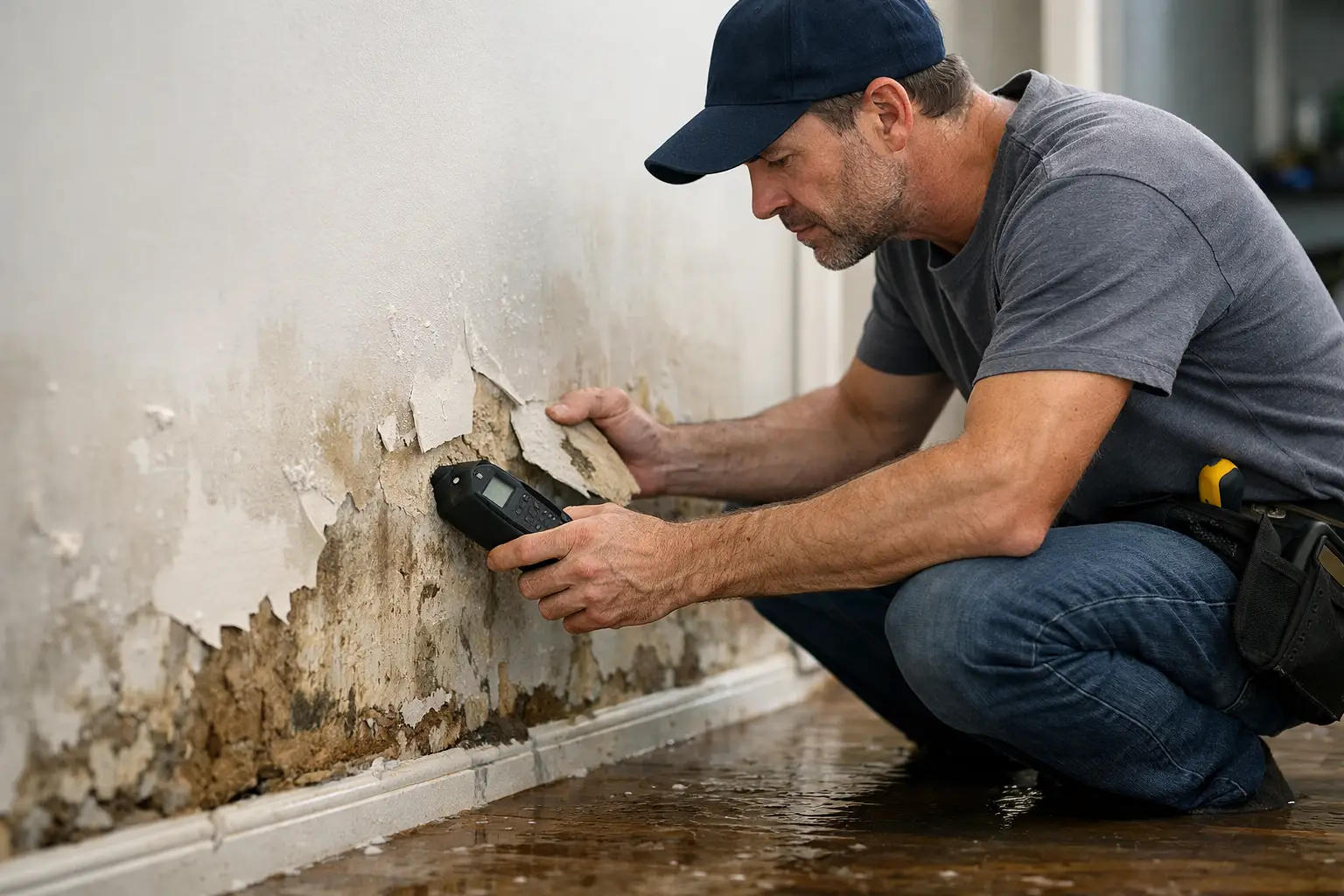
Once the source is controlled, the affected areas are assessed. That includes checking how far water migrated, what materials were impacted, and whether neighboring units or lower levels are affected. In multifamily properties, this step is critical because visible damage in one unit often understates what happened behind the walls or below the surface.
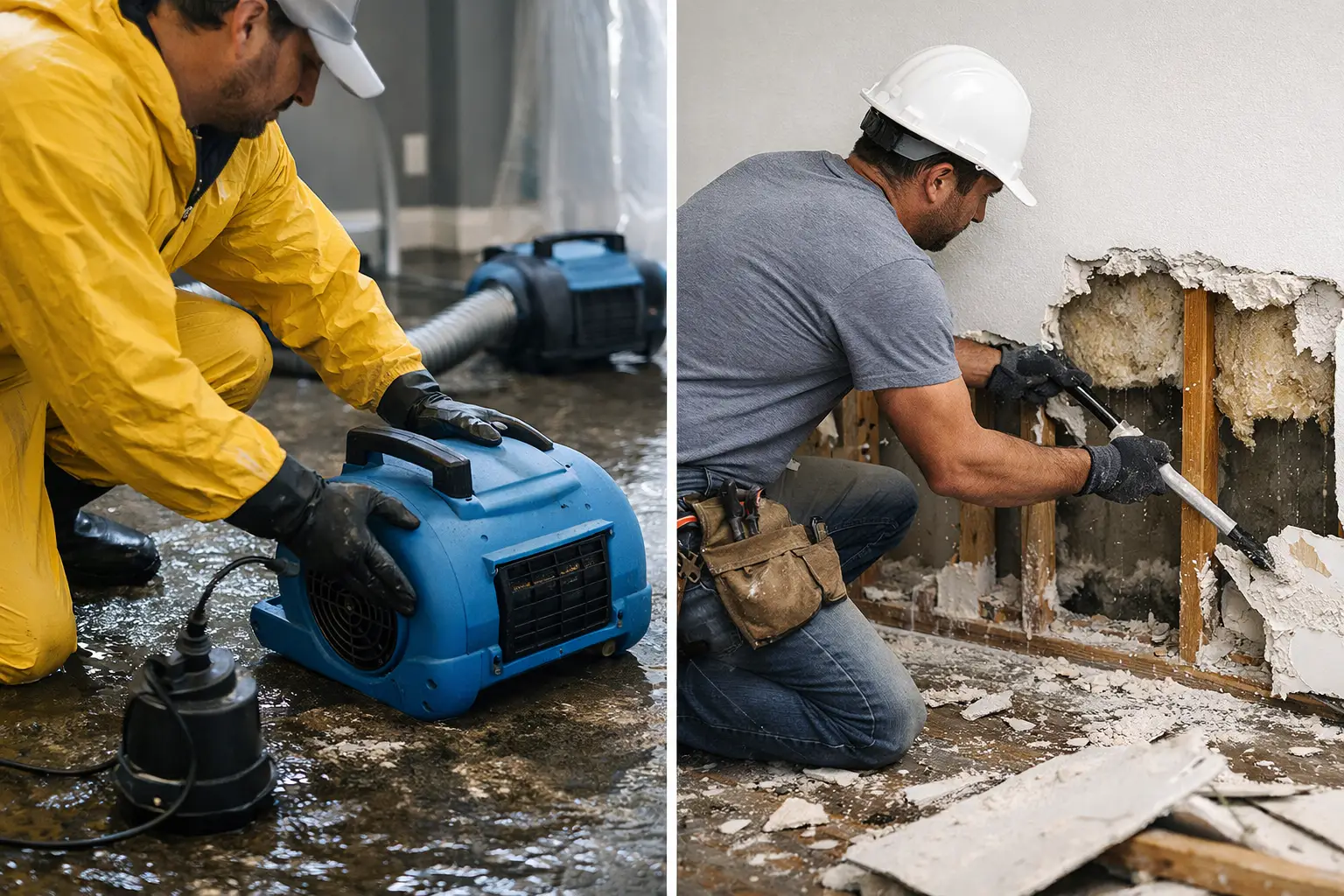
Water extraction follows. Standing water is removed as quickly as possible to reduce saturation and limit damage to flooring, drywall, insulation, and contents. From there, drying equipment is set to pull moisture out of the structure. Depending on the loss, technicians may also remove portions of drywall, baseboards, carpet pad, or other materials that cannot dry properly in place.
Documentation is a major part of mitigation, especially when an insurance claim is involved. Moisture readings, photos, equipment logs, and a clear timeline help support the claim and reduce disputes over what was necessary.
What happens during restoration
Restoration begins when moisture levels have returned to acceptable standards and the space is ready for repairs. At that point, the project becomes a construction and turnover issue rather than an emergency drying issue.
The restoration scope depends on how much material was removed or damaged. In some cases, that may mean replacing a small section of drywall and repainting one wall. In larger losses, restoration can involve flooring replacement across multiple rooms, cabinet reconstruction, electrical fixture replacement, texture matching, and finish work across several units or common areas.
For property professionals, this phase has a direct impact on occupancy and appearance. A well-run restoration process is not just about repairs being completed. It is about coordinating trades efficiently, matching existing finishes where possible, and reducing downtime so the unit or building can return to service without unnecessary delay.
Water mitigation vs restoration in the real world
In practice, these phases can overlap in scheduling, but they should not be confused. A common example is a second-floor supply line failure in an occupied multifamily building. Mitigation would include emergency shutoff, extraction in the affected unit and the one below, removal of damaged pad and wet drywall, equipment setup, and daily monitoring.
Restoration would begin after drying is complete. That could involve reinstalling drywall, repainting ceilings in the downstairs unit, replacing flooring upstairs, and completing the final punch items needed to make both units tenant-ready.
Another example is a roof leak affecting a hallway and shared lobby in an HOA property. Mitigation may be limited if the water intrusion is discovered quickly, but drying and moisture mapping still matter. Restoration would then focus on ceiling repairs, wall finishes, and restoring the common area to a safe and professional condition.
The sequence matters because skipping or rushing mitigation can increase the restoration scope. What could have been a limited repair can become a broader reconstruction job if moisture is allowed to spread or remain trapped.
It depends on the category of water and the building conditions
Not every water loss is equal. Clean water from a broken supply line is handled differently from water involving drain backups or long-standing intrusion. The category of water affects what can be saved, what must be removed, and how aggressive the mitigation process needs to be.
Building conditions matter too. Older properties may have layers of previous repairs, mixed materials, or hidden voids that hold moisture longer. Occupied properties add another layer of complexity because access, tenant communication, and work-hour restrictions can affect the schedule.
This is why experienced response matters. The right approach is not always the fastest-looking approach on day one. Sometimes a measured mitigation plan prevents a much larger restoration project later. Other times, decisive demolition of unsalvageable materials is the shortest path to recovery.
Why single-source accountability helps
For property managers, the handoff between emergency drying and reconstruction is where time often gets lost. One vendor finishes mitigation, another has to inspect, estimate, schedule trades, and start restoration. Each transition creates room for delays, missed documentation, and finger-pointing over scope.
Working with a trusted general contractor that can manage both phases creates continuity. The same team documents the loss, coordinates drying, communicates with insurance stakeholders, and moves directly into repairs when the structure is ready. That reduces administrative burden and keeps the recovery moving with one accountable partner.
This matters even more in portfolios where vacancy days, resident experience, and board expectations are under constant pressure. A fragmented process can turn a manageable water event into an operational headache.
When to call for mitigation instead of waiting for repairs
If water is still active, if materials are wet, or if there is any question about hidden moisture, the first call should be for mitigation. Waiting for a repair estimate before stabilizing the loss usually increases damage. Even a small event can spread beneath flooring, wick into walls, or affect adjacent units if not addressed quickly.
By contrast, if the area has already been dried and the remaining issue is purely cosmetic or structural repair, the focus shifts to restoration. The challenge is that many losses are not clearly one or the other at first glance. What looks like minor staining may involve active moisture behind the surface.
That is why a 24/7 emergency response partner is valuable. The first priority is to stabilize the loss, verify moisture conditions, and create a clear path forward. From there, repairs can be planned with confidence instead of guesswork.
For Southern California property professionals managing tight timelines and high expectations, understanding water mitigation vs restoration helps you protect both the asset and the schedule. The best outcomes usually come from fast containment, clean documentation, and a repair plan that starts the moment drying is complete. When the next water loss happens, clarity on that sequence is what keeps a disruption from becoming a prolonged setback.