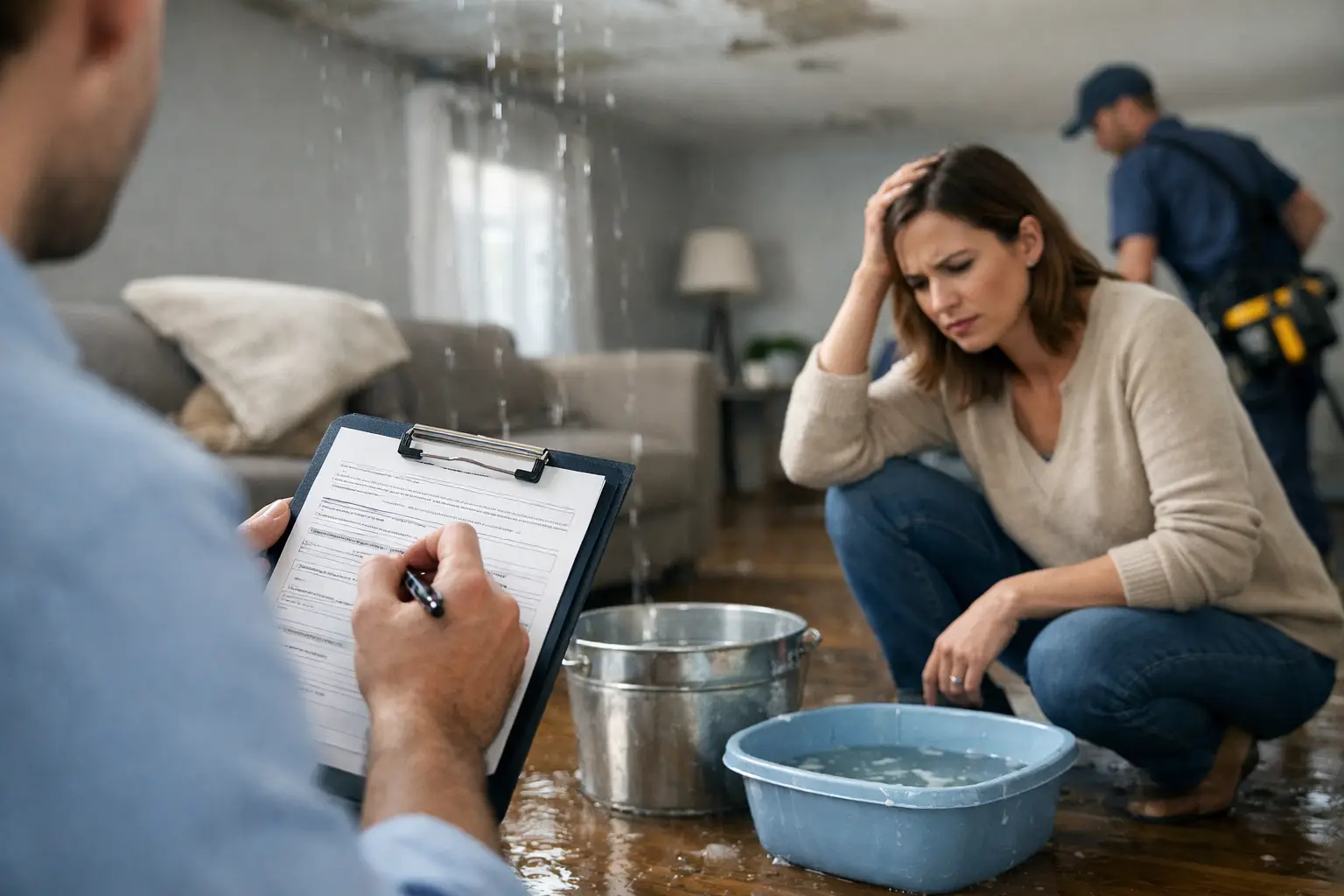
A supply line fails behind a second-floor wall at 2:00 a.m. Water reaches the unit below, a hallway ceiling begins to stain, and residents need direction. The question is not simply who handles emergency water extraction. For a property manager or building owner, the real question is which qualified team can stop the damage, document the loss, protect occupants, and move the property toward recovery without creating more vendor coordination.
The right response is usually a licensed water damage restoration contractor with 24/7 emergency capabilities. That team handles the extraction and drying process, while a plumber or other qualified trade addresses the source of the leak. On a multi-unit or commercial property, these roles must work in the right order and communicate clearly. Missing that distinction can add days to a disruption and expose more building materials to damage.
Who Handles Emergency Water Extraction at a Property?
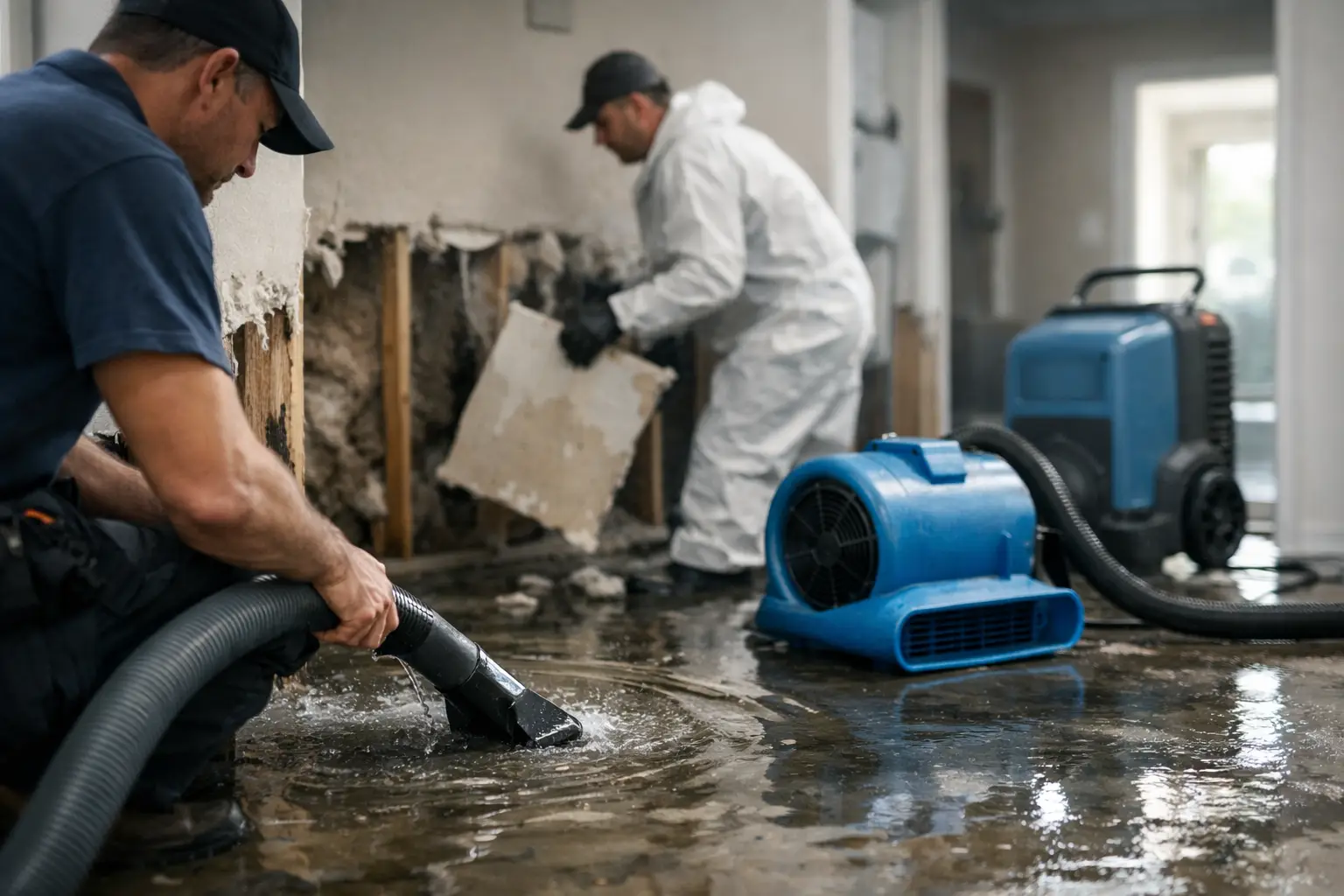
Emergency water extraction is handled by water damage restoration professionals equipped to remove standing water, assess moisture, place drying equipment, and monitor the affected areas until they meet appropriate drying conditions. Their work is different from ordinary cleaning and more involved than simply vacuuming water from carpet.
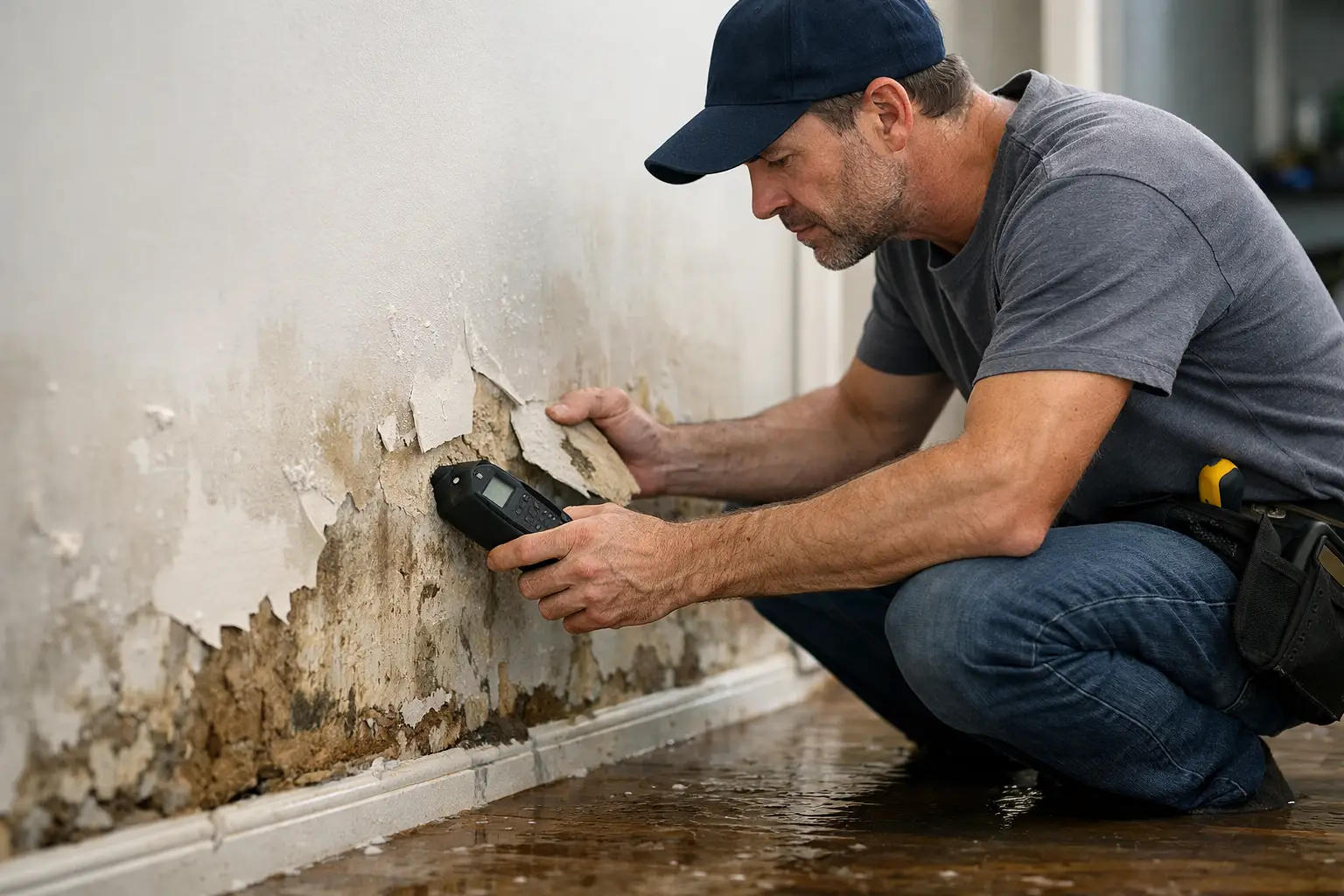
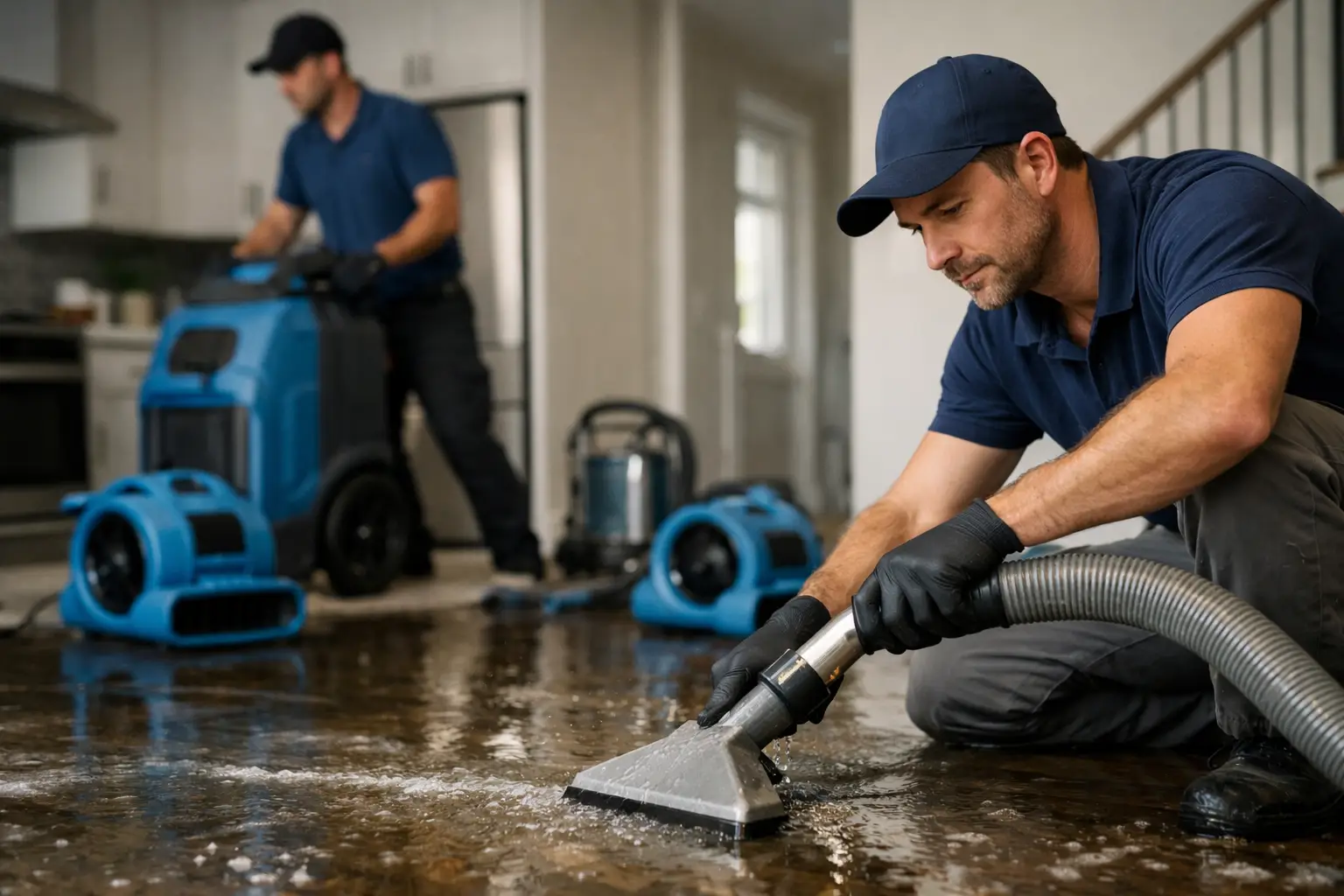
A professional restoration team arrives with commercial extraction equipment, air movers, dehumidifiers, moisture meters, and containment materials. They evaluate visible damage and the moisture that may have traveled beneath flooring, behind baseboards, inside wall cavities, or through ceilings into lower units. Their job is to limit secondary damage such as warped flooring, damaged drywall, persistent odors, and mold growth.
For Southern California property portfolios, response speed matters because water does not stay confined to the point of failure. A small leak in one apartment can become a multi-unit claim when water migrates through framing, insulation, electrical openings, and shared corridors. The provider handling extraction should be prepared to coordinate access, communicate with management, and maintain clear records from the first visit.
The plumber stops the source
If a burst supply line, failed water heater, drain backup, roof penetration, or fixture leak is still active, the source must be stopped first. A licensed plumber may repair or isolate the failed component. In some cases, building maintenance can shut off a local valve or main water supply before the plumber arrives.
The restoration contractor should not be expected to diagnose or permanently repair every plumbing issue. Their priority is removing water and drying the affected materials after the flow has been controlled. When one qualified partner can coordinate both the urgent repair and restoration workflow, management has fewer gaps to manage during a stressful event.
The restoration team protects the building
Once the source is controlled, the restoration crew begins mitigation. This typically includes extracting standing water, moving or protecting contents where appropriate, documenting affected materials, setting drying equipment, and monitoring conditions over the following days.
Not every incident requires demolition. A clean-water supply line leak caught quickly may be dried with limited disruption. Water that has traveled under glued flooring, soaked insulation, entered cabinets, or come from a contaminated source may require removal of affected materials. The scope depends on the water category, how long materials remained wet, the construction assembly, and the condition of each affected area.
Why a General Contractor Can Be the Right Single Point of Contact
For an owner-occupied home, managing separate vendors may be manageable. For a multifamily building, HOA property, retail space, or commercial facility, it can quickly become an operational problem. Managers may need to coordinate tenant notices, emergency access, plumbing repairs, drying equipment, insurance documentation, reconstruction, and unit turnover schedules at the same time.
A trusted general contractor with water damage restoration experience can provide accountability beyond the first extraction visit. The best fit is fully licensed, bonded, and insured, with a documented emergency response process and the capacity to manage the next phase when repairs are needed.
That continuity matters when water damage affects flooring, drywall, cabinetry, paint, or common-area finishes. Instead of handing an incomplete job from one vendor to another, the same accountable partner can help move from emergency mitigation to repair and rent-ready restoration. V&S Management Services Inc. supports this kind of coordinated response for Southern California property professionals who need urgent action without losing control of the larger asset-protection plan.
What Property Managers Should Expect During the First Hours
A capable emergency provider should begin with practical questions: Where is the water coming from? Is the source shut off? Which units or areas are affected? Is there standing water? Are electrical systems, elevators, or common paths involved? Is anyone unable to safely remain in the space?
From there, the response should be organized around safety, damage control, and documentation. In a larger property, that often means confirming access to neighboring units, notifying occupants about equipment noise, and creating a clear record of where moisture was found. Professional communication is especially valuable when residents, board members, insurance representatives, and ownership groups all need accurate updates.
A thorough response generally includes four actions:
- Immediate extraction of standing water from floors, carpets, padding, and other affected surfaces.
- Moisture assessment using appropriate tools, including checks beyond the visibly wet area.
- Strategic drying with commercial equipment and regular monitoring until drying goals are reached.
- Photo documentation and detailed records that help support property files and insurance claims.
The goal is not to make the space look dry for the moment. The goal is to verify that the building materials are drying correctly and to identify materials that cannot reasonably be saved.
When Emergency Extraction Requires Added Expertise
Some water events call for more than a standard response. Sewage backups, toilet overflows involving waste, and certain drain failures can introduce contaminated water. These situations require specialized cleaning protocols, careful removal of affected porous materials, and stricter controls to protect occupants and workers.
Flooding that affects electrical rooms, elevator areas, fire-life-safety equipment, or structural components also requires close coordination with the appropriate licensed professionals. The restoration team can address water removal and drying, but property management may need electricians, elevator contractors, roofing specialists, or engineers depending on the incident.
Mold is another concern, but it should be discussed accurately. Mold does not automatically result from every water loss. Rapid extraction and controlled drying can often prevent it. However, when moisture has been present for an extended period or concealed materials show growth, a qualified assessment and proper remediation plan may be necessary.
How Insurance Claim Coordination Fits Into the Process
Insurance reporting should begin promptly, but emergency mitigation should not wait for an adjuster to arrive when active water is damaging the building. Carriers generally expect property owners to take reasonable steps to prevent further loss. Timely extraction, drying, and documentation help demonstrate that management acted responsibly.
The restoration provider should provide clear records of the initial condition, affected areas, equipment placement, daily monitoring, and recommended repairs. This information can reduce confusion when a claim involves multiple units or common areas. Still, coverage decisions belong to the insurer and policyholder. A contractor can support the documentation process, but cannot promise what an insurance policy will cover.
For HOAs and commercial owners, it is also wise to identify early whether the event involves a common element, an individual unit responsibility, a tenant-caused loss, or a vendor-related issue. That determination may affect communications and claim handling, even while the drying work proceeds.
Choosing the Right Emergency Water Extraction Partner
The fastest available vendor is not always the best choice. Property professionals should look for a provider with 24/7 availability, commercial and multi-unit experience, current licensing, insurance and bonding, trained technicians, and the ability to communicate clearly with managers and occupants. Bilingual English and Spanish communication can also make a meaningful difference in occupied properties.
Ask whether the provider can handle the project after mitigation if repairs are needed. Ask how they document moisture, how often they monitor drying equipment, and who provides updates to management. These questions reveal whether the company is prepared for a controlled restoration process or only the first hour of cleanup.
When water enters a building, every hour affects the scope of the recovery. Keep the contact information for a qualified, fully compliant emergency restoration partner available before the next incident, so the first call protects both your residents and your property investment.